
QUOIN — Property, rental and maintenance interfaces
Every unit has an occupancy period, a monthly reading and details that need care. QUOIN connects leases, rent due, manual receipts and maintenance in an Arabic workspace with a visible reason for each correction.
Explore the project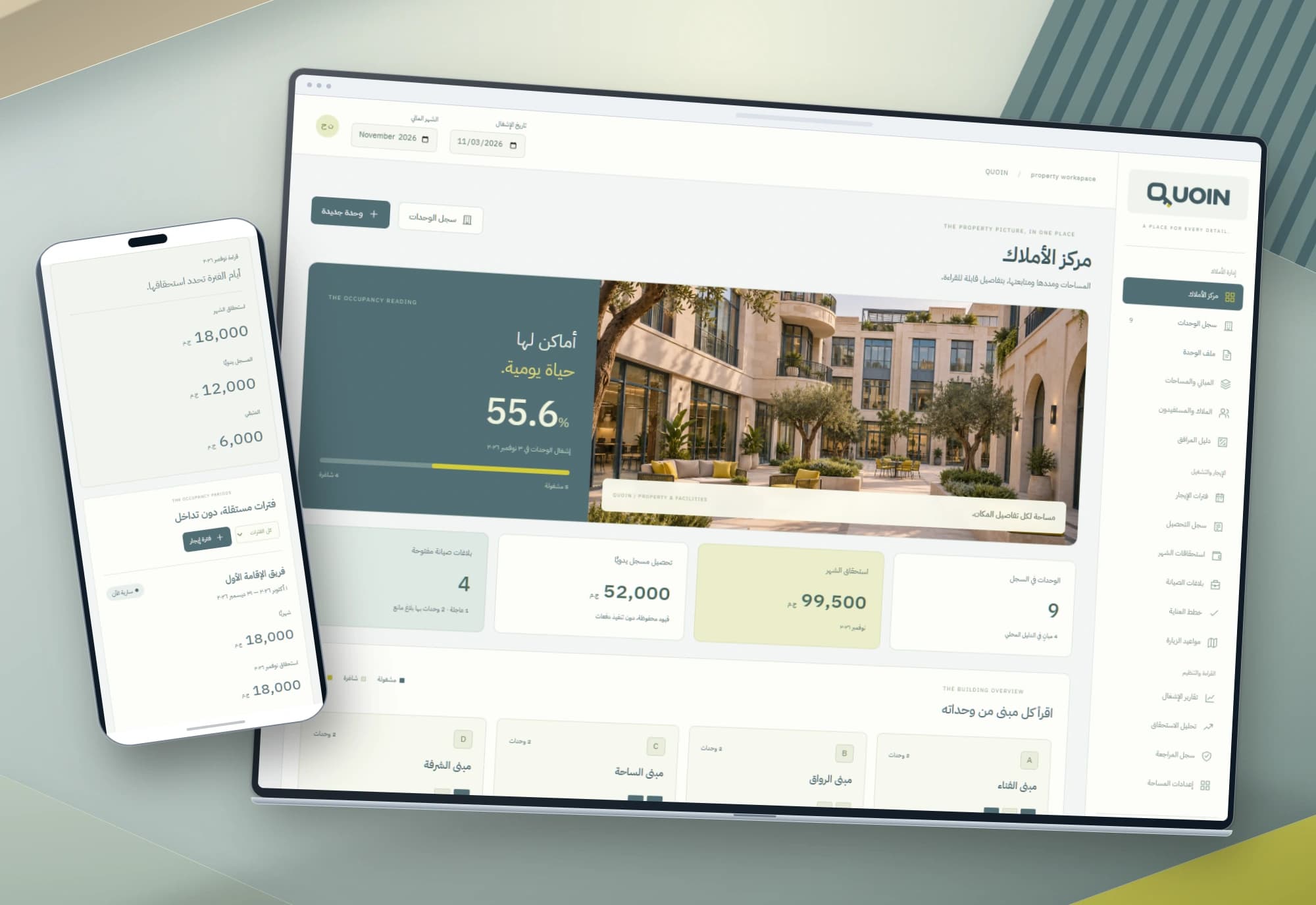 1 / 1
Project information
- Client
- An original Nextwave project
- Sector
- Real estate
- Platforms
- Web
- Project type
- Business systems
Services delivered
Project overview
A property unit can have several relevant states at once: vacant today with a lease starting later this month, or occupied while maintenance prevents a new booking. Nextwave designed QUOIN to keep those readings distinct while bringing their context together in the unit record.
Reading a property means separating dates from amounts
Occupancy describes the units on a chosen day. Rent due describes a month and may cover only part of it. Maintenance adds another decision:whether a new lease can be recorded for the unit.
The interface preserves those distinctions. The reading date determines the current beneficiary;the financial month determines rent and receipts;the issue state governs new leasing. All three remain connected to the unit and the records behind their numbers.
From the building overview to the unit’s daily record
The property center shows units, occupancy, monthly figures and open maintenance, then explains each building through its units. Markers distinguish occupied and vacant units and flag a blocking issue, with links to their records.
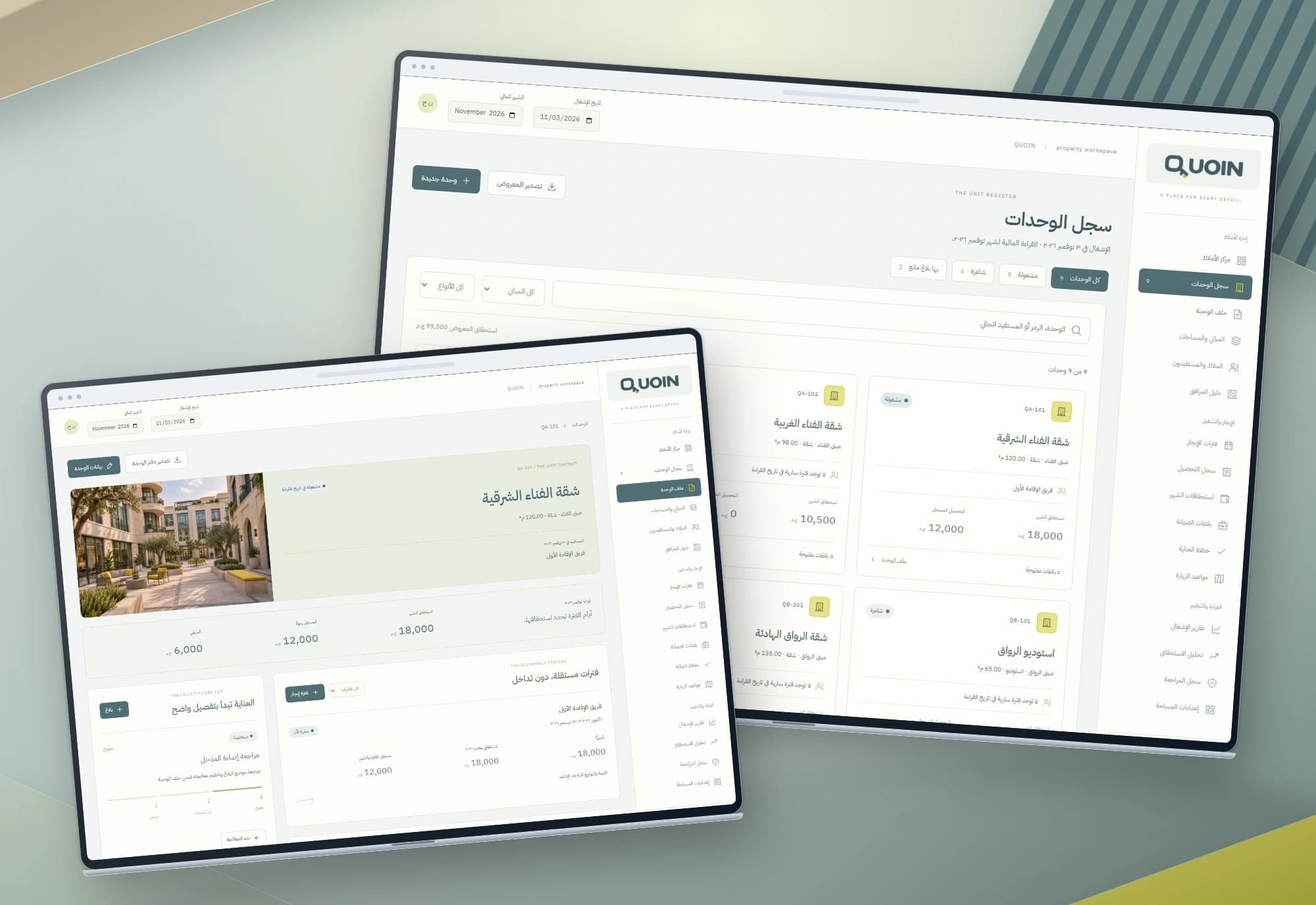
The register supports unit/reference/current-beneficiary search and building, type, occupancy and blocker filters. Each unit connects its area, lease periods, monthly receipts, maintenance and decisions. Monthly indicators are derived from those stored periods and entries.
Rent due follows the actual calendar month
Lease start and end dates are inclusive. Monthly rent is multiplied by the days falling within the selected month, divided by that month’s actual length and rounded once to the nearest cent. Leap February and adjacent month boundaries follow the same rule.
A lease’s amount and dates are fixed after creation. Periods cannot share a day;the next lease may start the day after the previous one ends. Correcting unit metadata leaves lease dates and amounts intact.
Project images
Explore the interface and experience through the project gallery.
 1 / 3
Use case: a unit vacant today with rent due later this month
The owner records a unit’s building, type and area, then a beneficiary, monthly rent and inclusive dates. A lease starting 10 November at 15,000 EGP monthly covers 21 of the month’s 30 days, producing 10,500 EGP due for November.
With an occupancy reading of 3 November, the unit remains vacant because the period has not started. On 11 November, it shows the recorded beneficiary. Changing the financial month does not alter that day’s occupancy;each reading keeps its own purpose.
Use case: record receipts and retain the correction trail
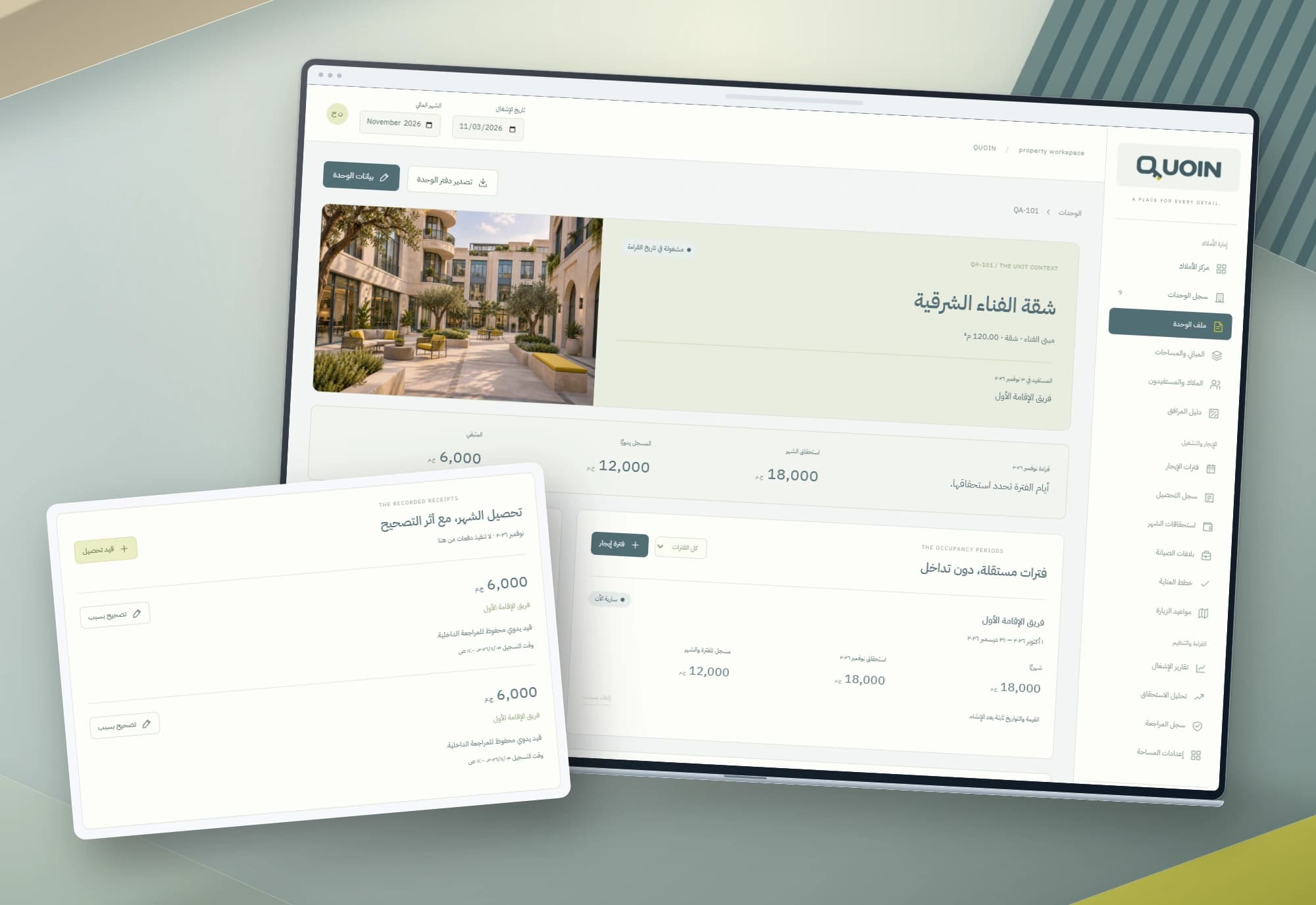
The user selects a lease and month before entering a positive receipt and note. The form explains the due, recorded and available amounts and prevents the total from exceeding the due. With 18,000 EGP due and two 6,000 EGP entries, the unit shows 6,000 EGP remaining.
A correction requires a changed amount and a reason, retaining the previous and new values while keeping the lease and month fixed. Any receipt prevents lease cancellation;a period without receipts may be cancelled with a reason and remains in history. These are manual records, without bank execution.
Use case: resolve a blocking issue while preserving a current lease
An owner creates an issue with a description, priority and optional block on new leasing. Its effect is visible in the register and unit record, while the existing lease, beneficiary and monthly amount remain unchanged.
The issue moves from open to in progress, then to resolved with a closing note. Resolution removes that issue’s block;other unresolved blocking issues still apply. Nonblocking maintenance leaves new periods available under the same overlap rules.
A calm architectural setting for everyday operational details
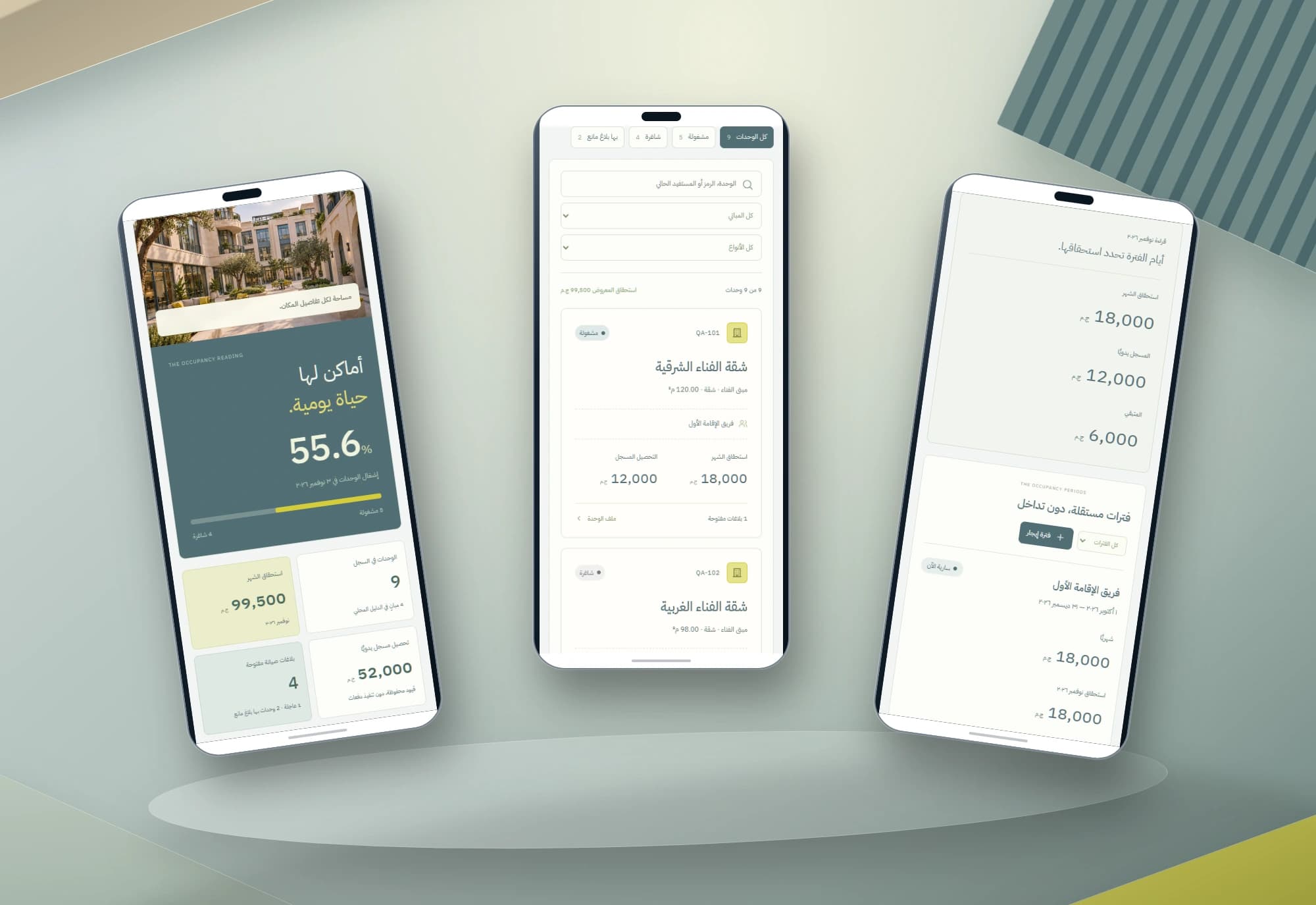
Steel blue anchors the data, lime marks reading and care details, and pale surfaces give numbers room. On mobile, rent and period details become readable rows, keeping even large amounts intact.
The architectural image depicts an invented generated setting and does not document ownership or a customer property. Four original-screen mockups use stone and architectural-frame compositions without lettering on the background.
Implemented scope
The delivered scope is three responsive Arabic HTML, CSS and JavaScript interfaces with browser-local persistence and visible/unit-record exports. Review covers overlap, rounding, exact cents, leap dates, save failures, empty states, long content and keyboard navigation. Three menu destinations work here;the others describe a wider module vision.
Shared accounts, permissions, legal leases, online collection, accounting, banking and connected technicians require further implementation. The study describes working interfaces without claiming an actual customer property operation or undocumented results.
Built with
- HTML5
- CSS3
- JavaScript
- localStorage
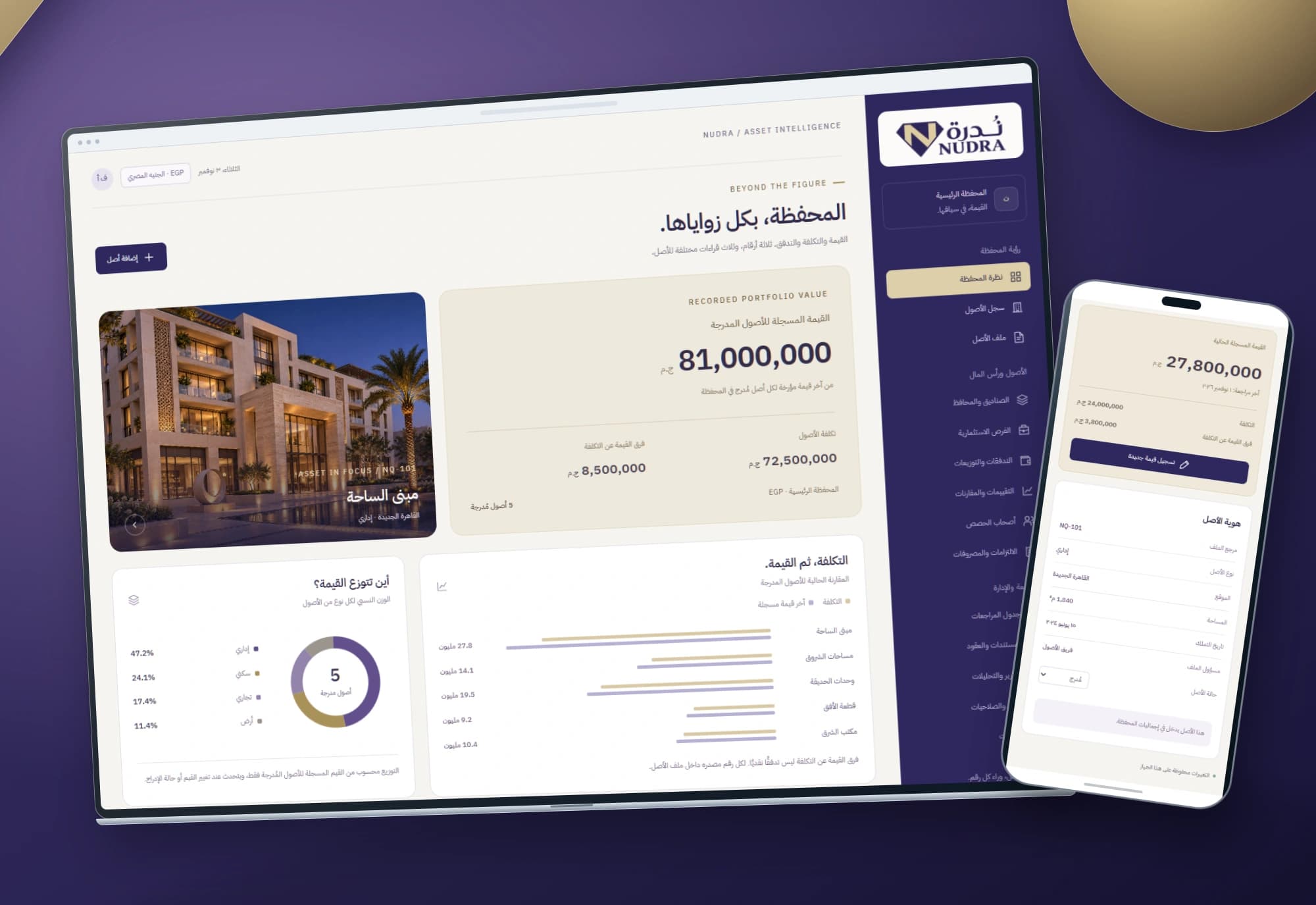
NUDRA — Property asset and portfolio interfaces
Cost, recorded value and cash movements tell different stories. NUDRA brings them into a clear property portfolio, with each figure traceable to its asset record.
Explore project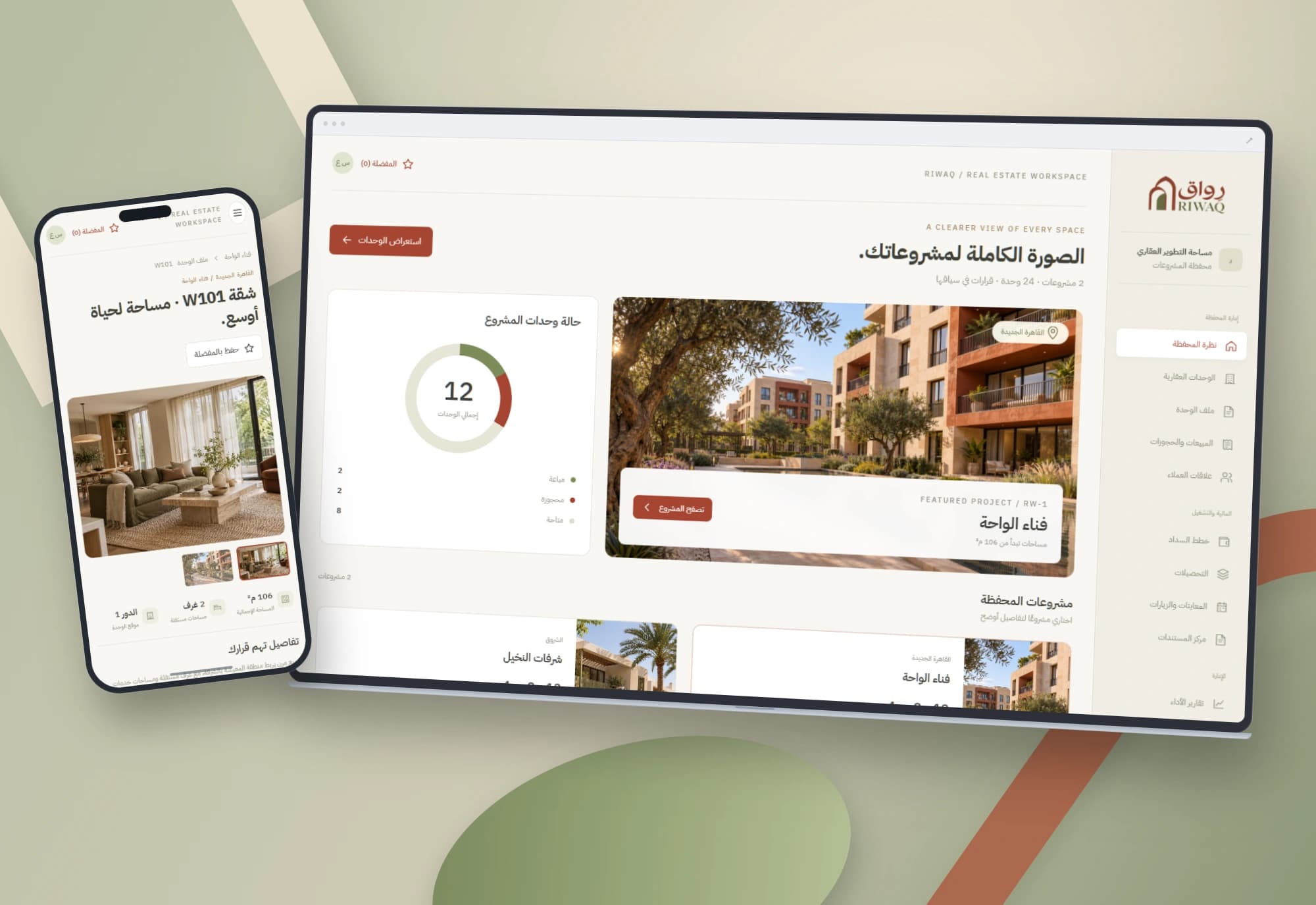
RIWAQ — Projects and property units interface
From a sense of place to unit details. Arabic property interfaces connect projects, filters, a plan, favourites and a payment calculator in one comparison journey.
Explore projectHow should your units, rent and maintenance fit together?
We start with your unit types, lease periods, receipt records and maintenance responsibilities, then define the data, permissions and integrations you need.