
NUDRA — Property asset and portfolio interfaces
Cost, recorded value and cash movements tell different stories. NUDRA brings them into a clear property portfolio, with each figure traceable to its asset record.
Explore the project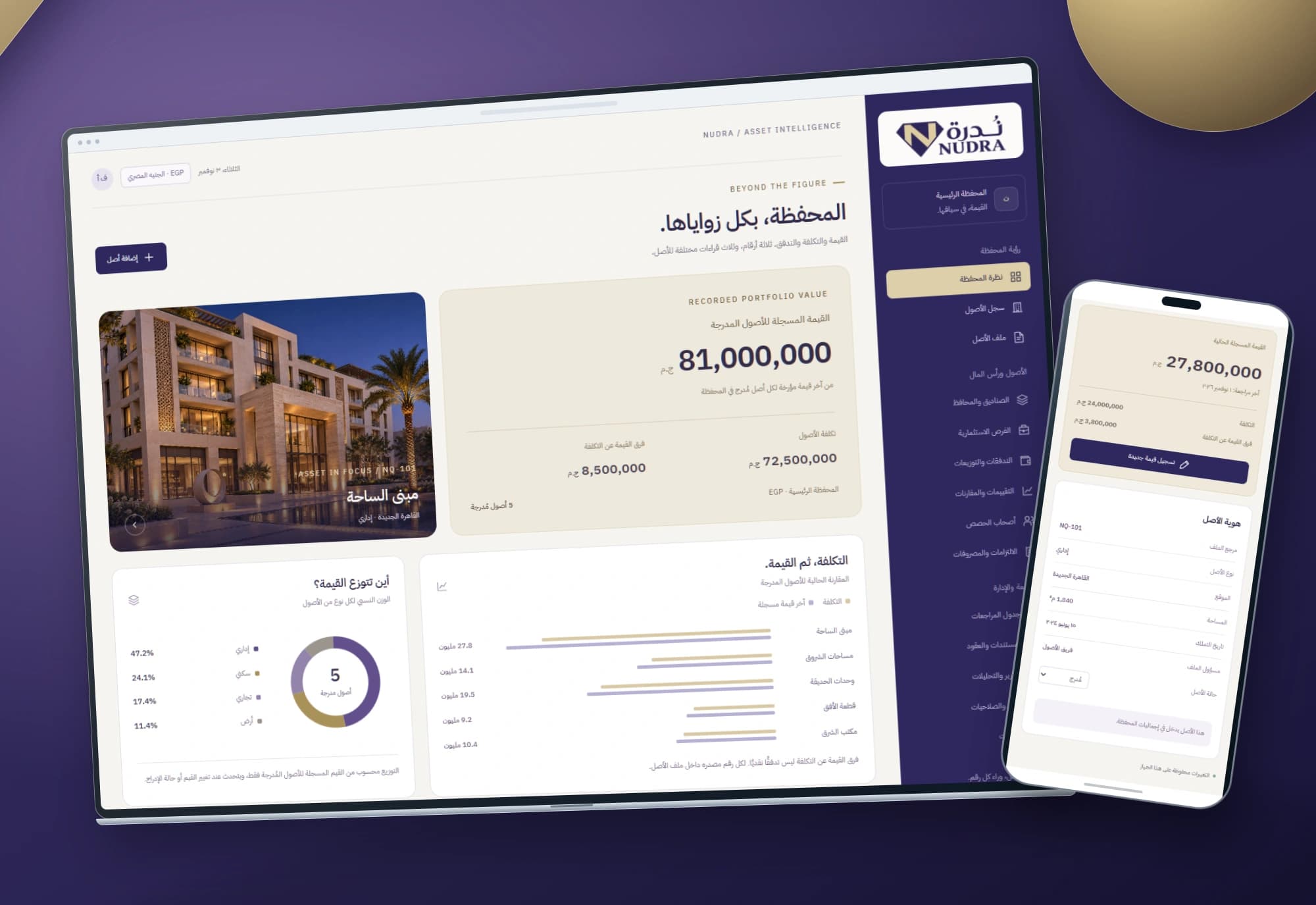 1 / 1
Project information
- Client
- An original Nextwave project
- Sector
- Real estate
- Platforms
- Web
- Project type
- Business systems
Services delivered
Project overview
A headline portfolio figure needs context: which assets contribute, when their values were reviewed, and how those values differ from cost and cash movements. Those questions shaped NUDRA.
Three figures, three different readings
A rise in recorded value can be mistaken for cash received if the two appear without context. An asset awaiting review can also distort totals if inclusion is unclear.
The design separates cost, latest dated value and cash movements. Inclusion state explicitly controls the portfolio while other asset records remain available.
A portfolio that leads back to its records
The overview connects recorded value, cost, variance, asset comparison, type allocation and cash movements. The charts state their inclusion basis: assets currently included in the portfolio.
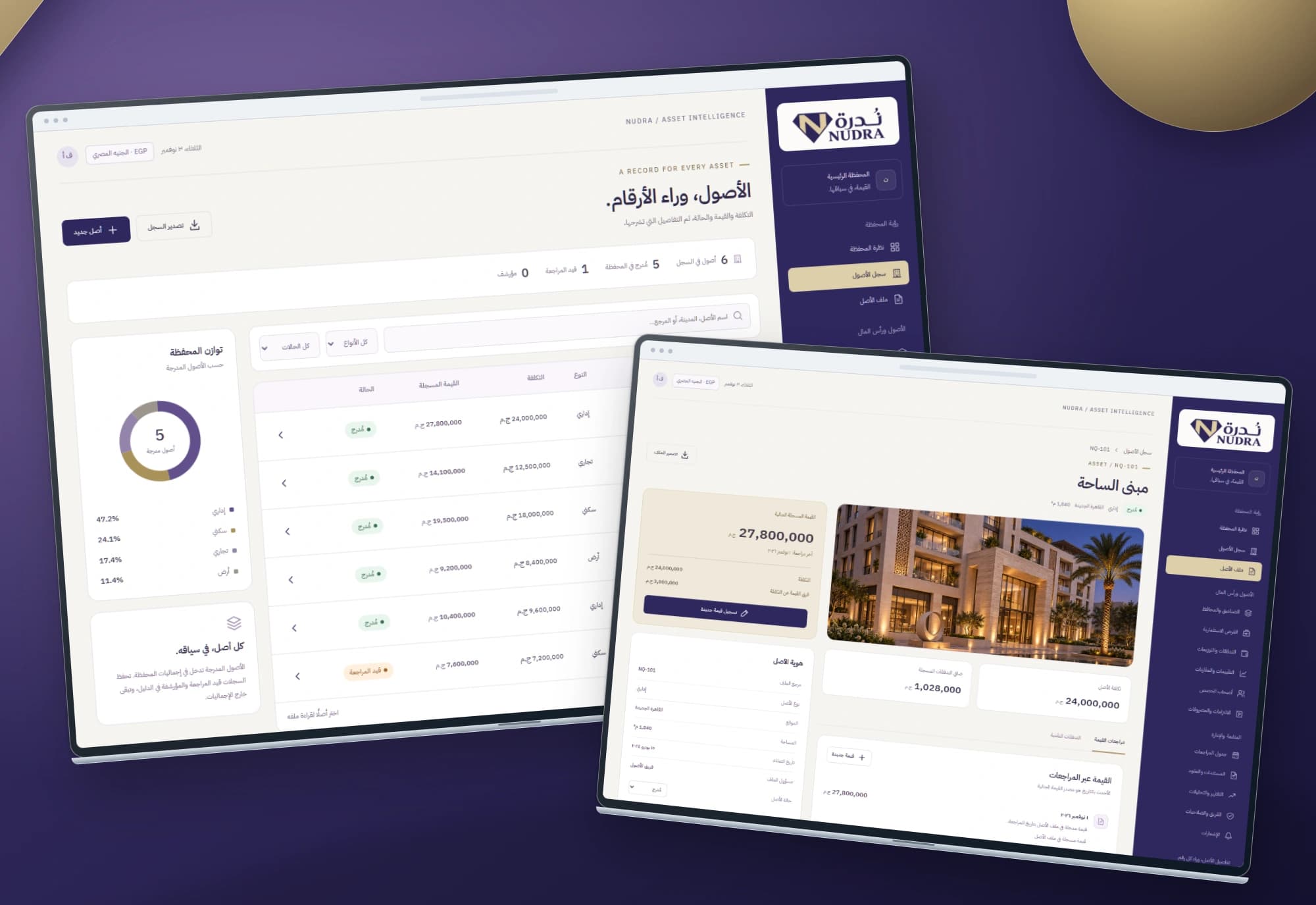
A searchable register filters by type and state, then opens each asset’s location, area, cost, valuation history and cash movements. Under-review and archived assets remain in the register without entering portfolio totals.
Dated values and precise cash records
Valuation entries retain a date and reason. The latest valuation date supplies the current figure; a later-entered historical record does not override it. Valuation dates cannot precede acquisition.
Cash entries record direction, a positive amount, description and date. Cent-based amounts supply totals and net movements after a successful save. Register, asset and filtered movement exports support further review.
Project images
Explore the interface and experience through the project gallery.
 1 / 3
Use case: including an asset after review
An asset records type, location, area, acquisition date, cost and recorded value. Saving it as under review keeps it in the register without changing portfolio value or allocation.
Including it later adds its latest value to the total and type allocation. The distinction remains explicit: inclusion changes portfolio scope; a valuation entry changes the recorded figure.
Use case: recording a historical valuation
A reviewer checks the current valuation date, then records a newly received historical value with its own date and explanation.
An older dated entry remains in the history without changing current portfolio value. A newer entry updates asset value, variance and allocation. These figures describe saved asset records, rather than a live external market feed.

Use case: reviewing cash movements before archiving
An asset can record a receipt or operating expense, with separate incoming, outgoing and net totals. Filtering outgoing movements also limits the export to those entries.
Archiving retains the asset’s values and movements and prevents new entries until its state changes. Portfolio and cash charts then reflect only currently included assets. Value variance stays separate from cash receipts and expenses.

A quiet setting for the figures
Deep indigo, champagne and lavender create a restrained setting for asset figures. Comparison bars separate cost from value, while a donut chart explains type allocation.
On mobile, register rows become labelled cards and asset details stack vertically. The mockups preserve original screen pixels within metallic geometric studio compositions, without background text.
Implemented scope
Three connected interfaces implement portfolio review, an asset register and individual records, with valuations, cash entries, exports and browser persistence. Values are saved record inputs, without a market feed or bank connection. Fund administration, ownership, permissions and shared data require separate implementation; the navigation places these within a wider product outline.
Built with
- HTML5
- CSS3
- JavaScript
- localStorage
RIWAQ — Projects and property units interface
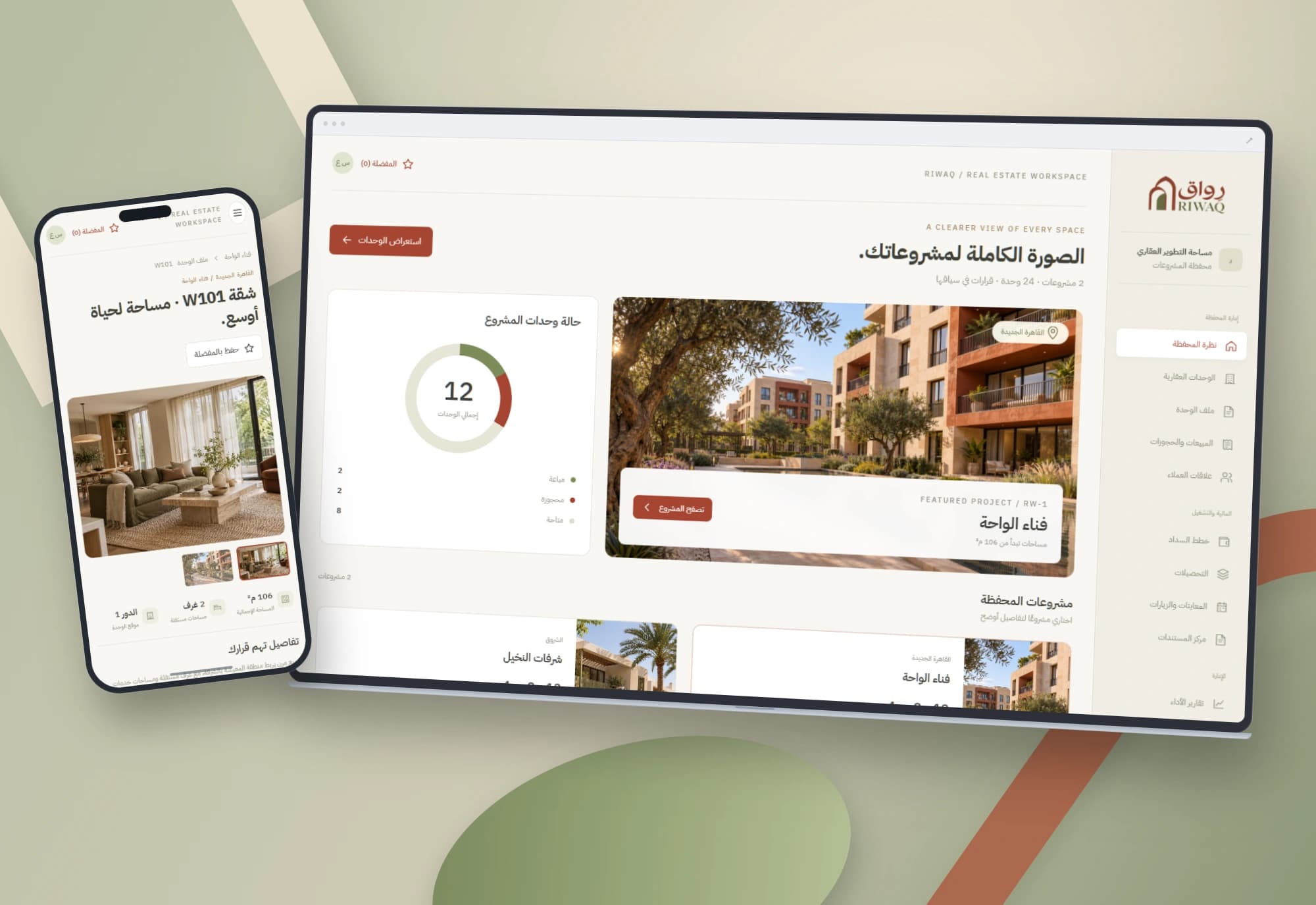
From a sense of place to unit details. Arabic property interfaces connect projects, filters, a plan, favourites and a payment calculator in one comparison journey.
Explore project
DARAJ — Employee performance and development interfaces
Performance reviews begin with people and lead to clear next steps. DARAJ connects an employee directory with individual skills, dated reviews and a development plan.
Explore projectNeed a clearer reading of your asset portfolio?
We map your asset data, inclusion rules and review workflow, then design the experience and integrations your team needs.