
NAMAT — Department resources, budgets and stock issues
An item being on the shelf is only part of the decision; the request also needs a budget and clear authorization. NAMAT connects department allocations to stock reservations, partial issues and returns, preserving each request's month, cost and movement history.
Explore the project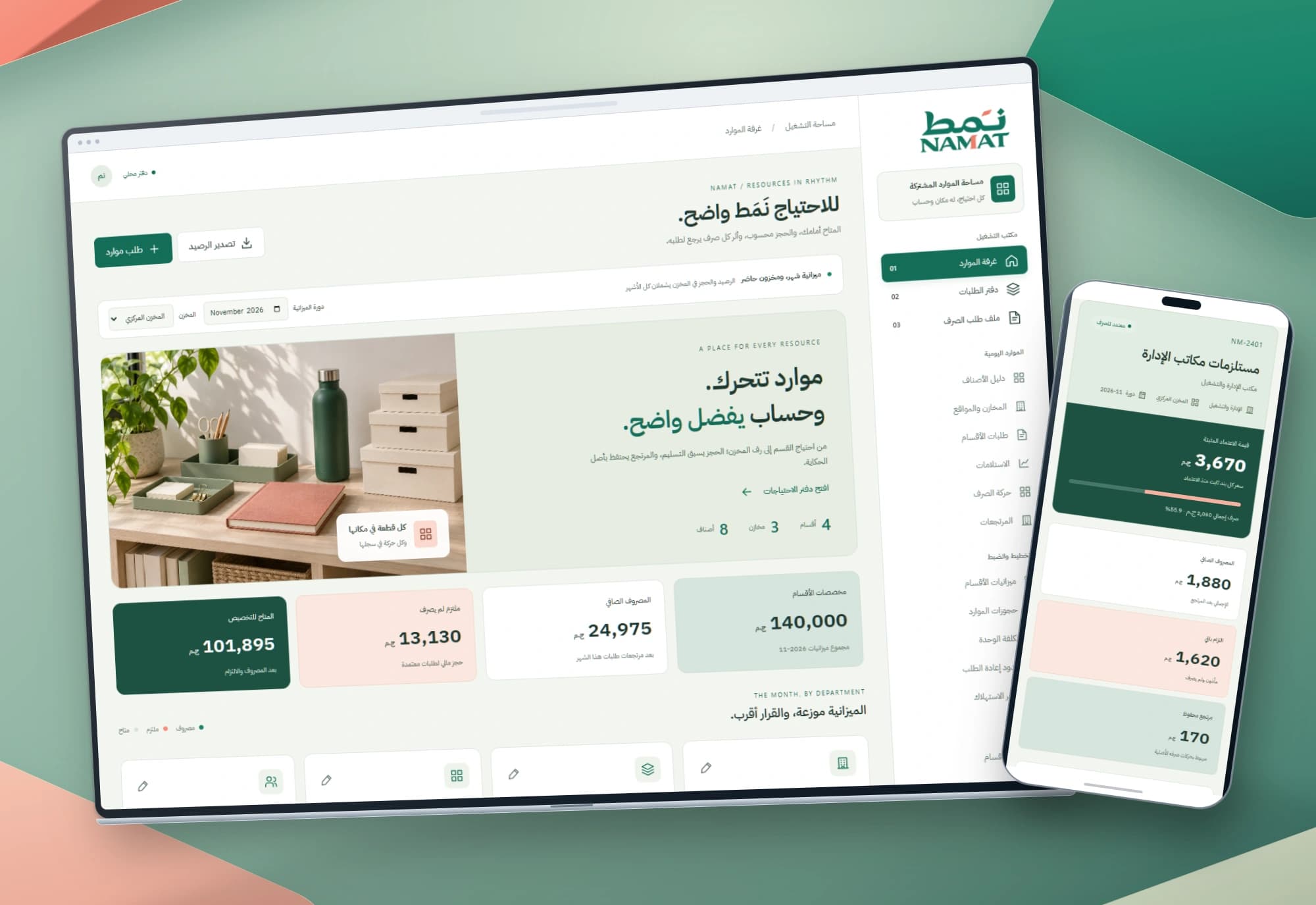 1 / 1
Project information
- Client
- An original Nextwave project
- Sector
- Professional services
- Platforms
- Web
- Project type
- Business systems
Services delivered
Project overview
A simple department request can reserve stock another team needs, or remain approved for a future month while the warehouse view shows the current one. Nextwave designed NAMAT around the intersection of need, quantity and allocation, so following one does not hide the others.
A place for each resource and room to read the details
Emerald and mint with coral accents distinguish NAMAT. An original office-supplies photograph and department cards establish context, while budget bars separate spent, committed and available value.
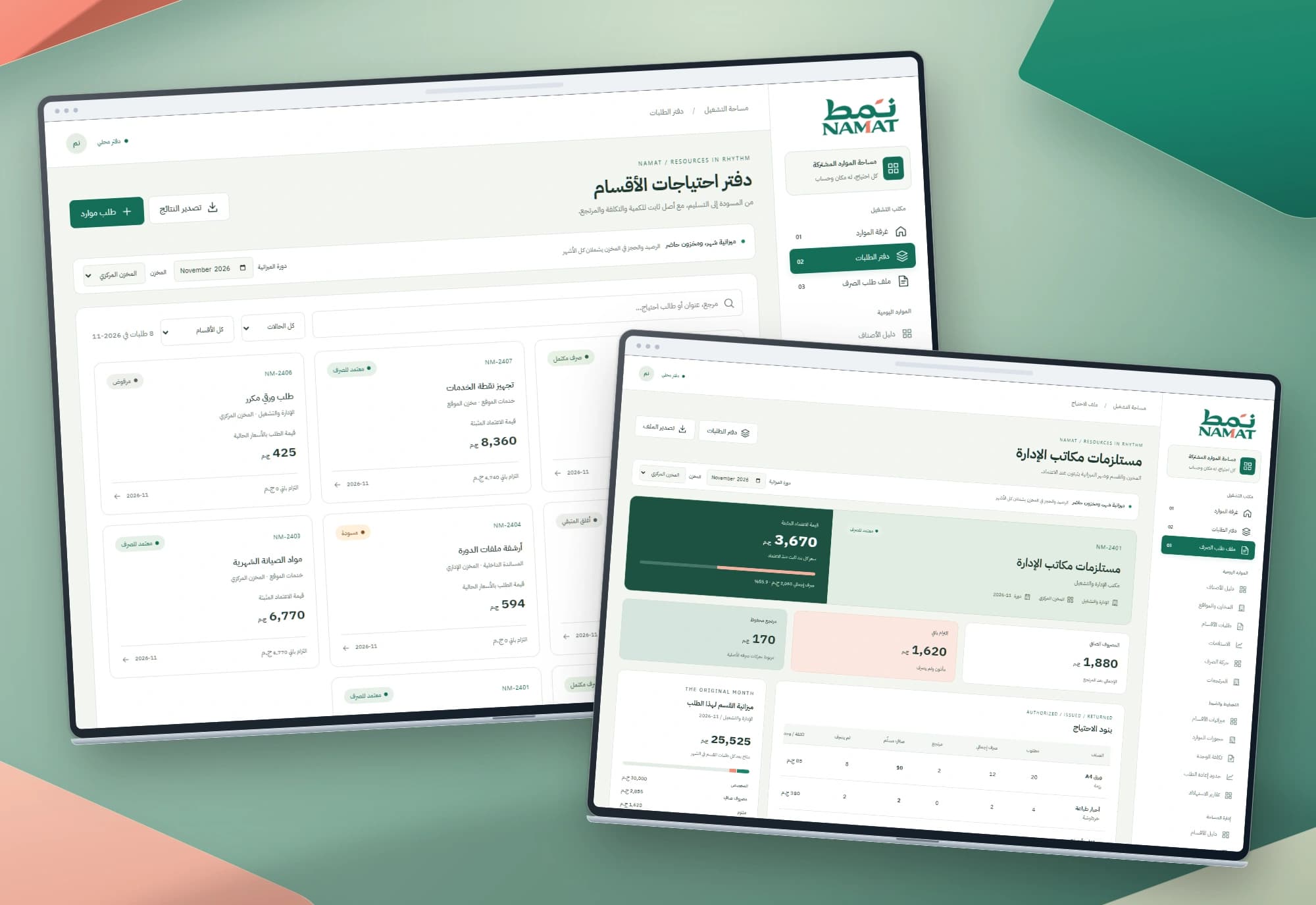
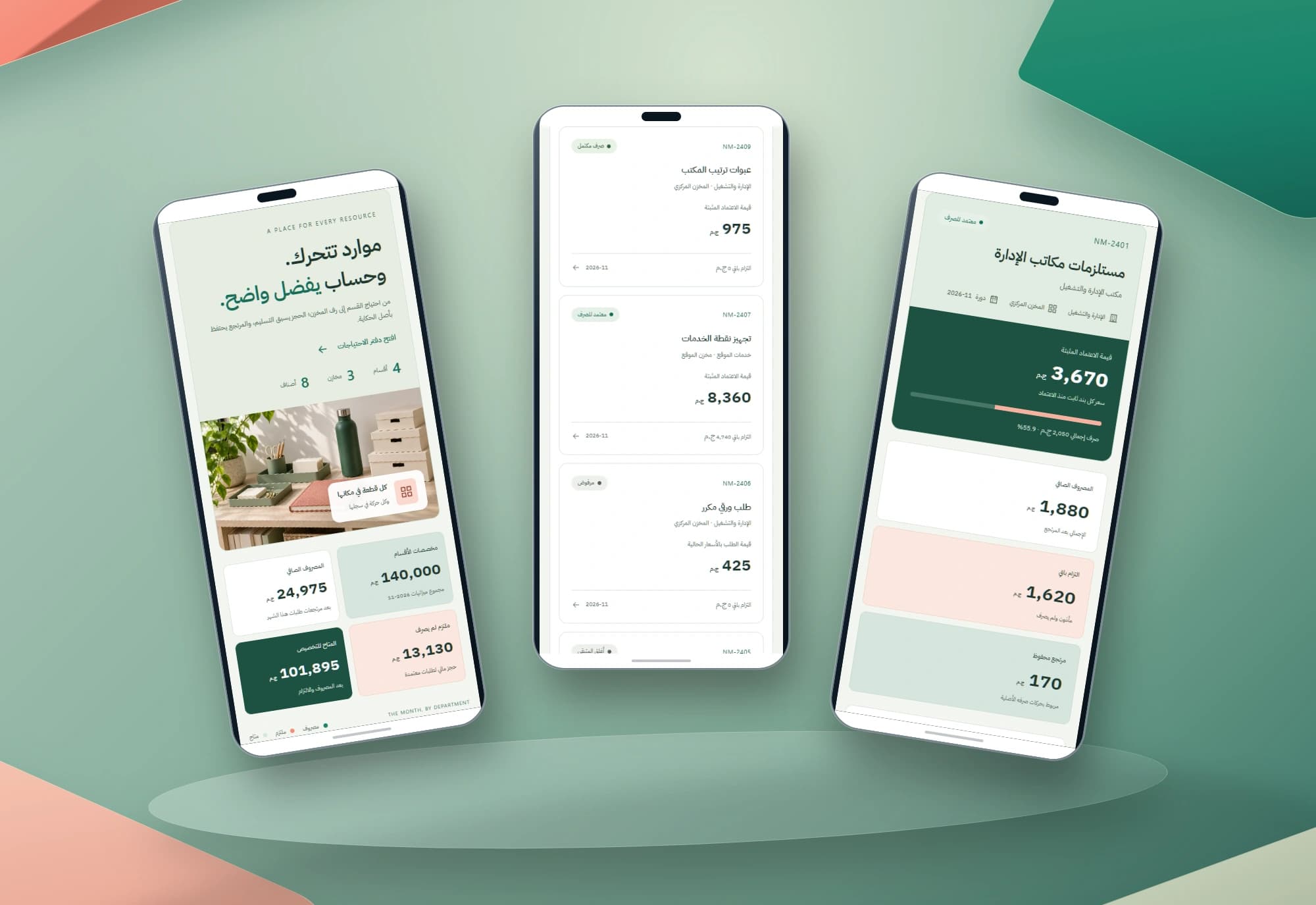
The resource room, request register and issue request file form three connected destinations. On phones, department cards become a sequential reading and quantity lines remain in a contained scrollable table. The broad sidebar identifies the working pages and scope beyond them.
Project images
Explore the interface and experience through the project gallery.
 1 / 3
Available budget and available shelf stock are different readings
A warehouse may be full while a department has exhausted its allocation. A budget may allow a request while the available units are already reserved. We separated those readings and connected them at approval, avoiding a financial authorization without stock or a stock reservation without allocation.
The resource room shows each department's budget, net spent amount, outstanding commitment and available allocation. Warehouse rows show on-hand, reserved and available quantities in each item's own unit. Reams, kits and boxes are not added into an uninformative total quantity.
Use case 1: Approve against stock and budget together
A request begins as a draft with a title, department, warehouse and budget month, then receives item lines and whole quantities. Draft data remains editable, and the draft alone does not reserve stock or create a financial commitment.
Approval checks each item's warehouse availability after reservations across all months and compares the request cost with the department's available allocation in its own month. Either failure leaves the draft without a partial reservation. Success freezes request attributes, quantities and rates and reserves stock and cost together.
A reasoned catalogue rate update does not reprice approved requests. A department budget change cannot reduce allocation below net spent plus current commitments, so it respects what the ledger has already authorized.
Use case 2: Issue in parts without doubling exposure
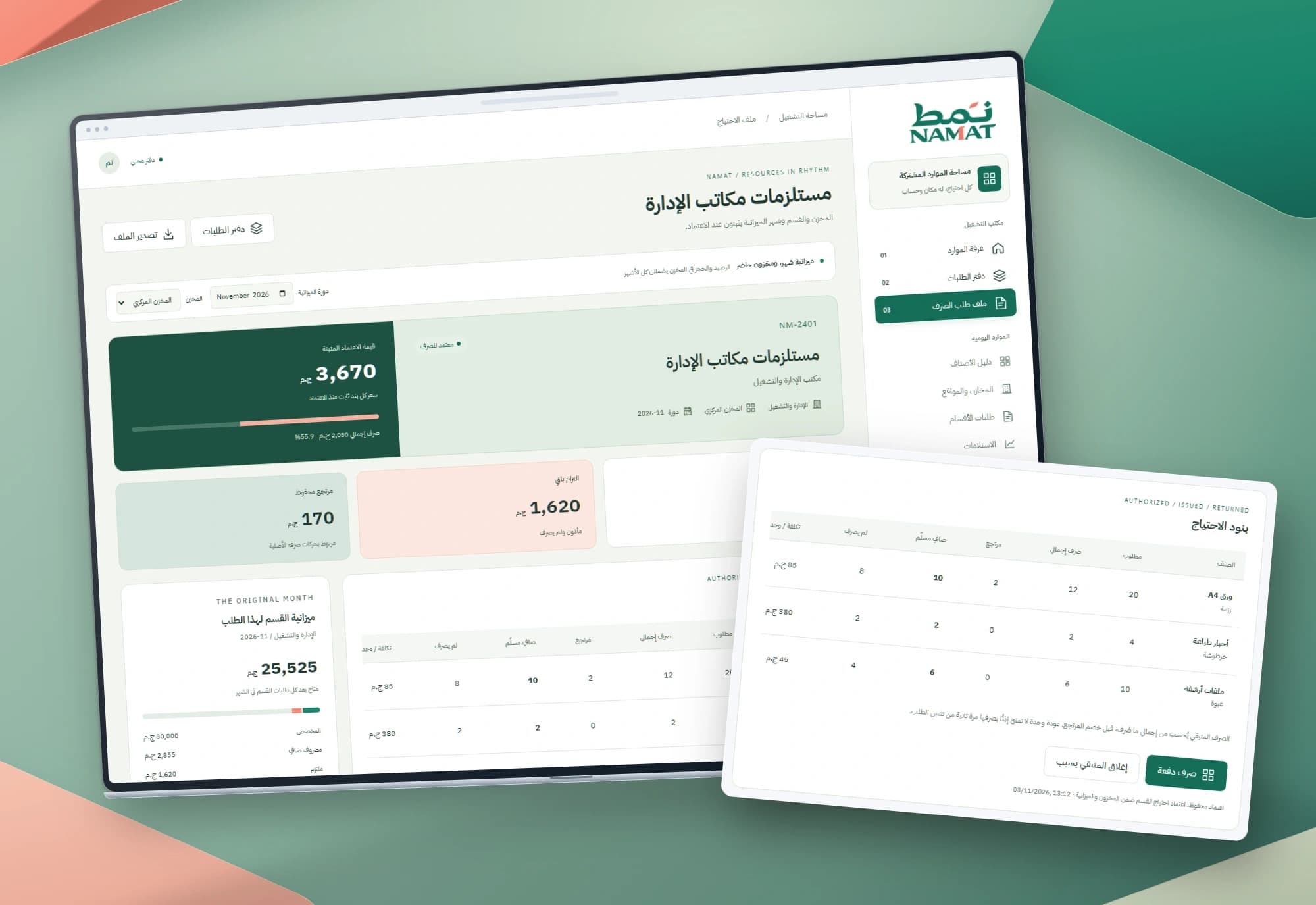
The warehouse operator opens an approved request, enters the quantities handed over in this batch and leaves other items blank. NAMAT validates the entire batch before recording it; one excessive line cannot leave the others partially posted.
Saving reduces on-hand units and transfers their fixed cost from commitment to spent. It does not add expenditure on top of the same commitment. Unissued quantities remain reserved, and each line distinguishes requested, gross issued, returned and still-unissued amounts.
If the department no longer needs the remainder, the operator closes it with a reason. Unissued stock and financial commitments are released while earlier handovers remain recorded. Full issue or closing the remainder locks the authorization against further delivery.
Use case 3: Return to the original warehouse and budget month
The operator selects a specific issue movement and records returned units and a reason. NAMAT checks that movement's remaining returnable quantity after earlier returns; a return cannot exceed what actually left under that issue.
Units go back to the same warehouse at the approved rate, reducing spent value in the original request's department and budget month, even when another month is selected. This also applies after fulfillment or closure of the remainder.
A return does not create a fresh issue authorization. Remaining permission uses gross issued quantities before returns, preventing the same request from handing those units out again. Future-month request reservations also stay in current warehouse availability when the selected budget month changes.
A movement ledger that stays understandable under pressure
The register searches request titles or requesters and filters by department, status and month. Exports cover every matching result, request lines, complete request history and warehouse balances. The file displays recent events without overwhelming the page with its full history.
Whole quantities, cents and Arabic and Latin numeric separators are checked before saving. Tests covered five hundred requests, long inputs, large values and failed storage with form retention. An inconsistent source is replaced only through explicit recovery that backs up the original first.
The scope delivered in NAMAT
NAMAT is an original Nextwave interface project with three pages and browser-local storage for a declared department, warehouse and item directory, monthly budgets, issues and returns. Unit cost is an internal authorization value rather than accounting inventory valuation.
A shared server, enforced user permissions, purchasing cycle, supplier invoices, accounting entries, bank transfers and tax processing are outside this scope. The study describes implemented resource flows without presenting other sidebar labels as completed modules or attributing unmeasured operational results to an organization.
Built with
- HTML5
- CSS3
- JavaScript
- localStorage
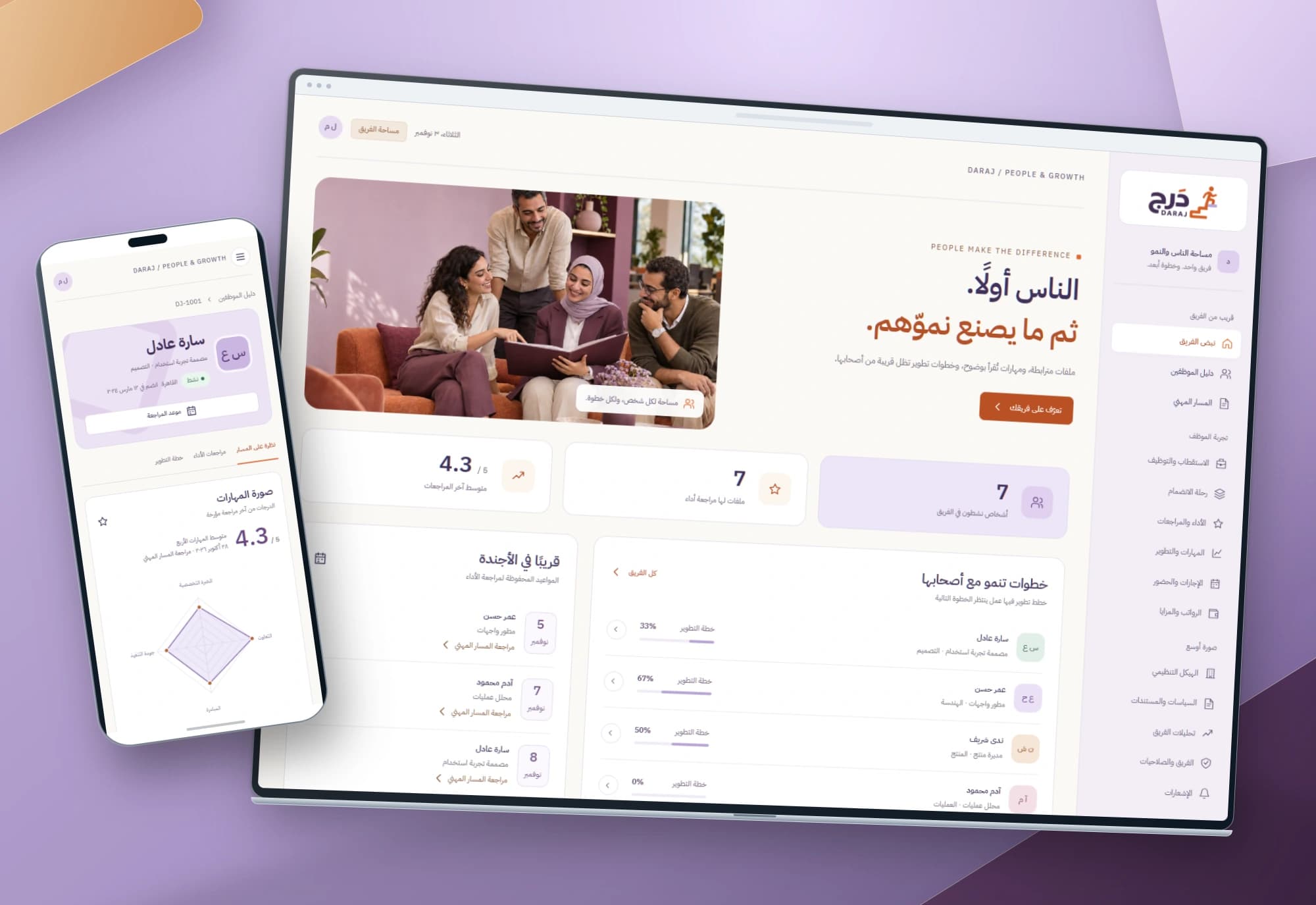
DARAJ — Employee performance and development interfaces
Performance reviews begin with people and lead to clear next steps. DARAJ connects an employee directory with individual skills, dated reviews and a development plan.
Explore project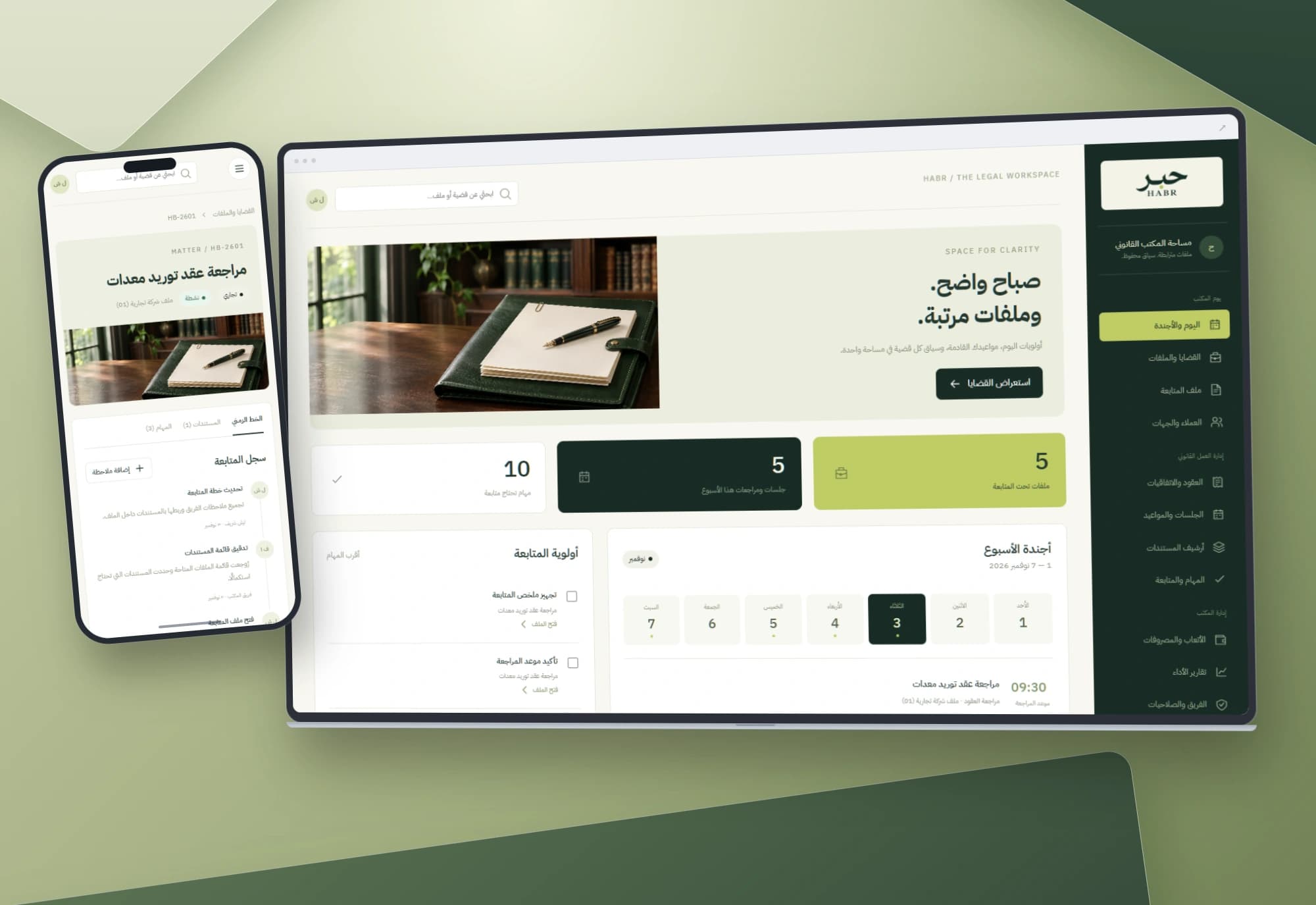
HABR — Legal matters and office workflow interface
Dates, tasks and documents belong to the same matter. An Arabic workspace connects the office agenda to case files and notes, keeping each step in context.
Explore projectGive department requests a clearer flow
Start with how your teams approve, hand over and return resources. We can define the resource flow, allocation rules and integrations each stage requires.