
DARAJ — Employee performance and development interfaces
Performance reviews begin with people and lead to clear next steps. DARAJ connects an employee directory with individual skills, dated reviews and a development plan.
Explore the project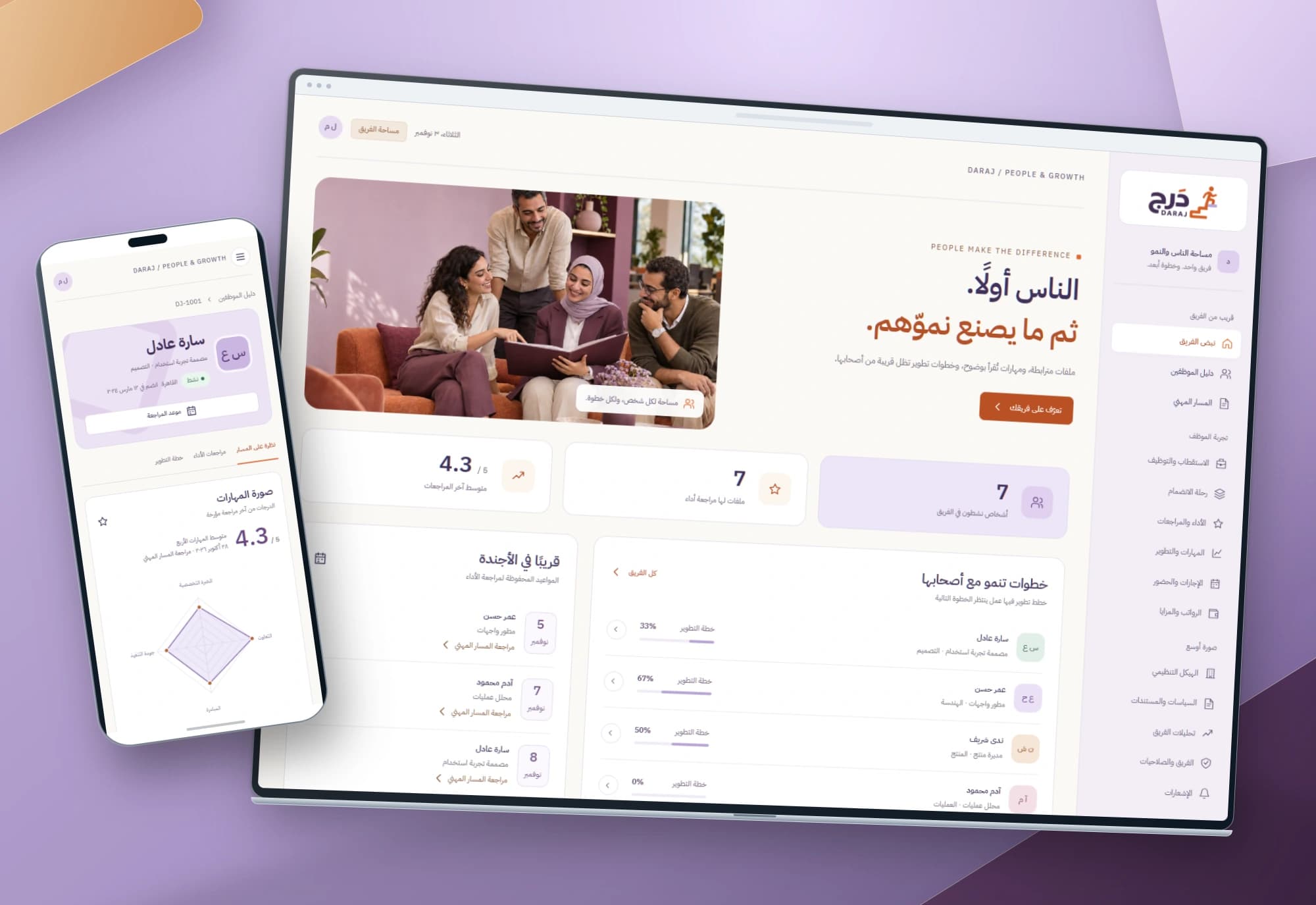 1 / 1
Project information
- Client
- An original Nextwave project
- Sector
- Professional services
- Platforms
- Web
- Project type
- Business systems
Services delivered
Project overview
What happens after a review meeting? That question shaped DARAJ. Skill scores stay close to their review context, while development becomes a set of steps within the person’s own record.
A review should lead beyond the score
Employee data, review notes and the next development step can become disconnected. Keeping them apart makes follow-up harder.
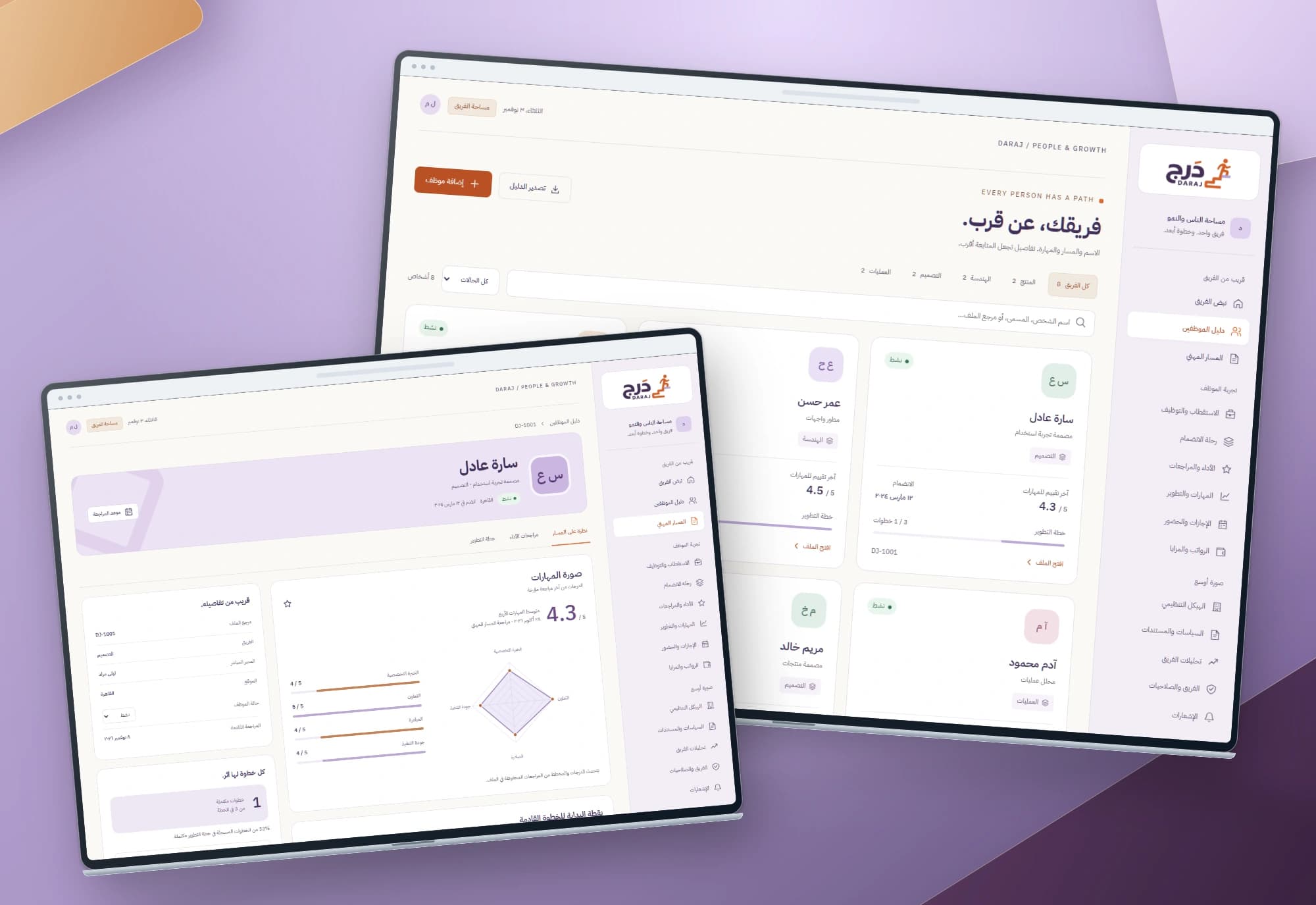
The experience centres on the person: a recognisable directory card and a profile combining the latest review, its skill scores and development steps. Team context leads directly into an individual record.
Team overview, then individual context
The overview brings together active people, reviewed profiles, latest-review averages, upcoming appointments and development steps. Directory search combines team and employee state.
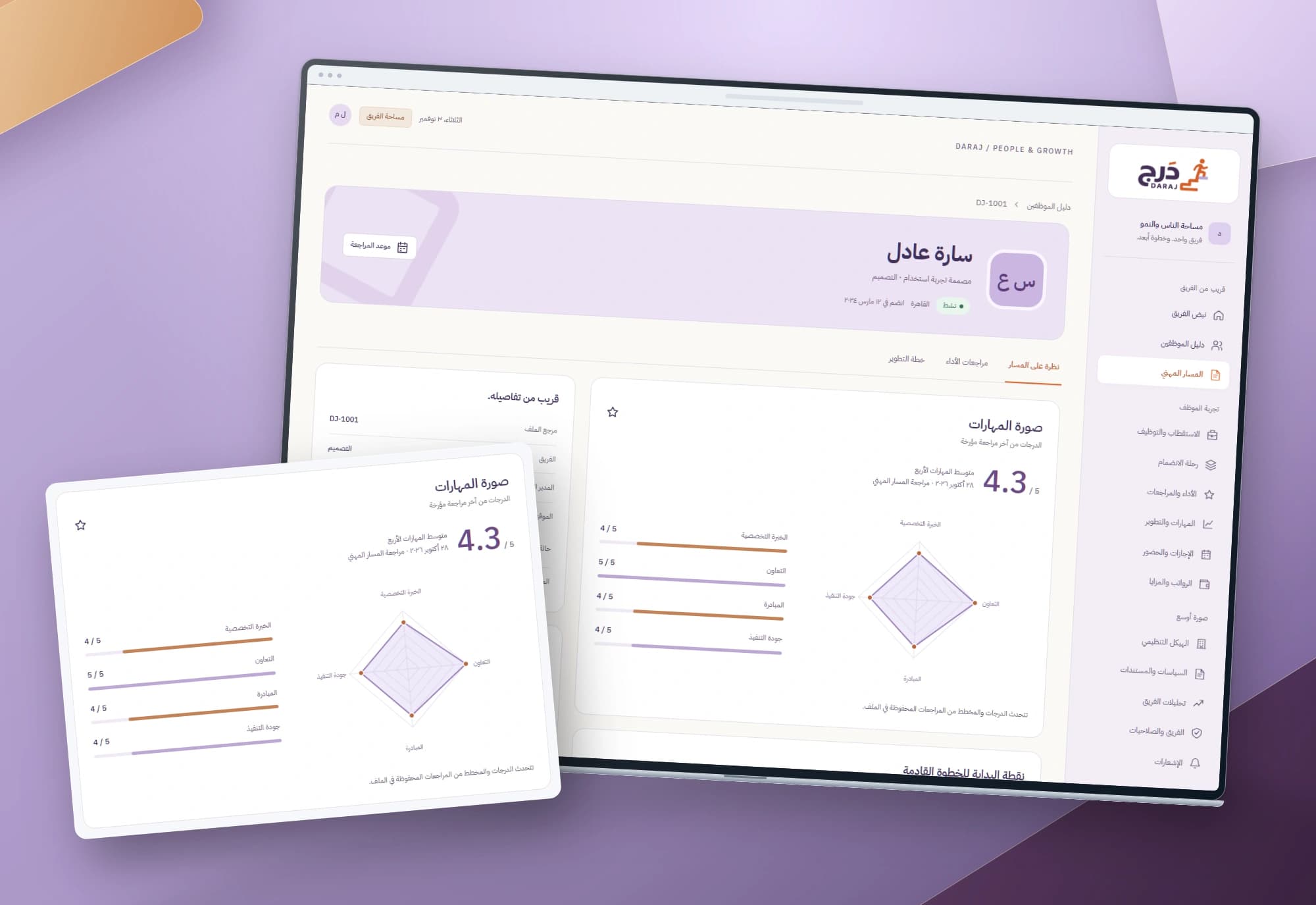
Each profile has skill, review-history and development-plan views. The latest dated review supplies the scores and chart; completed steps determine plan progress.
Traceable scores and trackable steps
A review records four skills on a one-to-five scale, a title, date and notes. Historical reviews stay available without overriding a later dated assessment. New employees begin without an assumed score.
Development steps support details, target dates and completion. Review appointments and employee state connect back to the overview and directory. Exports follow the selected results or employee.
Project images
Explore the interface and experience through the project gallery.
 1 / 3
Use case: a review meeting with context
Before a meeting, the manager opens the latest skill profile and its dated review notes. A newly recorded assessment updates the chart and average when it is the latest by review date.
An older assessment entered later remains in the history. Its entry time does not displace a newer dated review, preserving a clear chronology for future discussion.
Use case: turning feedback into a development step
Feedback such as documenting research findings becomes a named development step with details and a target date. The step stays within the employee’s plan.
Marking it complete updates the completed count and percentage. Adding a new step changes the denominator. This percentage describes the saved checklist, rather than claiming to measure the person’s productivity.
Use case: onboarding a profile and planning follow-up
A new profile records role, team, manager and joining date. It opens without an invented performance score, ready for its first assessment and initial development steps.
A follow-up review cannot precede the joining date and appears in the overview agenda. Team and state filters help prepare a follow-up list. Browser persistence retains these records on the current device.
Approachable people, clear information
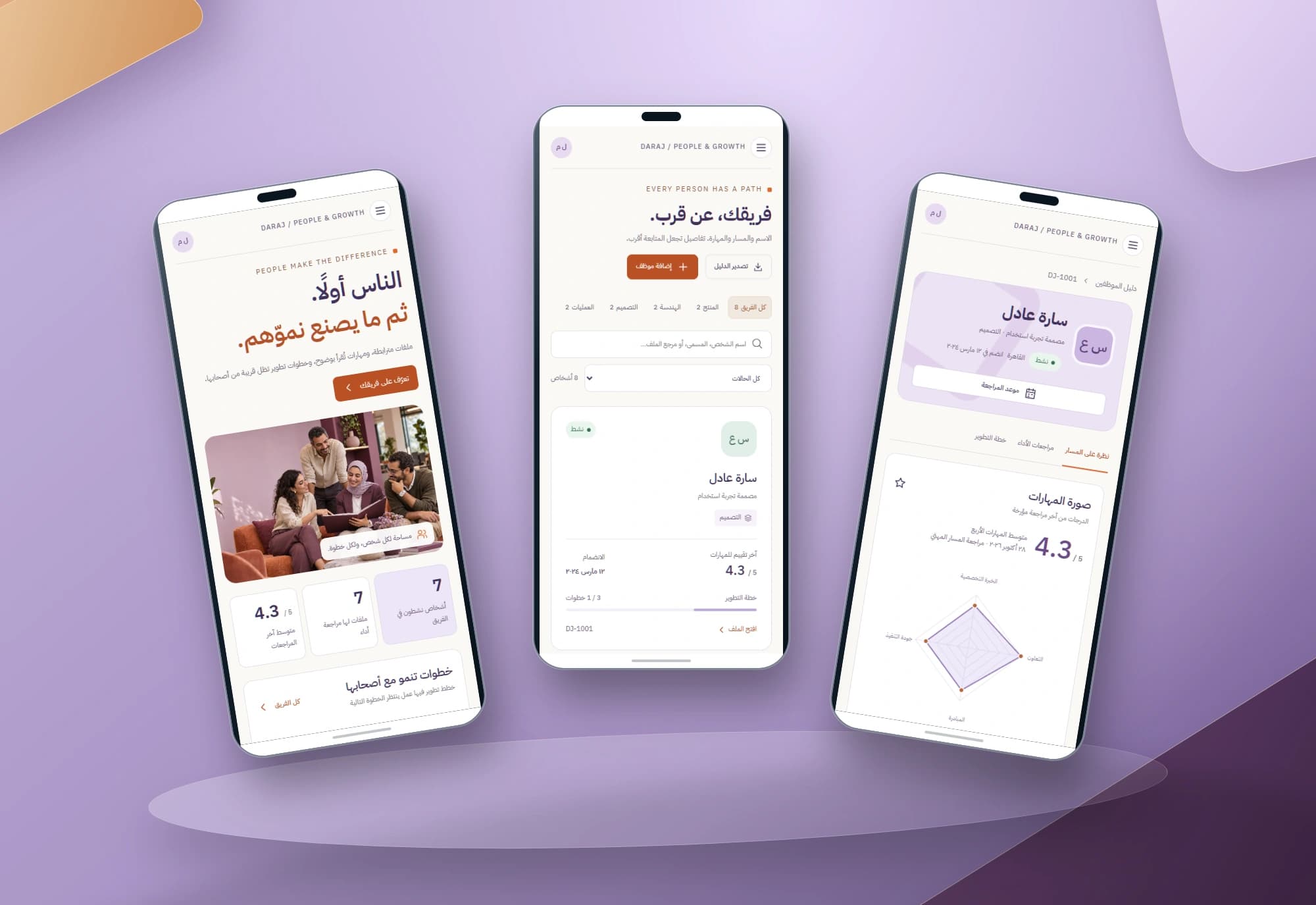
Pale surfaces, lavender and copper accents create an approachable workspace. Team imagery leads the editorial composition, while skill charts retain written scores.
Directory cards stack on mobile and profile tabs support keyboard navigation. Four mockups preserve the original screens within DARAJ’s own studio composition, with no background text.
Implemented scope
Three connected interfaces implement employee profiles, performance reviews and development plans with derived indicators and browser persistence. The navigation outlines a wider HR product. Shared data, permissions, payroll processing and HR-service integrations require a separate implementation scope.
Built with
- HTML5
- CSS3
- JavaScript
- localStorage
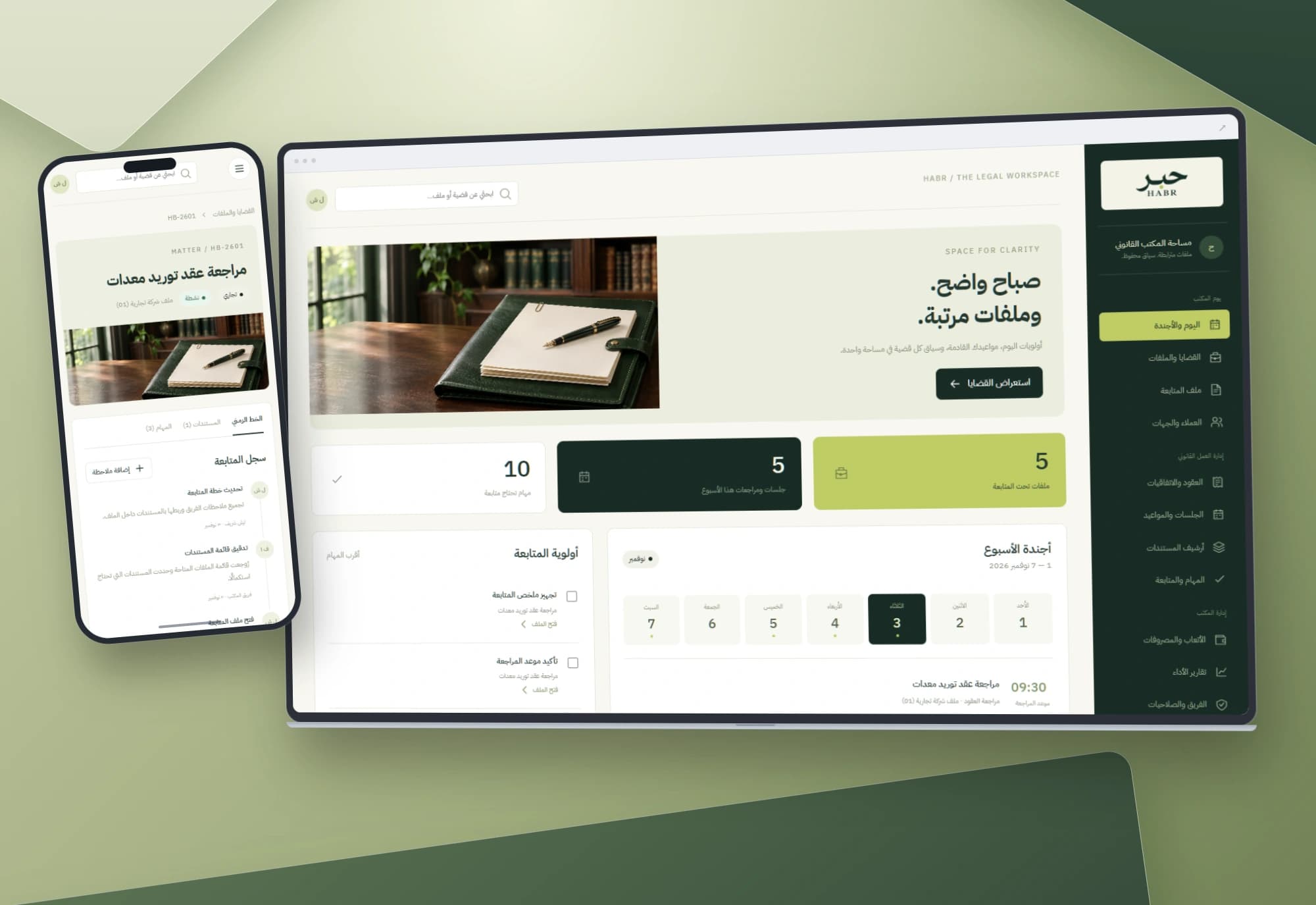
HABR — Legal matters and office workflow interface
Dates, tasks and documents belong to the same matter. An Arabic workspace connects the office agenda to case files and notes, keeping each step in context.
Explore project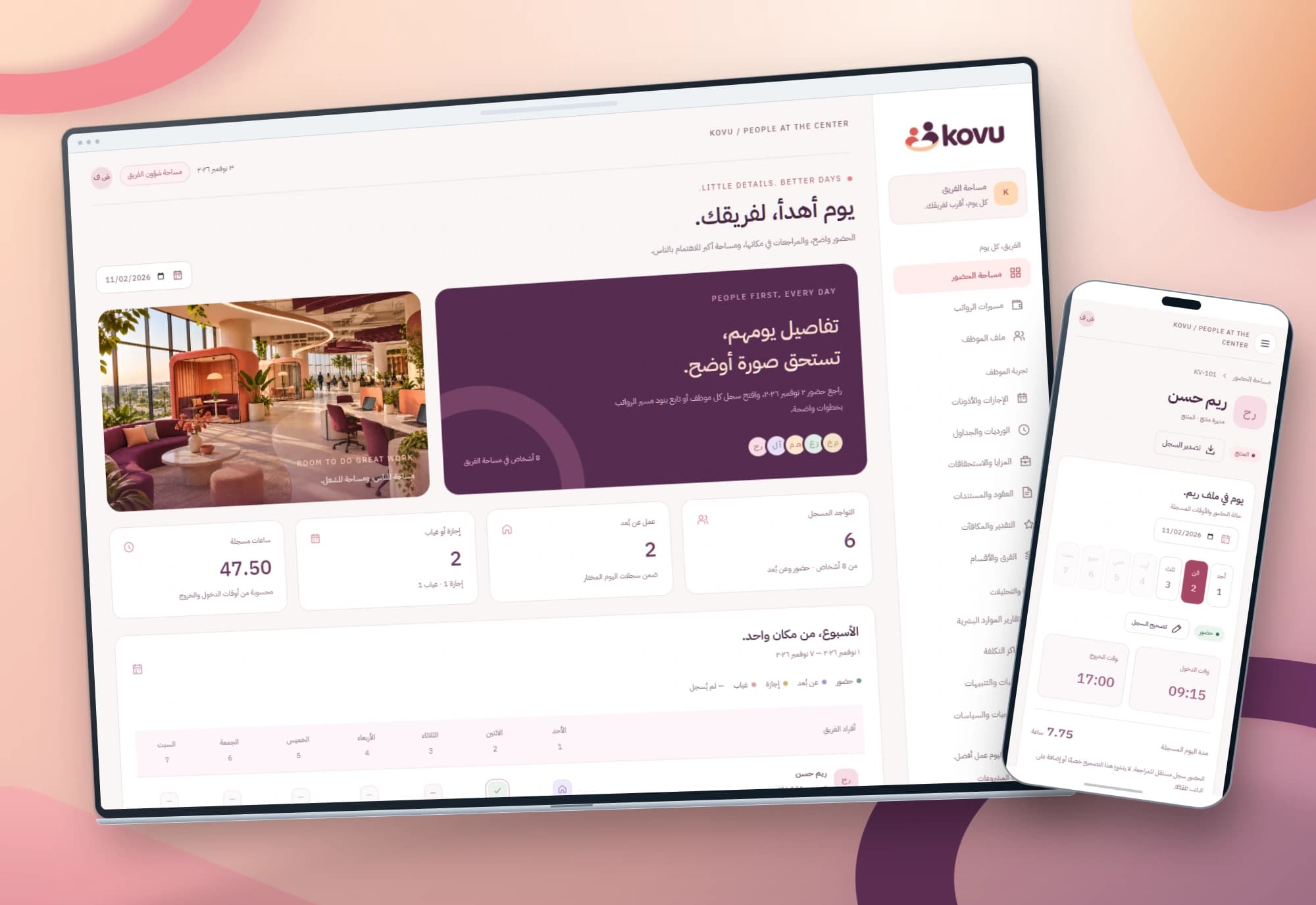
KOVU — Attendance and payroll review interfaces
Attendance needs a clear daily record; payroll needs clear line items. KOVU brings both into an Arabic people workspace while keeping recorded hours distinct from payroll amounts.
Explore projectNeed reviews that lead to clearer follow-up?
We map your review and development workflow, then define the data, permissions and services needed for your workplace.