
MIDMAK — Contractor scope, quantities and claims
Value alone does not explain completed work. MIDMAK preserves contract baselines and quantity changes, then connects each claim to measurements, two internal reviews and explicit cumulative valuation in an Arabic-first execution ledger.
Explore the project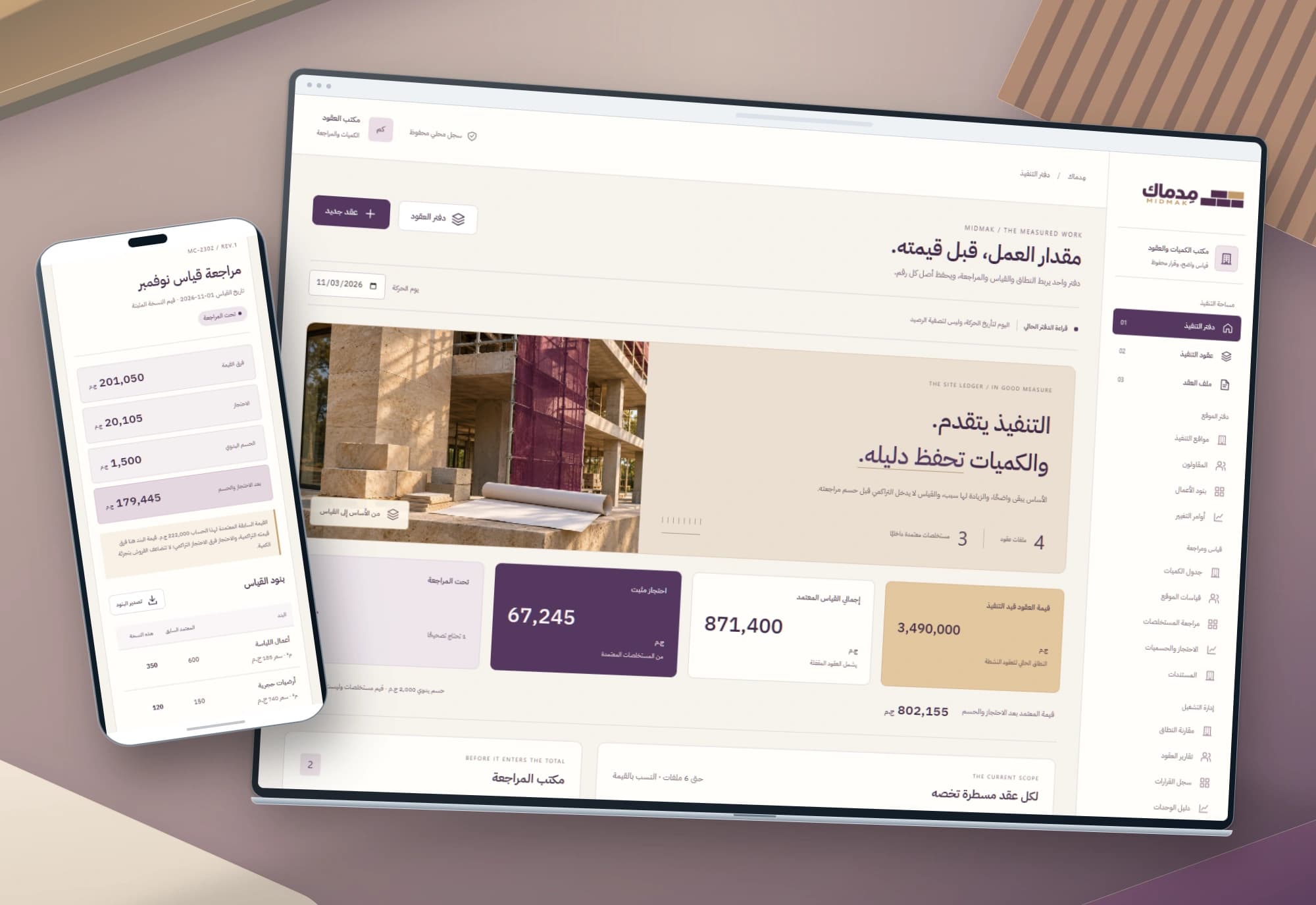 1 / 1
Project information
- Client
- An original Nextwave project
- Sector
- Construction
- Platforms
- Web
- Project type
- Business systems
Services delivered
Project overview
Between a quantity written into a contract and one measured on site sit decisions that should not disappear inside a total. Nextwave built MIDMAK around a ledger that retains the baseline, explains changes and keeps measurements out of the accepted cumulative balance until their reviews are resolved.
Site materials in the identity; measured work in the layout
Plum, sand and ivory define MIDMAK, supported by an original construction-material photograph and restrained measuring details. The visual direction gives each file character without competing with item, price and review information.
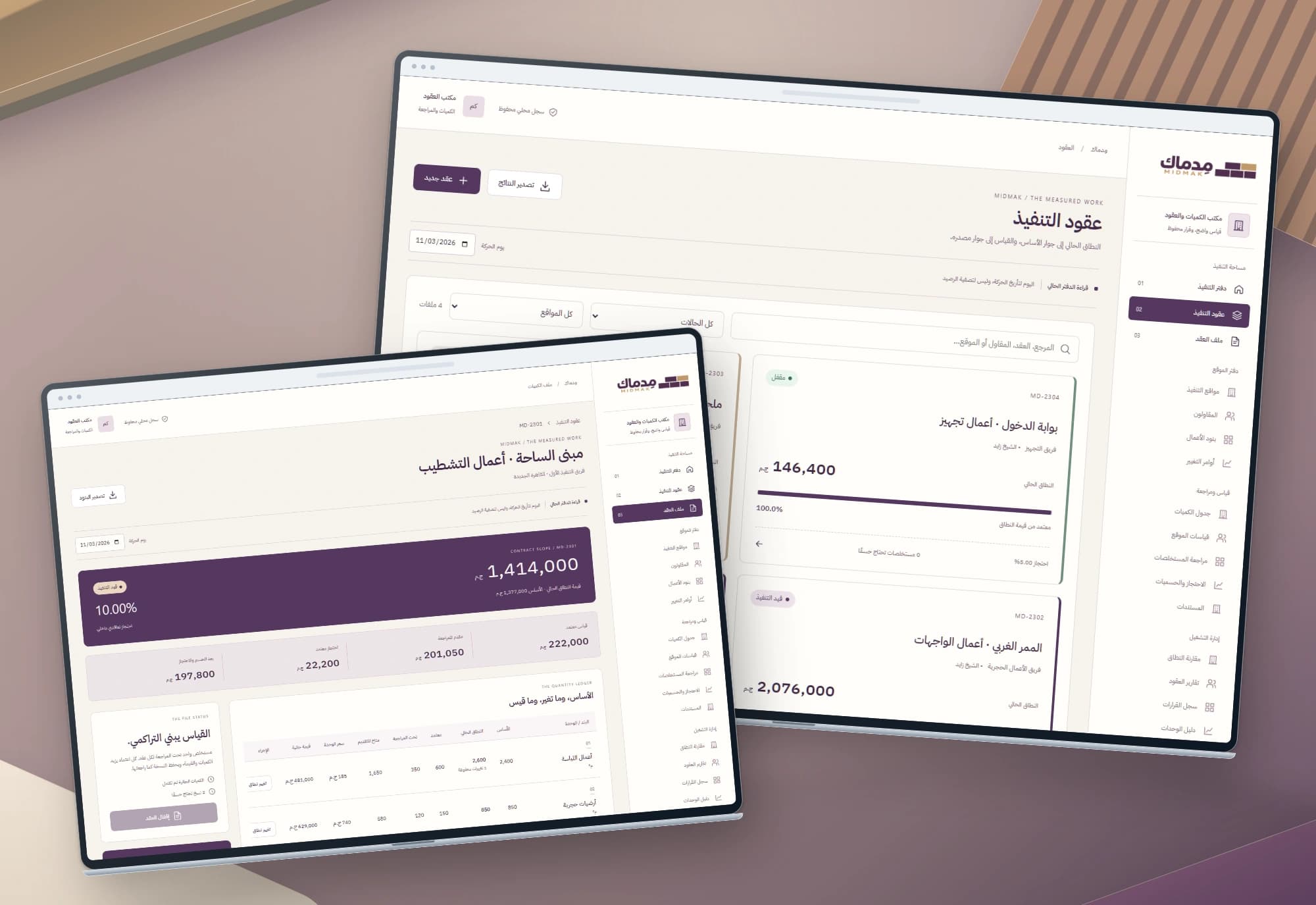
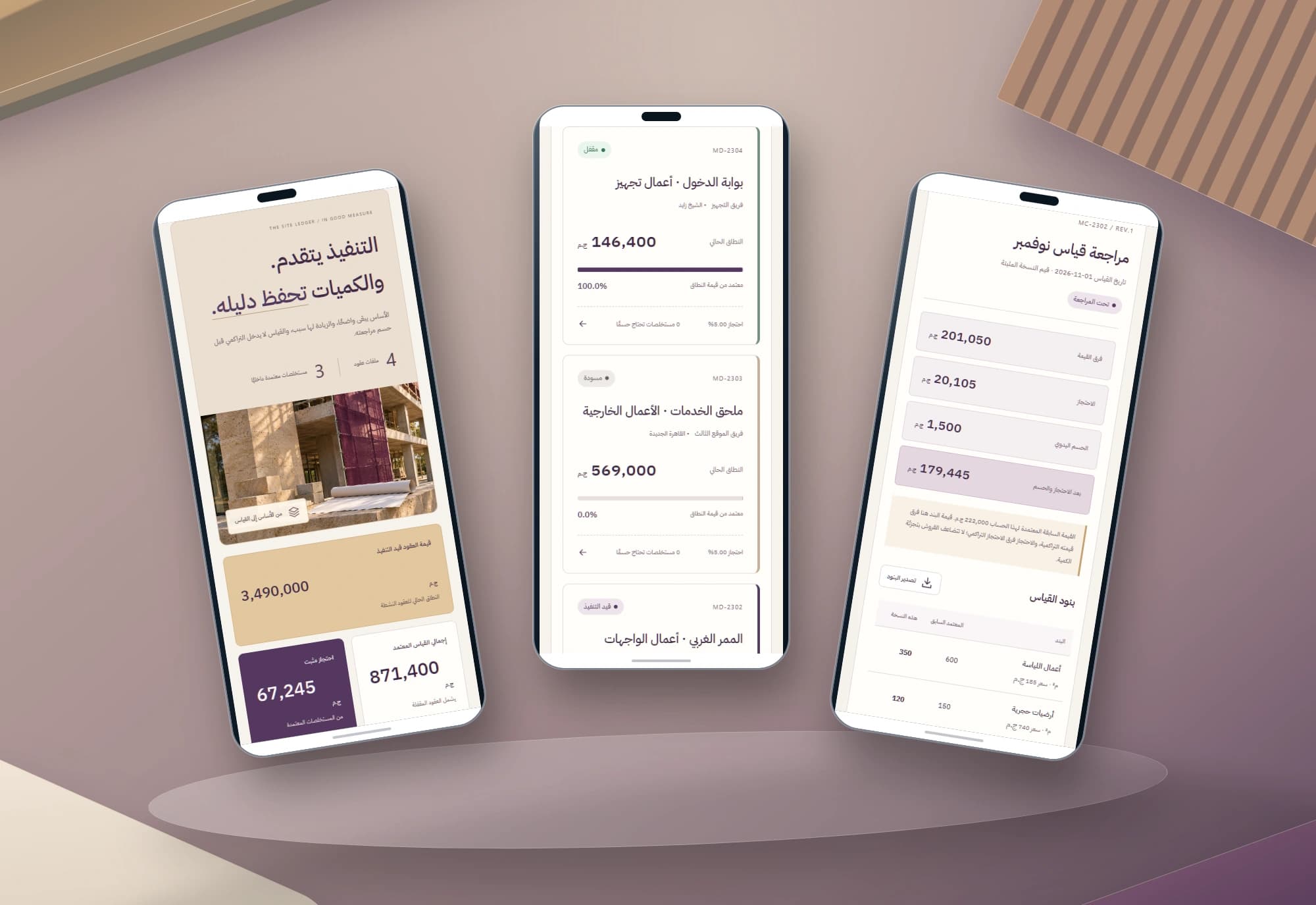
A broad sidebar identifies three connected working destinations. On small screens, claim value, retention and deduction stack vertically, while quantity tables scroll within their own space. Long party and site names and large values remain contained and readable.
Project images
Explore the interface and experience through the project gallery.
 1 / 3
A useful figure has a visible origin
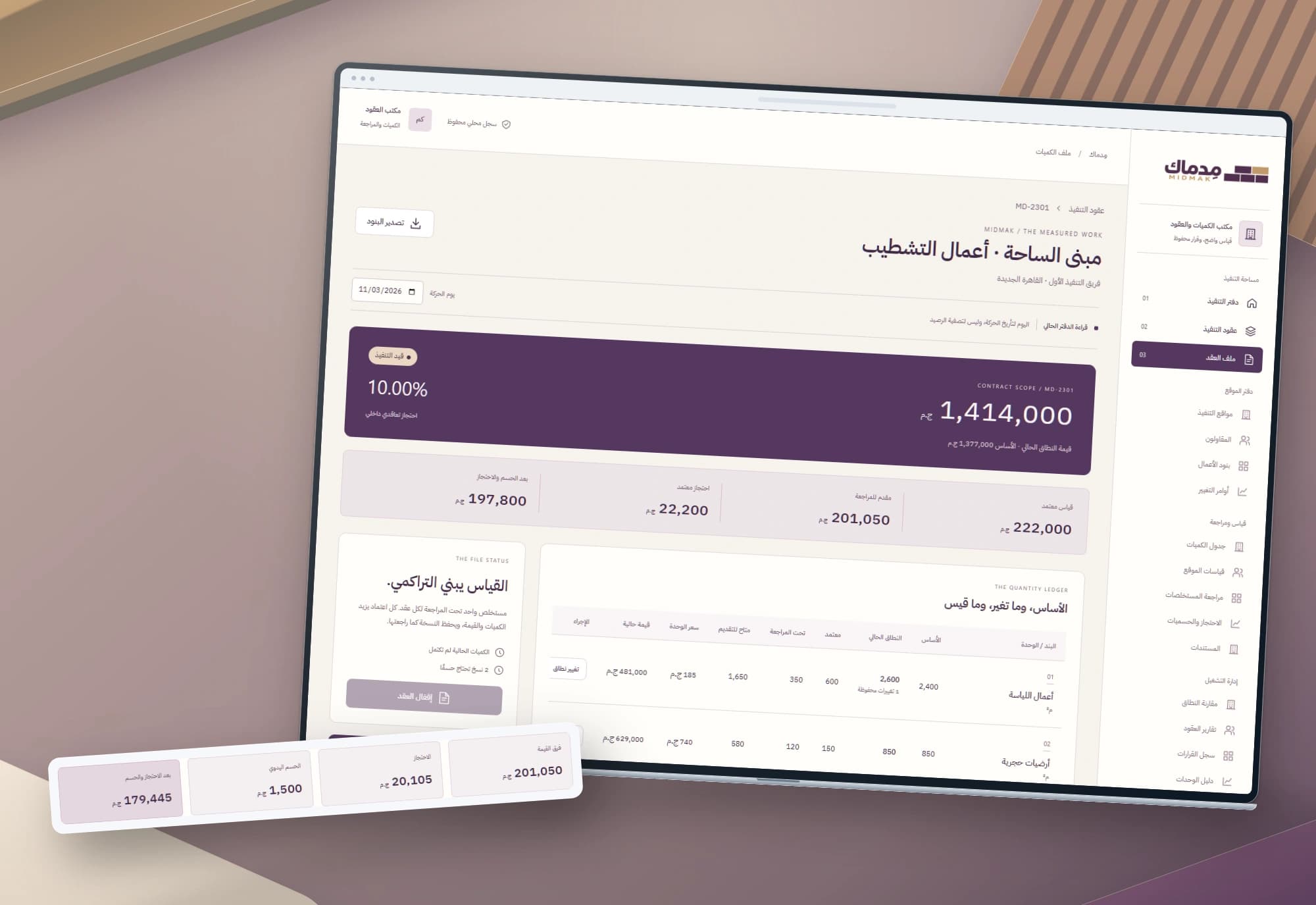
Changing an item quantity is more than replacing one number with another. It has a baseline, previous quantity, difference, reason and recorded day. A claim is not isolated from earlier documents either: its value depends on accepted measurements, retention and the deduction in that revision.
The workspace therefore separates an overview, contract register and a contract file retaining its items, claim revisions and decisions. Progress is value-based; unlike units are not added into a false quantity percentage, and zero-value scope is not given an invented progress ratio.
Use case 1: Fix the baseline and explain scope amendments
The user records the contractor, site, period and an internal retention percentage, then adds items with units, quantities and prices. While the contract is a draft, these can be reviewed, edited or removed with a reason.
Activation fixes prices, units, baseline quantities, period and retention. Later changes record a reasoned current quantity while preserving the baseline, before and after amounts, difference and operation day.
A reduction cannot go below accepted quantities or quantities submitted for review. Changing scope therefore cannot erase work already accepted or reserved in an outstanding claim.
Use case 2: Partial measurement without accumulating rounding drift
The user creates a draft claim, records measured quantities and enters a manual deduction. Drafts do not reserve scope, and several may compete for the same remainder. Submission checks it again and permits only one claim under review per contract.
Each line value is the difference between the newly measured cumulative quantity value and its previously accepted value. Retention is also a cumulative difference. Splitting a fractional unit into small measurements therefore does not accumulate independent rounding errors.
Submission fixes its baseline, quantities, prices, gross difference, retention, deduction and net value. The deduction cannot exceed the value remaining after retention, and the saved valuation is not retrospectively recomputed when later claims are accepted.
Use case 3: Two reviews and a revision that keeps its predecessor
A submitted claim has separate site and quantity reviews, each with a manual note. Acceptance requires both and a decision note. Withdrawing a review requires a reason, retains its former note and returns acceptance to a waiting state.
Rejection releases the claim's reservation without deleting its submission snapshot or decision. A corrected revision archives the previous measurements, values, reviews and decision, then starts with fresh reviews and a baseline derived from current accepted work. An accepted claim remains locked against editing or cancellation.
Contract closure requires all current quantities to be accepted and every outstanding document resolved, with a recorded reason. An operation day cannot precede the file's last event. Reading an earlier day does not rewrite history or turn overview balances into an as-of financial statement.
A ledger that remains reviewable at the input boundaries
Quantities use integer thousandths and prices use cents, with cumulative rounding handled before display. The register supports search, site and status filters, and complete exports of matching contracts, items, claim lines and event history, even when the view is paginated.
Checks covered long names and notes, large values, rejection and revision, deductions and acceptance, and failed storage. Candidate changes are validated before replacing state; an inconsistent saved source is protected until explicit backup-first recovery.
Delivered scope and the meaning of approval
MIDMAK is an original Nextwave project with three working interface pages, calculations and browser-local persistence. Its reviews and acceptance are internal manual decisions, not external owner or engineer signatures or connected legal approvals.
Retention is an internal user-selected rate rather than a recommended legal or tax rule. Claim amounts are not bank transfers or verified payments. Accounting integration, retention release payments and a shared server are outside this delivery. The study describes implemented behavior without attributing contracts or undocumented commercial outcomes to a client.
Built with
- HTML5
- CSS3
- JavaScript
- localStorage
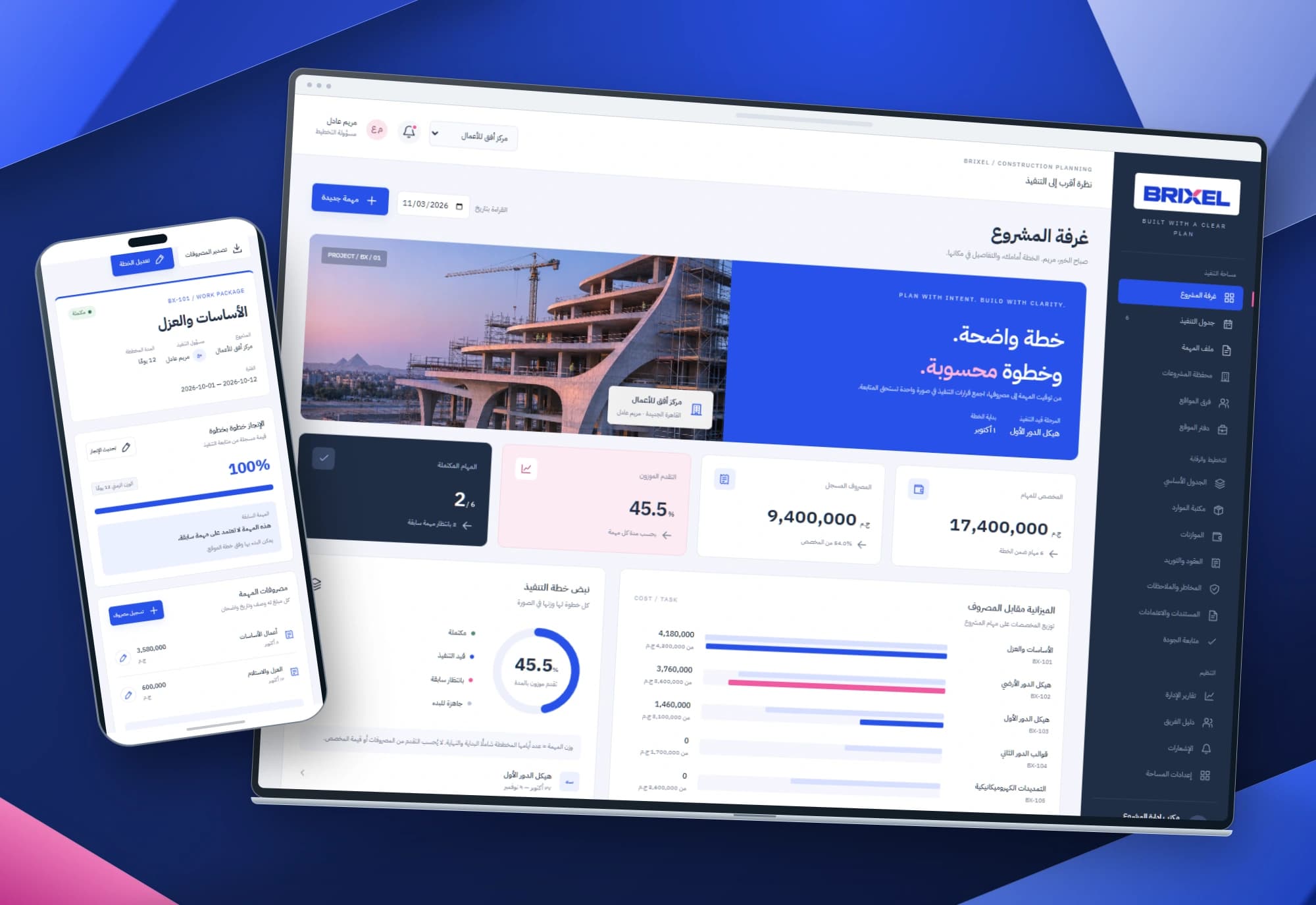
BRIXEL — Construction planning and cost tracking interfaces
A task may be complete while its costs still need review, or due soon while waiting on earlier work. BRIXEL brings timing, dependencies, progress and expenditure into one Arabic planning workspace.
Explore project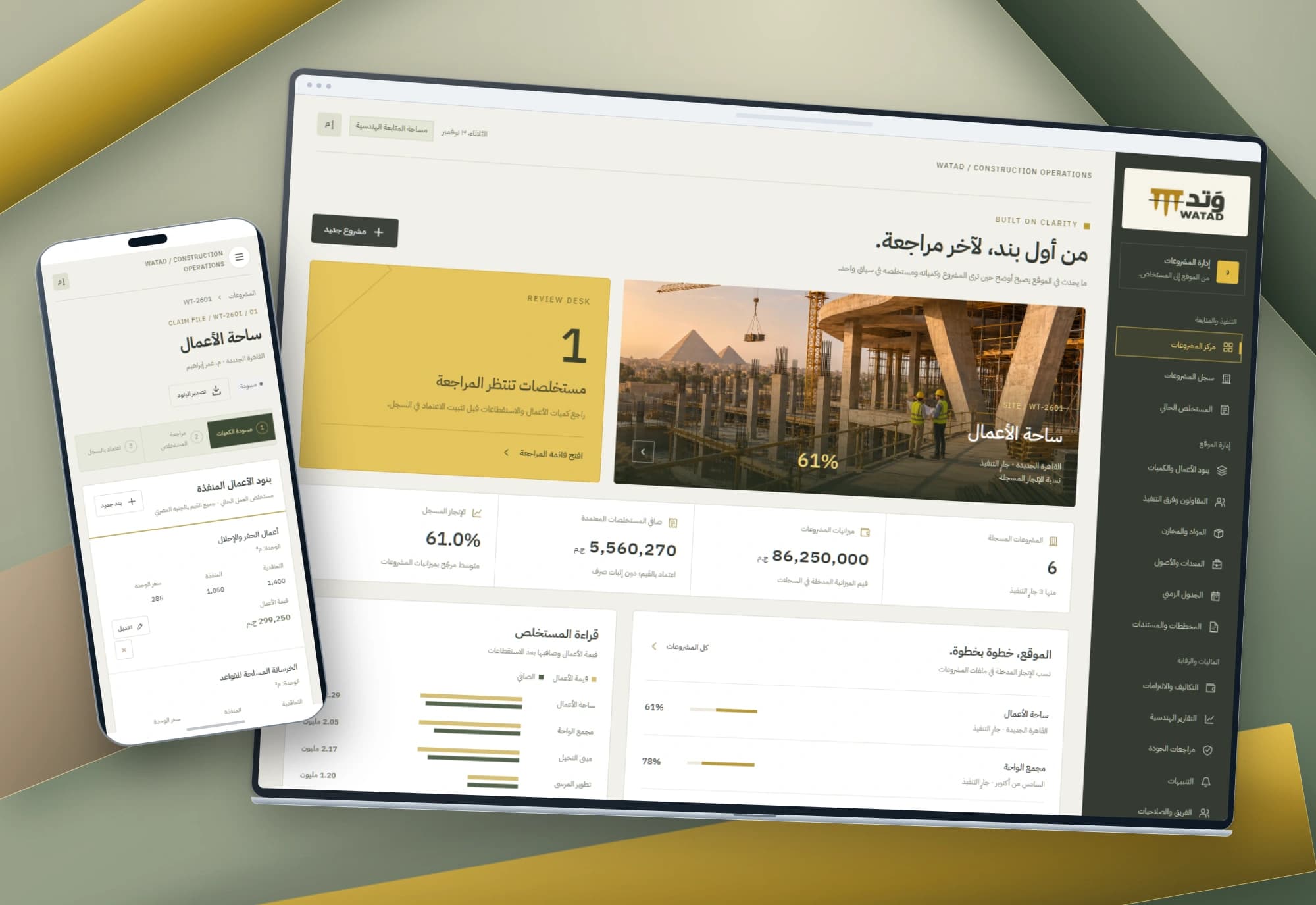
WATAD — Construction project and work claim interfaces
Every work claim starts with a line item, quantity and rate. WATAD connects project records to executed work, deductions and net value, with a clear review workflow.
Explore projectKeep each quantity close to its decision
Tell us how you measure work and review claims. We can define the screens, scope-change rules, review flow and integrations your delivery requires.