
KNOT — Supplier agreements and commitment interfaces
An agreement is easier to follow when its commitments, dates and supplier stay connected. KNOT turns that context into an Arabic agreement desk, with a record of each obligation and the reasons behind its changes.
Explore the project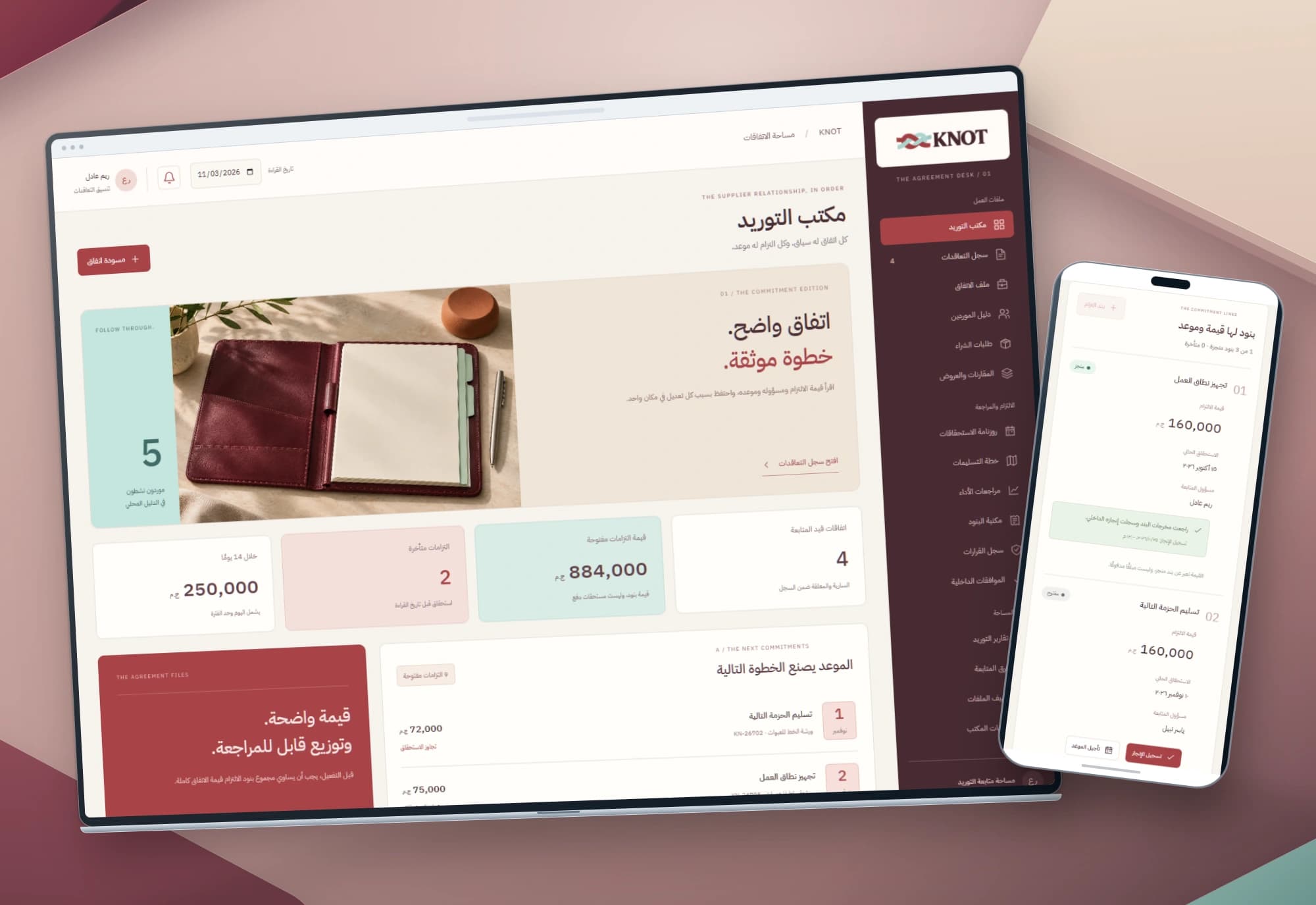 1 / 1
Project information
- Client
- An original Nextwave project
- Sector
- Professional services
- Platforms
- Web
- Project type
- Business systems
Services delivered
Project overview
An agreement’s value may be clear while its delivery details are scattered across notes, people and dates. Nextwave built KNOT around a record that connects the supplier, scope, value and obligations that explain how the work is followed.
Every commitment needs a value, a date and an owner
Day-to-day follow-up needs to show what is due, what is late and which dates have changed. The team also needs to distinguish a draft from an active agreement, and an obligation’s internal completion from its monetary value.
The records connect those details. Suppliers have a directory status; agreements have dates and a value; each obligation has a description, value, owner and due date. Written decisions remain attached when work is paused, deferred or closed.
A due-date desk, a supplier register and a detailed file
The supplier desk shows active and paused agreements, open commitment value, overdue items and the inclusive next 14-day window. Each due item leads to its agreement so the date can be read in context.
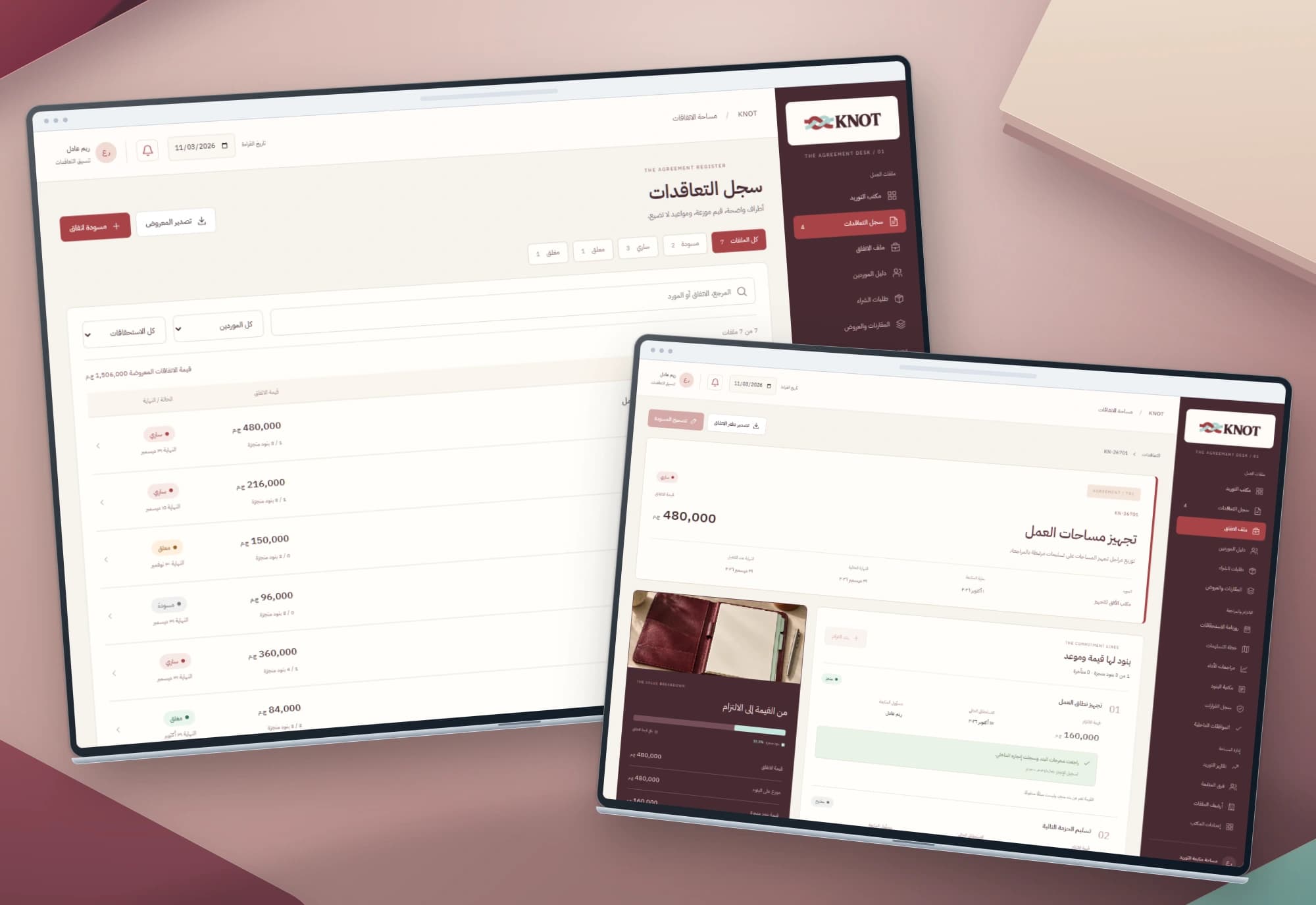
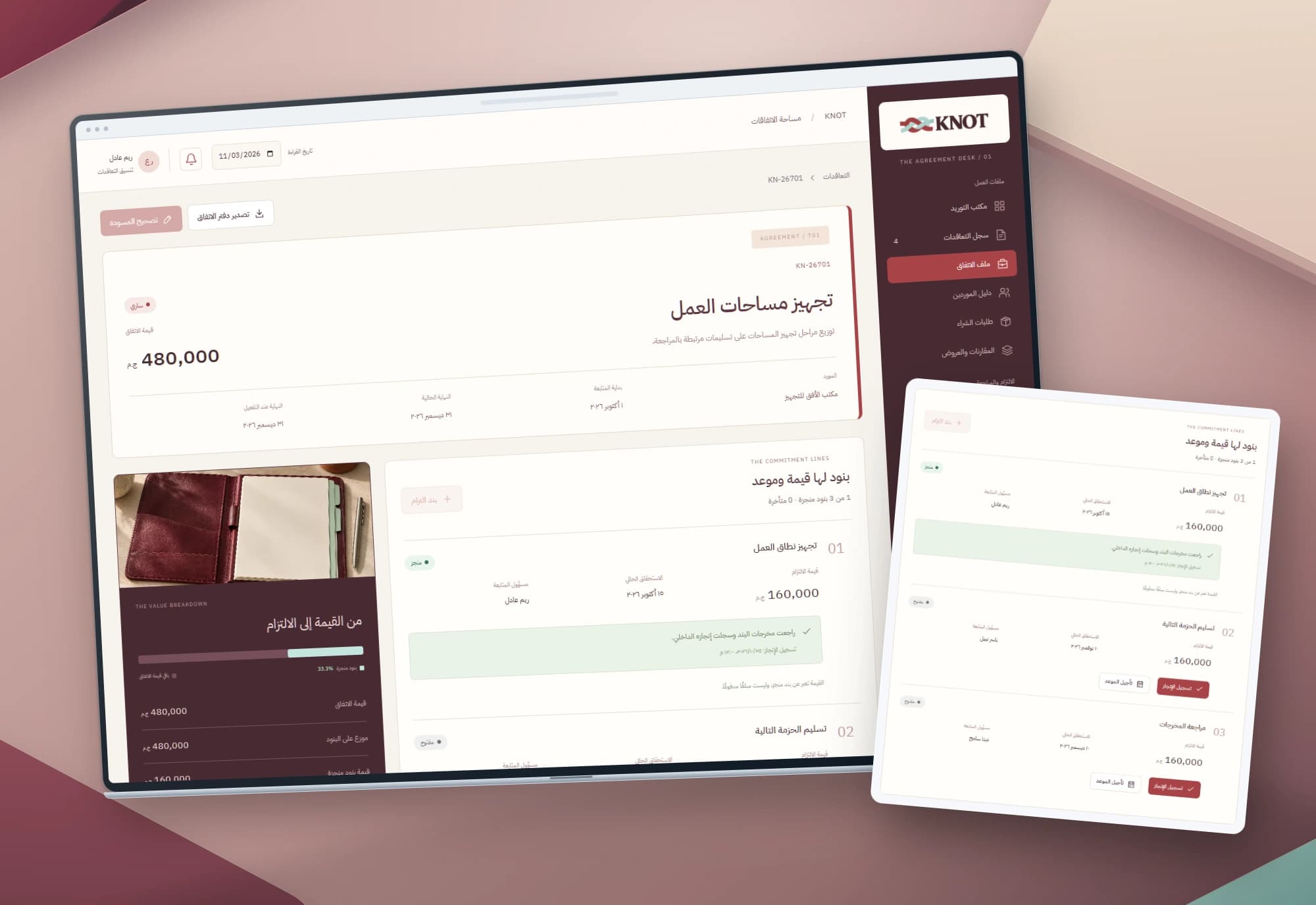
The register combines search and status, supplier and overdue filters with the supplier directory. The agreement page explains allocated and completed commitment values beside original/current dates and the decision trail. Amounts use exact integer cents, with Arabic and Latin decimal input.
Project images
Explore the interface and experience through the project gallery.
 1 / 3
Use case: prepare an agreement before activating follow-up
A coordinator opens a draft with a unique reference, supplier, scope, value and period. The value is divided into obligations, each with an owner and a due date within that period. Draft obligations can be corrected or removed with a reason.
KNOT prevents over-allocation and requires the obligation total to equal the agreement value before activation. The supplier must also be active. Once follow-up starts, the agreement’s base fields and obligation values lock, giving subsequent decisions a clear baseline.
Use case: defer a commitment while preserving its original date
When a pending obligation needs more time, the owner chooses a strictly later date and records a reason. The date must remain inside the agreement’s current end. A separate reasoned end amendment can extend that window while protecting every existing due date.
The file keeps the obligation’s original date, its sequence of deferrals and the agreement’s activated end baseline. Paused follow-up retains its due and overdue items while completion and deferral wait for a reasoned resume. The starting point remains visible alongside the changed plan.
Use case: record completed commitments and close the file
An owner records internal completion with a note explaining the review. Completed obligation values are shown together and remain explicitly labeled as commitment value. Completion does not create a payment entry or transfer.
Closure requires every obligation to be completed, the agreement to be active and a closing note. The file then becomes read-only while remaining available for export. Inactivating a supplier prevents new agreement activation without retroactively changing existing agreements or commitments.
A digital folio with room for dates and decisions
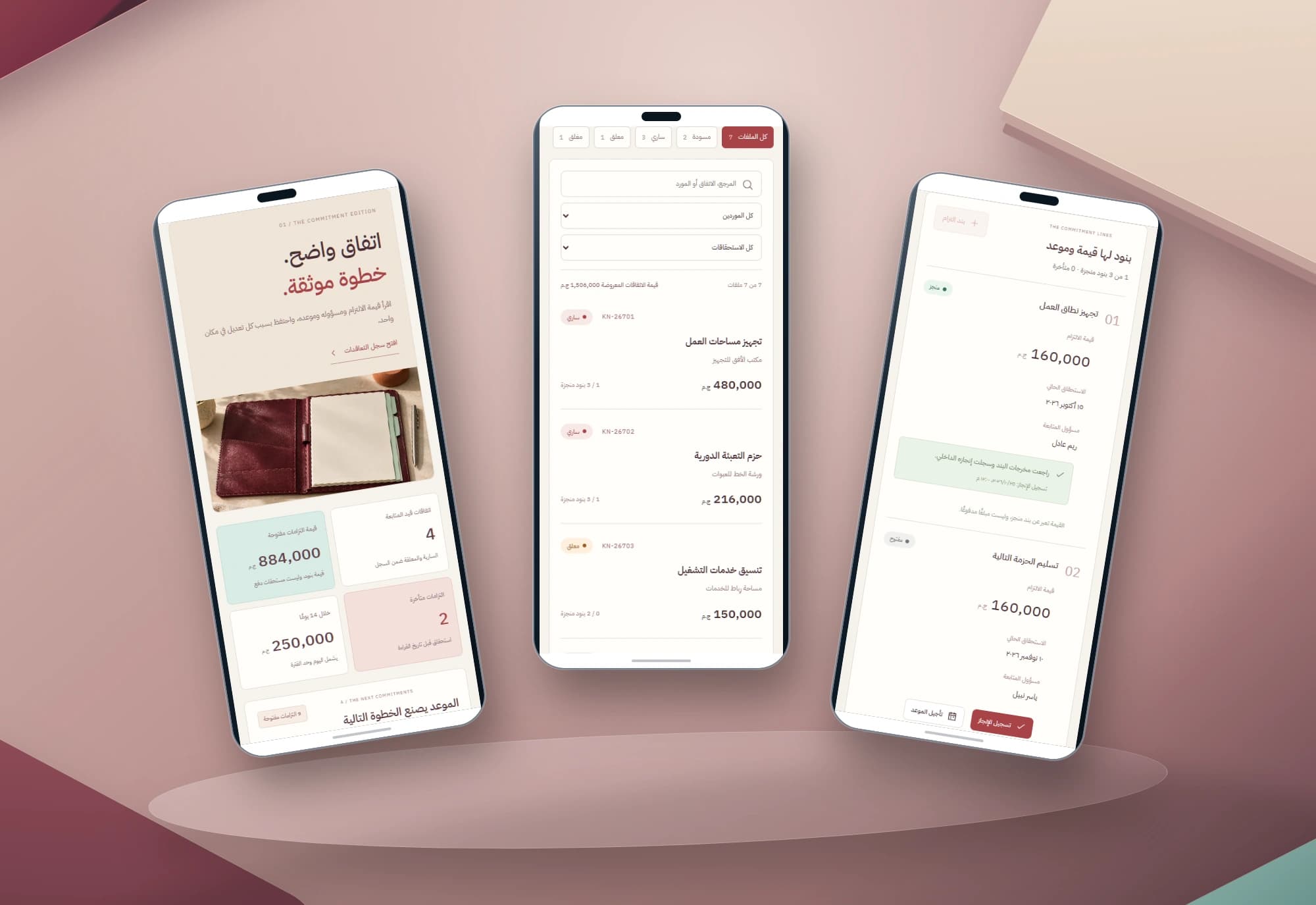
The composition borrows from an orderly agreement folio: burgundy for actions, plum for value context and mint for supporting surfaces. Numbered clauses and a clear numerical hierarchy connect the agreement total to individual obligations.
The folio and blank-paper image is a generated editorial asset, with no signature, seal or customer document. Four mockups place original screenshots in brand-specific device and paper compositions, preserving Arabic lettering inside the interface.
Implemented scope
The scope comprises three responsive Arabic HTML, CSS and JavaScript interfaces with browser-local persistence, search, filters and agreement/register exports. Review covers exact cents, date protection, save failures, empty states, long content and keyboard use. Three menu destinations work here; the other labels describe a wider module vision.
Shared accounts, permissions, document uploads, e-signatures, accounting, payment execution and procurement integrations require further implementation. This study describes the working follow-up tools without attributing executed legal agreements or procurement outcomes to a customer.
Built with
- HTML5
- CSS3
- JavaScript
- localStorage
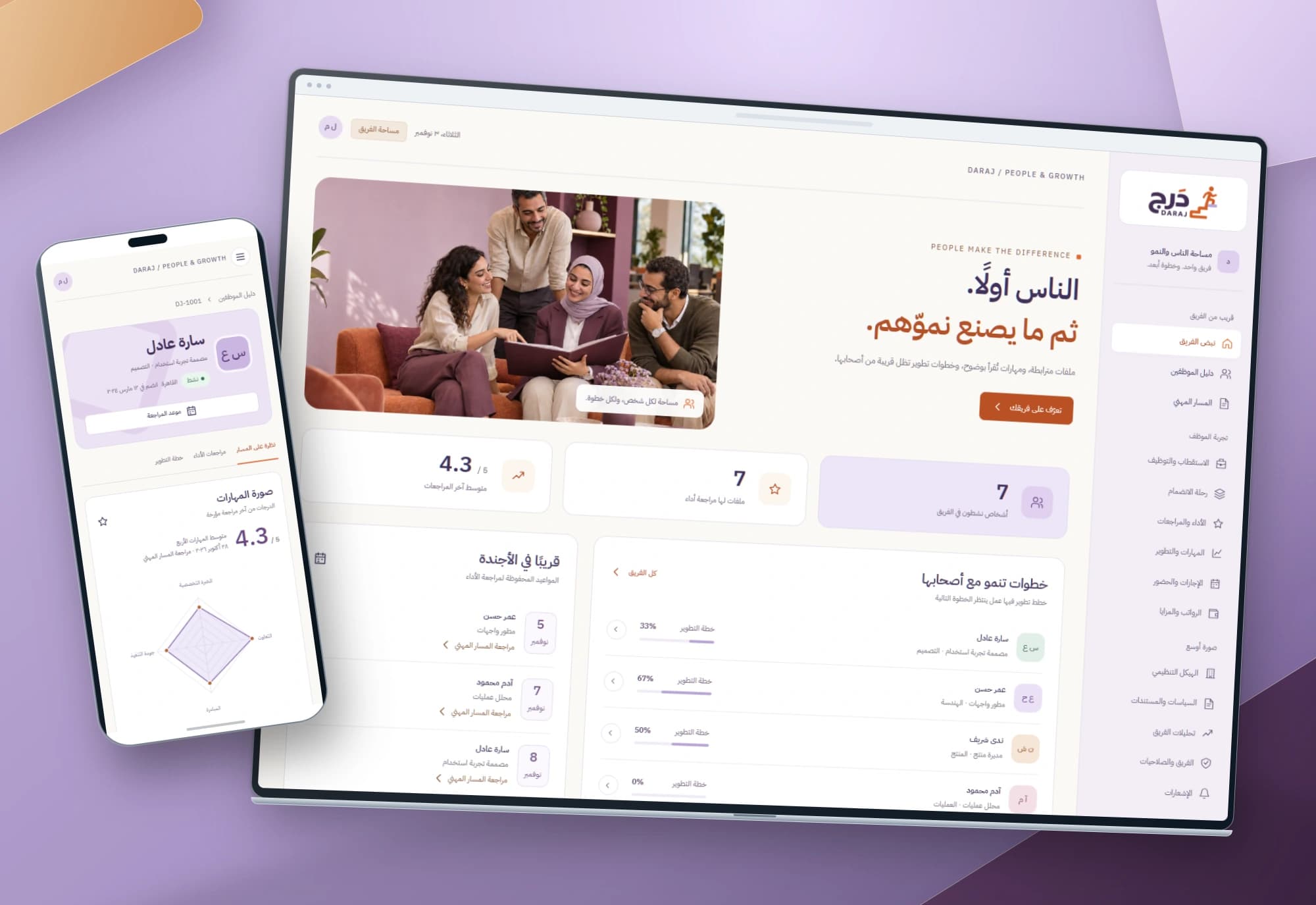
DARAJ — Employee performance and development interfaces
Performance reviews begin with people and lead to clear next steps. DARAJ connects an employee directory with individual skills, dated reviews and a development plan.
Explore project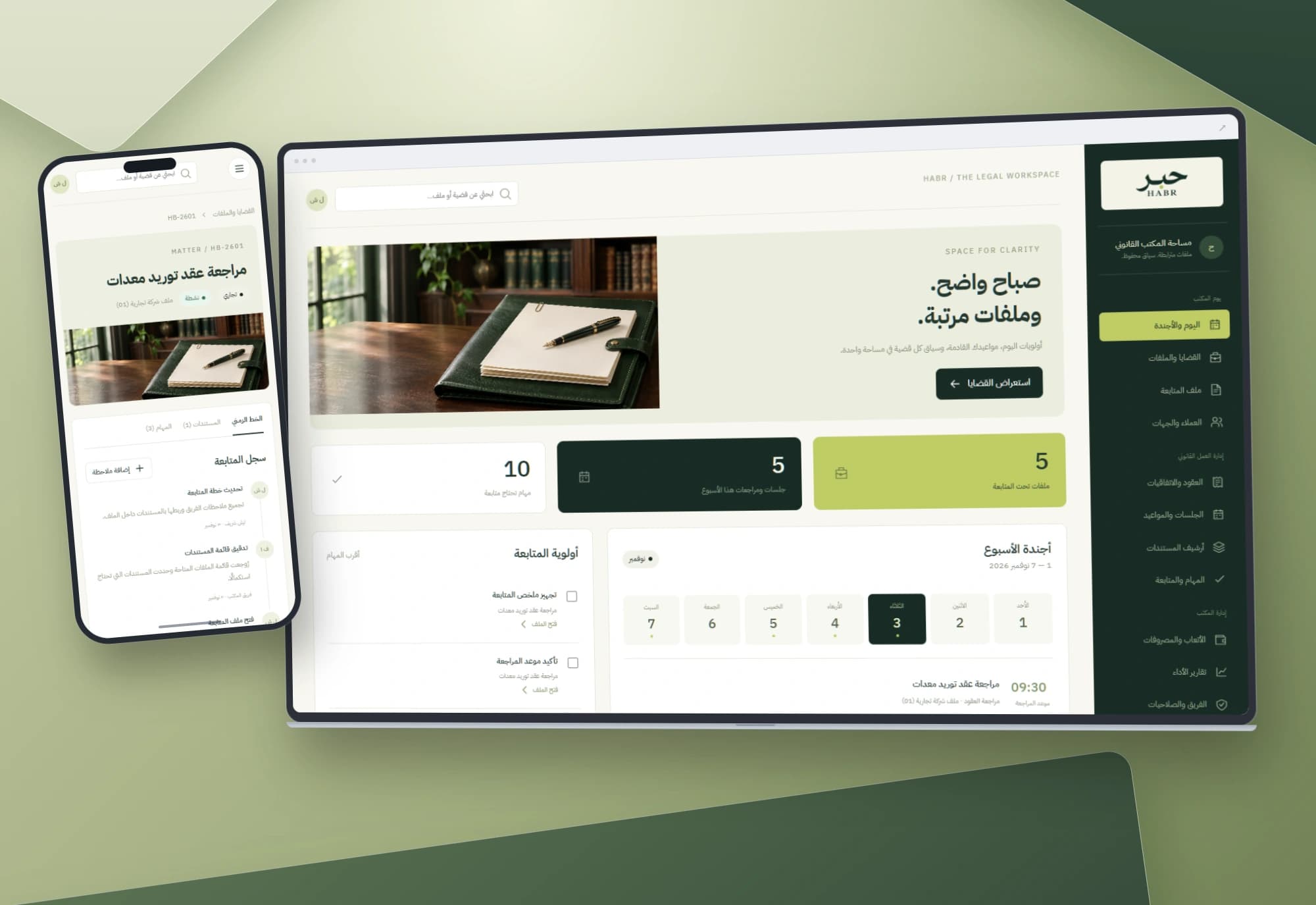
HABR — Legal matters and office workflow interface
Dates, tasks and documents belong to the same matter. An Arabic workspace connects the office agenda to case files and notes, keeping each step in context.
Explore projectWhere do your agreement details get scattered?
We start with your suppliers, commitments and review process, then define the records, roles and integrations your agreement follow-up needs.