
SIRB — Fleet dispatch and trip management interfaces
Every trip has a driver, vehicle, load and schedule. SIRB connects these details in an Arabic dispatch workspace, from the trip register to each journey’s operating record.
Explore the project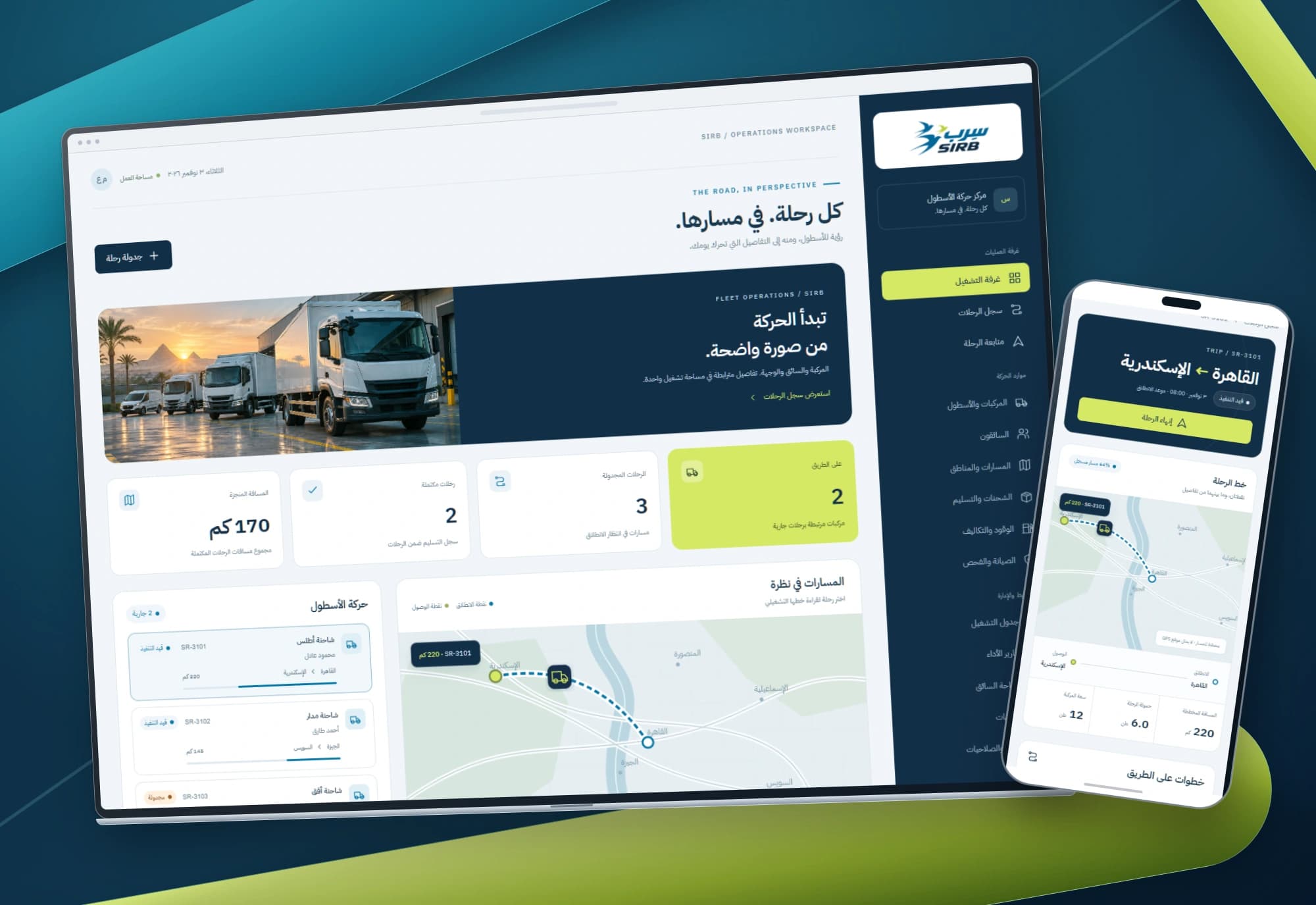 1 / 1
Project information
- Client
- An original Nextwave project
- Sector
- Transport & logistics
- Platforms
- Web
- Project type
- Business systems
Services delivered
Project overview
Choosing a vehicle becomes more involved when a delivery time, load limit and driver already on the road enter the picture. SIRB starts with that everyday dispatch decision: what should the coordinator see before assigning resources and recording departure?
Departure needs the whole picture
A suitable route does not guarantee sufficient vehicle capacity or an available driver. Separate lists make it harder to know which record needs updating first.
The trip reference becomes the connecting point for destination, schedule, load, resources and execution state. The layout places decision context before the action.
From dispatch overview to trip record
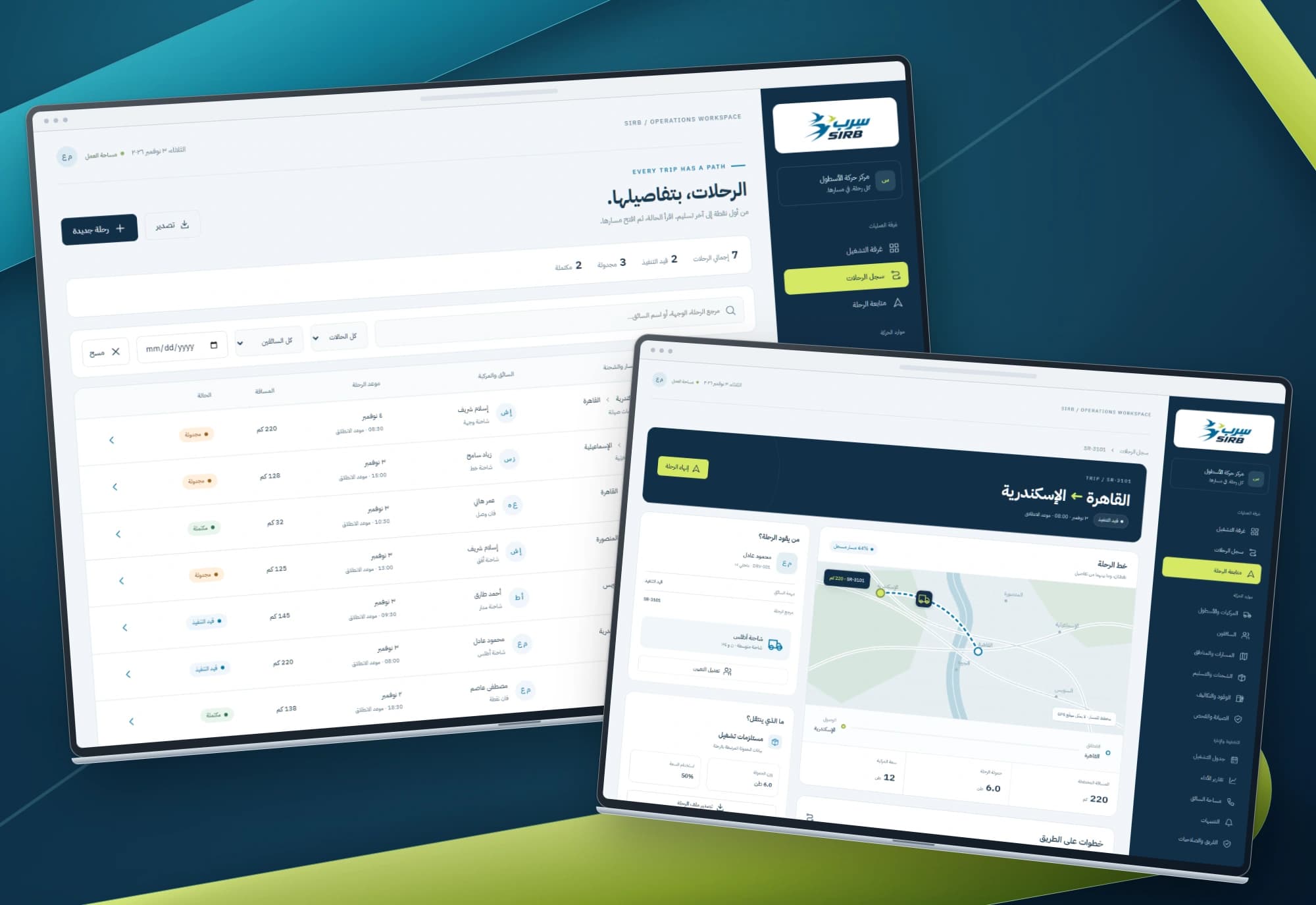
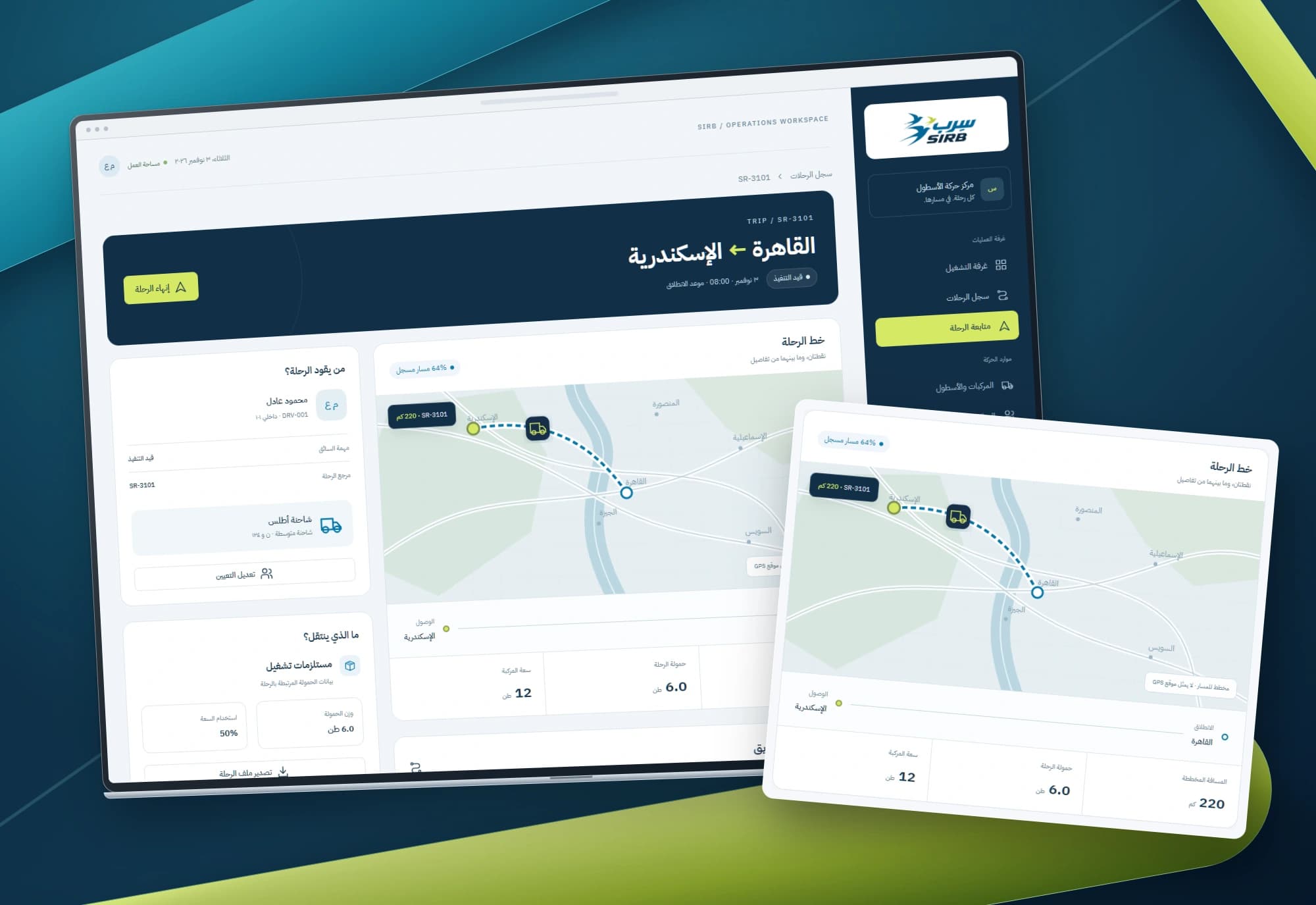
Three pages organise dispatch indicators, a searchable trip register and an individual journey record. The record keeps assigned resources, load information, events and operating notes together.
Selecting a trip updates its route schematic and detail link. Active and completed trip counts, and recorded distance for completed trips, follow the saved trip states.
Clear rules before recording movement
Scheduling validates trip fields and load against vehicle capacity. Starting a journey checks that its driver and vehicle are not already assigned to another active trip. Resource changes remain traceable in the journey’s event record.
Operating notes, filtered register exports and individual trip exports support review. Notes retain their literal text, and storage errors are shown before a change is committed.
Project images
Explore the interface and experience through the project gallery.
 1 / 3
Use case: preparing a scheduled departure
The coordinator enters the route, resources, departure schedule, planned distance and load. An overweight load keeps the form open with an explanation, allowing correction before the journey is saved.
The saved trip opens as scheduled. At departure, availability is checked again: a resource that was available during planning may have started another journey in the meantime.
Use case: changing the assigned resources
A coordinator can inspect load and capacity before changing a trip’s driver or vehicle. Alternative resources are checked and the saved change adds a traceable event.
The reference, destination and notes remain in the same record. Completed trips prevent resource reassignment, preserving the context of the finished journey.
Use case: handing over dispatch follow-up
An operating note can preserve delivery-gate details alongside the trip’s events and assigned resources. A later reviewer can read the current state and its context in one place.
Completing the trip records the event and releases its resources in the overview. Completed journeys can then be filtered and exported. These are interface-level record workflows; shared team synchronisation needs a dedicated backend.
A visual language shaped by movement
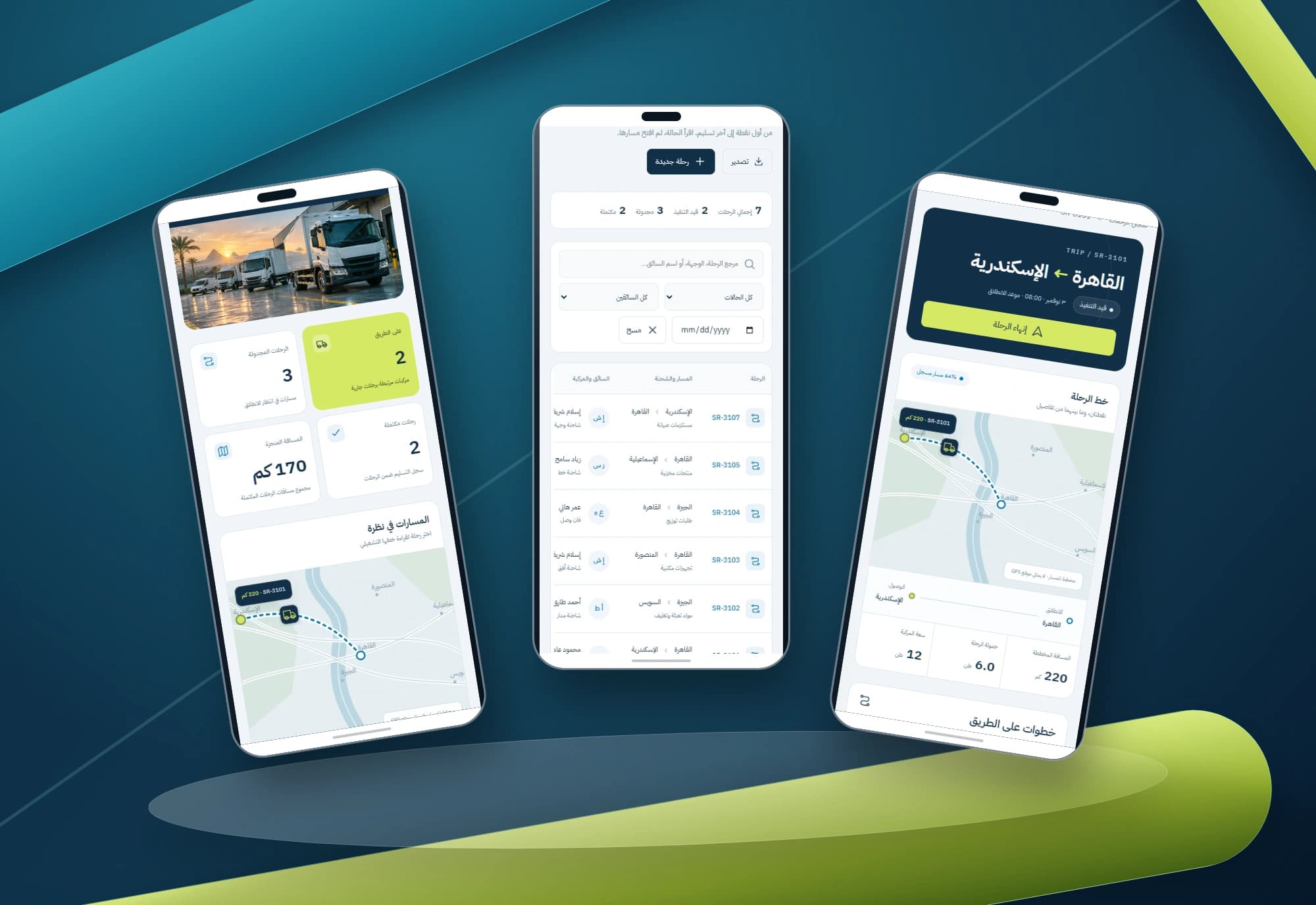
Navy establishes a steady operations workspace; citron marks selected states and key actions. Fleet imagery and a route schematic give the data a visual context.
Mobile layouts stack indicators and trip details vertically. Four authored mockups use the original screens against brand-specific studio backgrounds, with no text outside the interfaces.
Implemented scope
The delivered work comprises three connected interfaces with browser persistence, capacity and resource checks, state transitions and exports. The route drawing is a schematic. Live location feeds, a driver app and shared multi-user operation need separate implementation. The sidebar outlines broader fleet modules; the three pages define the implemented interactive scope.
Built with
- HTML5
- CSS3
- JavaScript
- localStorage
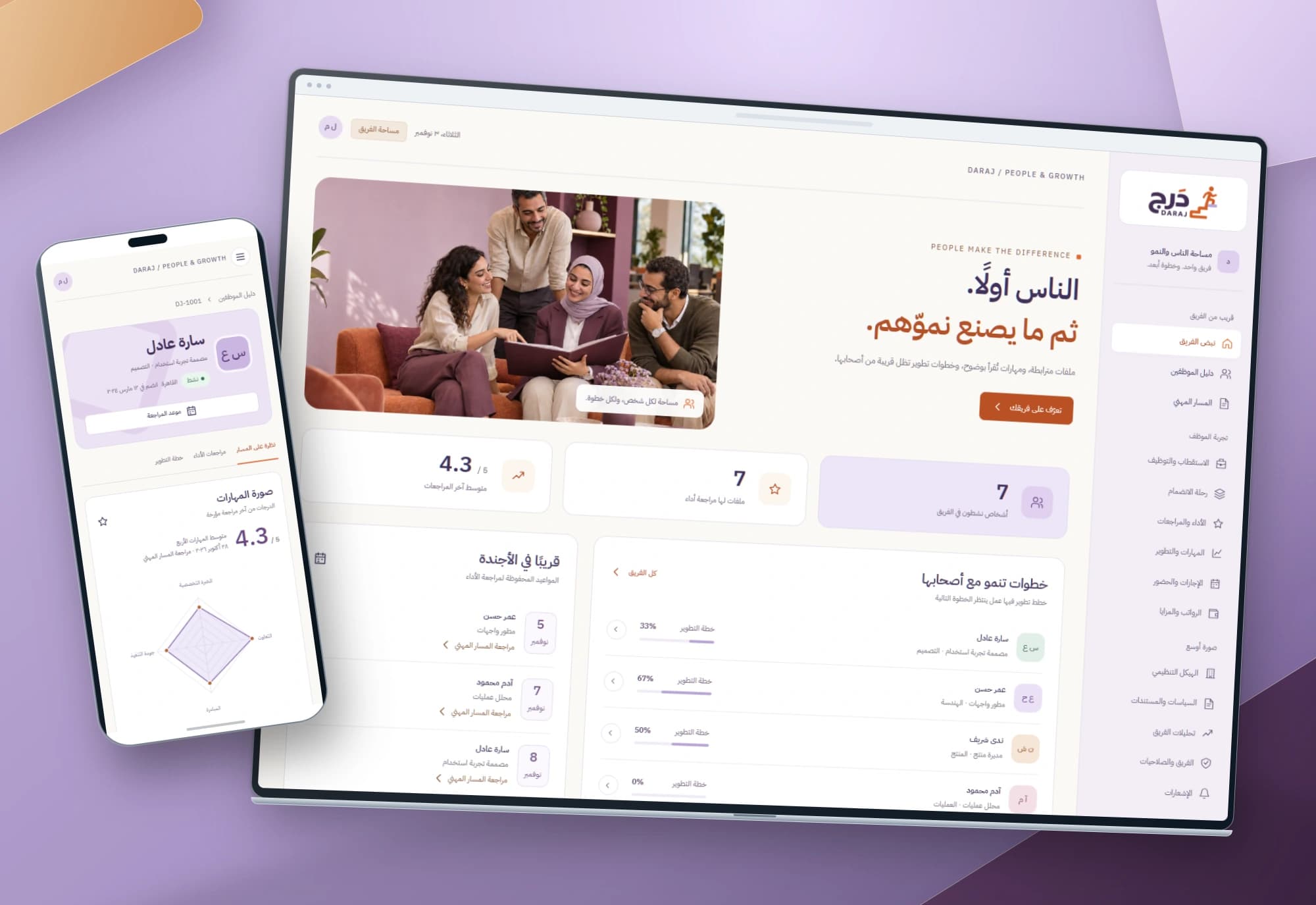
DARAJ — Employee performance and development interfaces
Performance reviews begin with people and lead to clear next steps. DARAJ connects an employee directory with individual skills, dated reviews and a development plan.
Explore project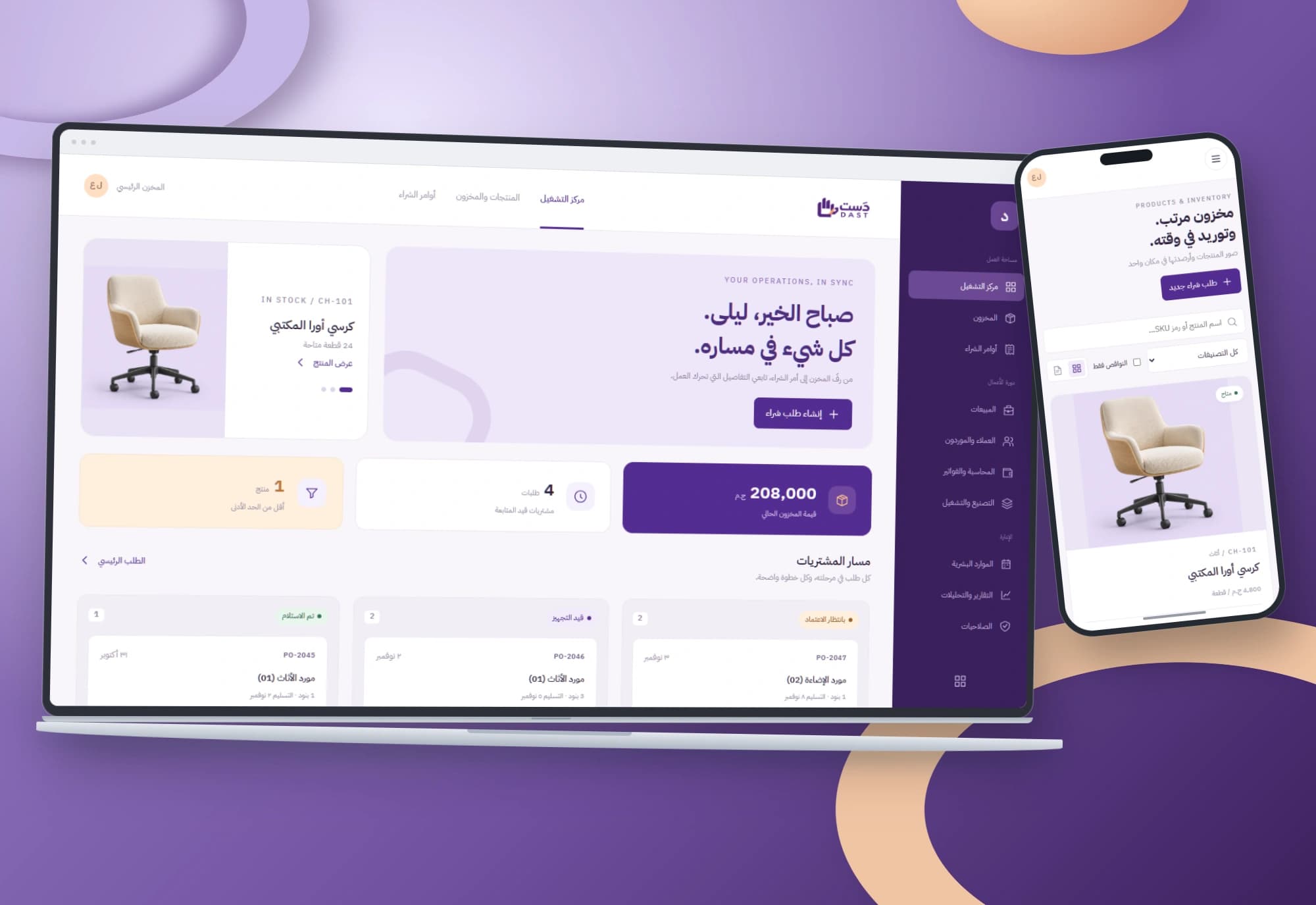
DAST — Purchasing and inventory interface
Every order has a path and every item has a balance. Arabic interfaces connect low-stock alerts, purchase-order review and receipt of its line items.
Explore projectNeed a clearer view of your fleet operations?
We start with your daily dispatch workflow, then define the resource rules, data and integrations your operation needs.