
KAWD — Internal risk and governance interfaces
A risk rating becomes clearer when its reason, control evidence and next action remain visible. KAWD connects initial and residual assessment, treatment and internal acceptance in an Arabic workspace with a retained decision trail.
Explore the project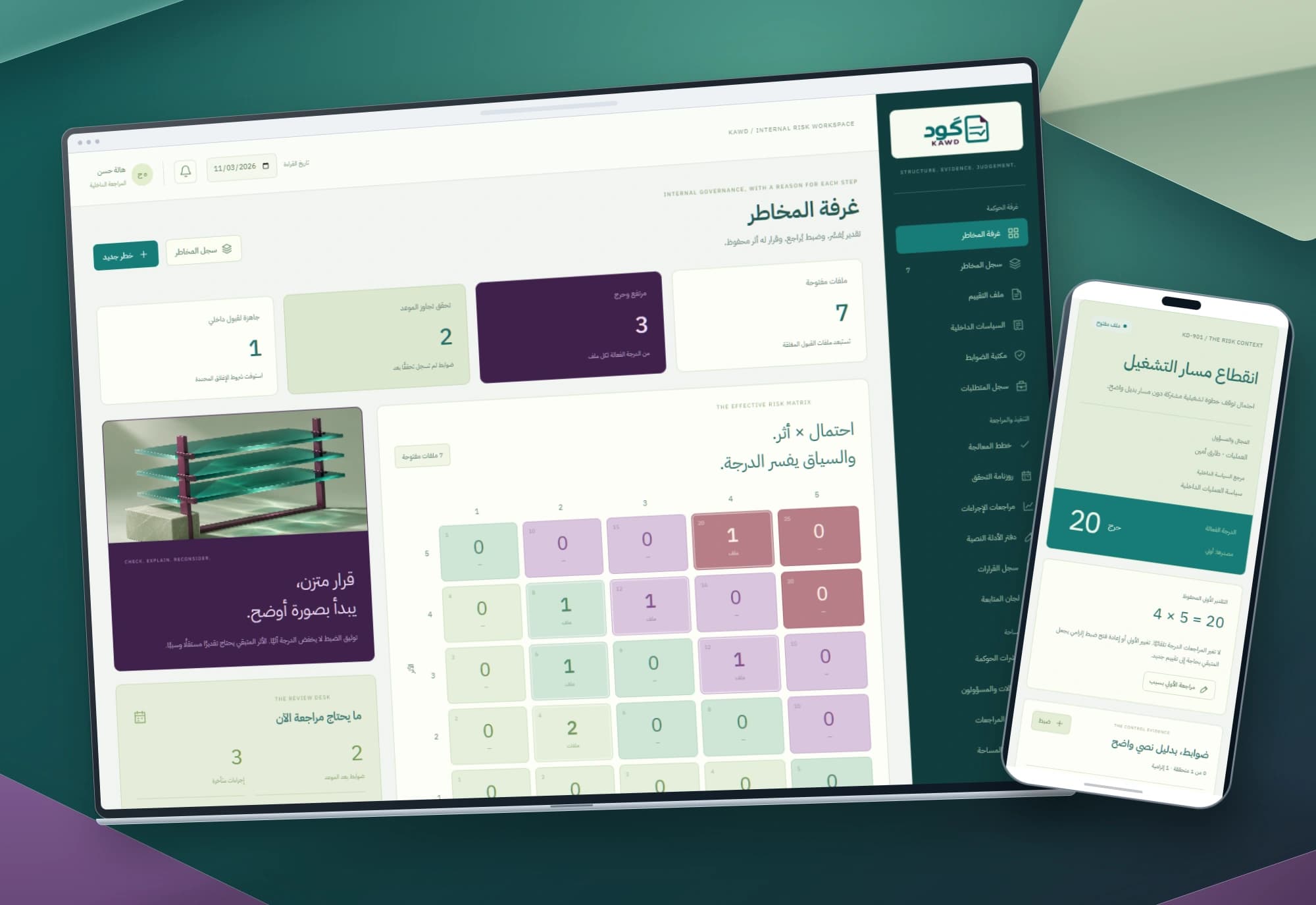 1 / 1
Project information
- Client
- An original Nextwave project
- Sector
- Professional services
- Platforms
- Web
- Project type
- Business systems
Services delivered
Project overview
An internal review needs a rating’s context:its probability, impact, verified controls and the reason for a changed judgement. Nextwave built KAWD around those questions, moving from a score to its evidence and an explainable decision.
A rating needs an explanation that stays with it
A team may verify a control and change its assessment later, then find a new number without a clear reason. A treatment step may also be complete while another review remains open. Following these states requires a clear separation between judgement, evidence and action.
Each element has its own record:a risk with context, owner and internal policy reference;an initial assessment history;dated controls with textual evidence;and owned actions. Residual assessment is then an independent, reviewable decision.
A matrix that leads to the files behind its counts
The risk room shows open files, high/critical ratings, overdue verification and records meeting internal acceptance conditions. A five-by-five probability/impact matrix links each cell to the actual records it contains.
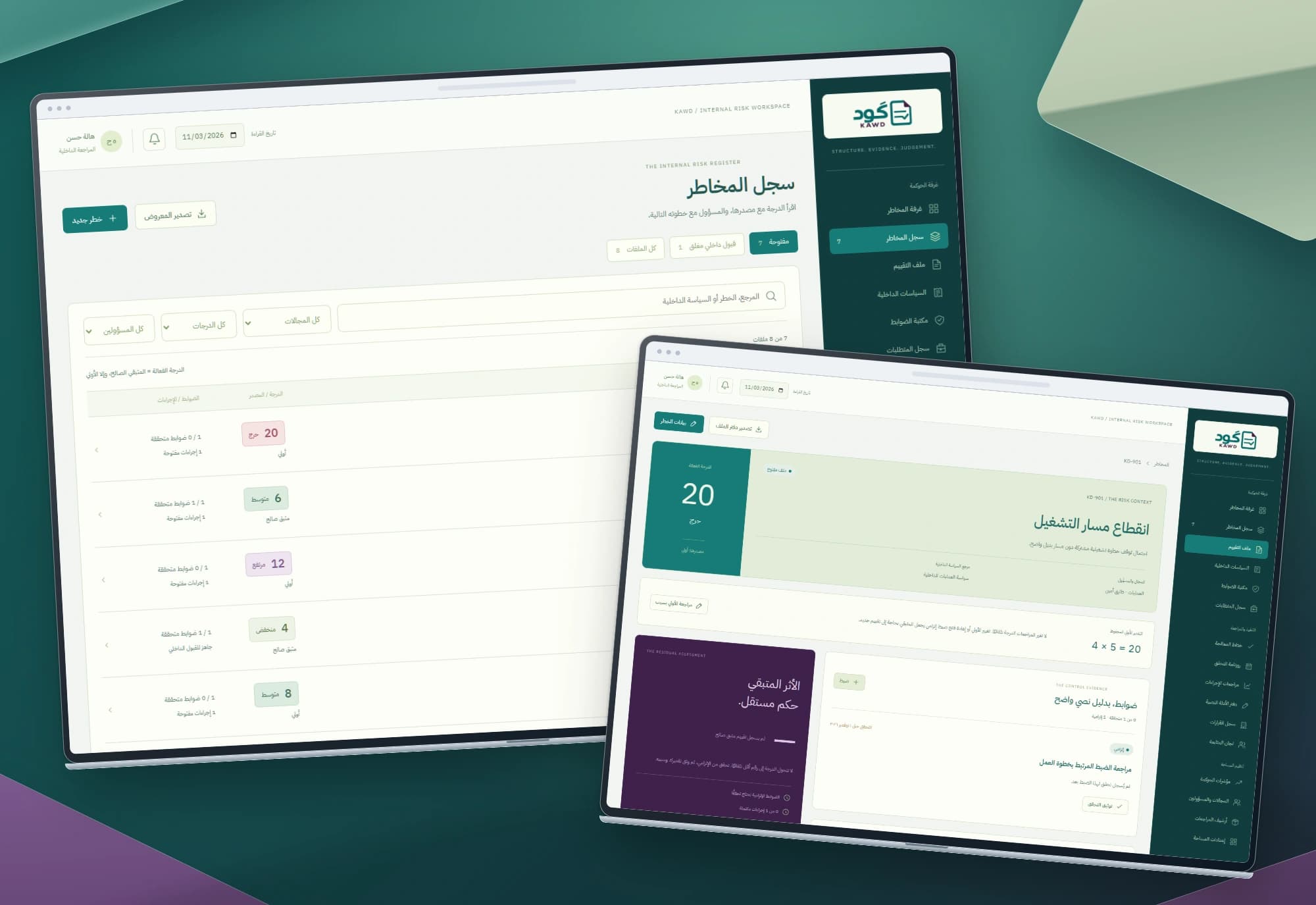
The effective score uses the latest valid residual assessment and falls back to the initial score when reassessment is needed. Its source is visible beside domain, owner, band and status filters. The review queue combines unverified controls and open actions past their deadlines at the selected reading date.
Explicit internal bands and independent human decisions
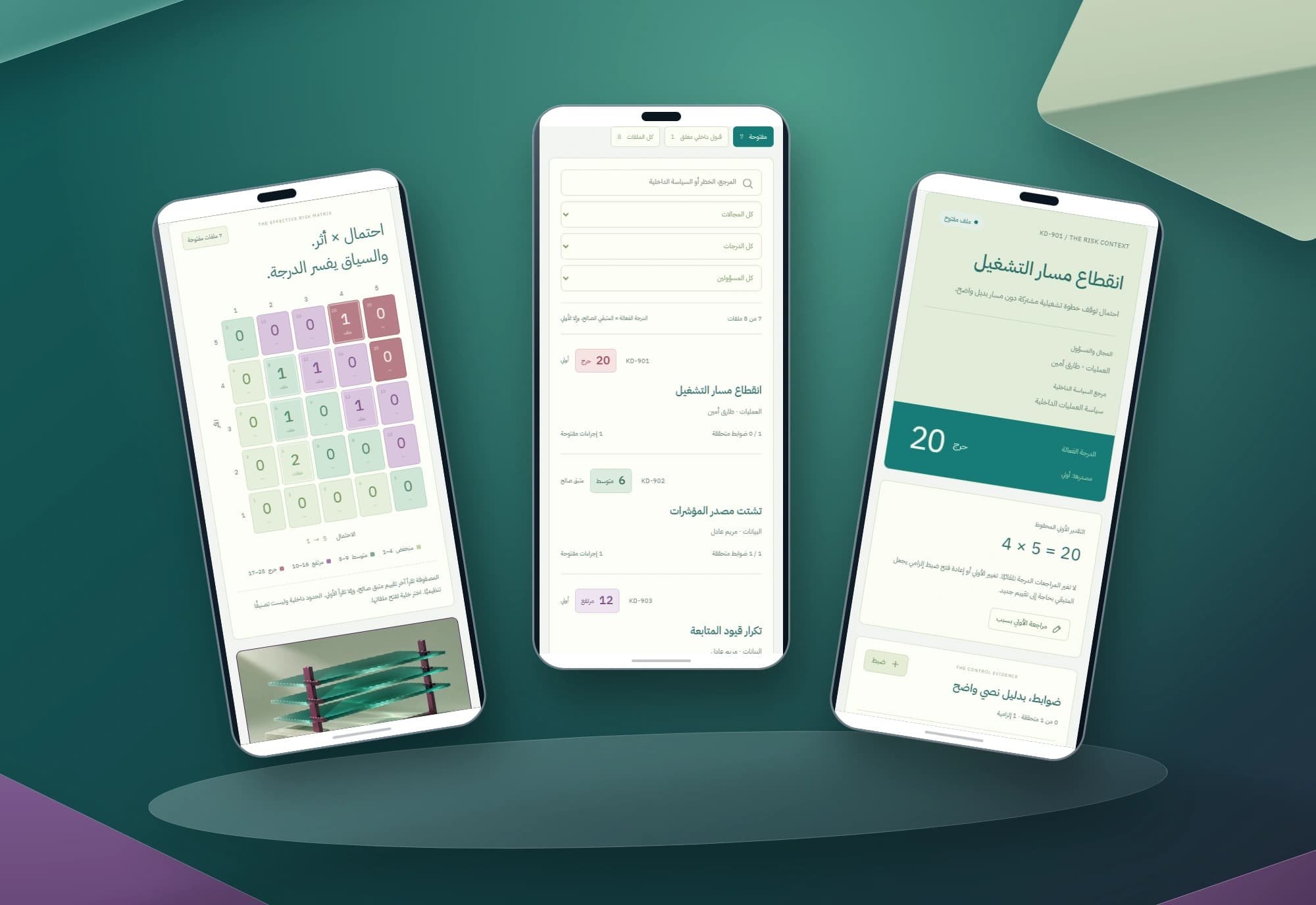
The score multiplies probability and impact, each from 1 to 5. The interface states its internal bands:low 1–4, medium 5–9, high 10–16 and critical 17–25. They organize this workspace’s reading and are not an approved regulatory classification.
Verifying a control does not automatically deduct a percentage from risk. The user enters residual probability, impact and a reason after required controls are verified. Assessment and evidence history remain available to explain each judgement.
Project images
Explore the interface and experience through the project gallery.
 1 / 3
Use case: open a risk with an explainable assessment
An owner records a unique reference, title, context and internal policy reference, then assigns the domain, record owner and initial probability/impact. The score places the record in the corresponding matrix cell while keeping both dimensions visible.
A revised initial assessment requires a reason and adds a new version. The register and matrix reflect it, and a prior residual assessment requires review. The score change remains connected to a written decision.
Use case: revisit a control without reviving an old assessment
A reviewer adds a control with a verification deadline and marks whether it is required. Verification needs a note and a manual date no later than the reading date when entered. Once at least one required control exists and all required controls are verified, the owner can record independent residual judgement and its reason.
Adding or reopening a required control invalidates the previous residual assessment while preserving its history. Re-verification alone does not revive it;a new assessment decision is required. Optional controls remain available for follow-up without automatically lowering the score.

Use case: accept internal closure after its conditions are met
The team assigns treatment actions with an owner and deadline, then documents completion with a note and date. This remains independent of residual judgement:completion does not change the rating, and a reasoned action reopening restores its follow-up requirement.
Internal acceptance requires a valid residual score of 9 or less, all required controls verified, at least one completed action, no open actions and an acceptance note. The record locks until reasoned reopening, preserving assessments and the earlier acceptance event. This is an internal follow-up decision without a guarantee of risk elimination.
Names, scores and color support the same reading
Teal carries the main reading and actions;plum gives residual assessment its own space, and pale sage supports review details. Each band has a written label and score, so the matrix does not depend on color alone.
The generated glass-and-support sculpture represents structured judgement without seals or certificates. Four mockups preserve original screenshots in authored brand compositions, with all lettering contained inside the interfaces.
Implemented scope
The scope is three responsive Arabic HTML, CSS and JavaScript interfaces with browser-local persistence and exports for risks, assessments, controls, actions and decisions. Review covers rating boundaries, assessment validity, evidence dates, acceptance, save failures, empty states and keyboard use. Three menu destinations are implemented here.
Shared accounts, permissions, file uploads, external policy connections and automatic detection require further implementation. Evidence is user-entered text;the work does not provide regulatory approval, compliance certification or legal advice.
Built with
- HTML5
- CSS3
- JavaScript
- localStorage

DARAJ — Employee performance and development interfaces
Performance reviews begin with people and lead to clear next steps. DARAJ connects an employee directory with individual skills, dated reviews and a development plan.
Explore project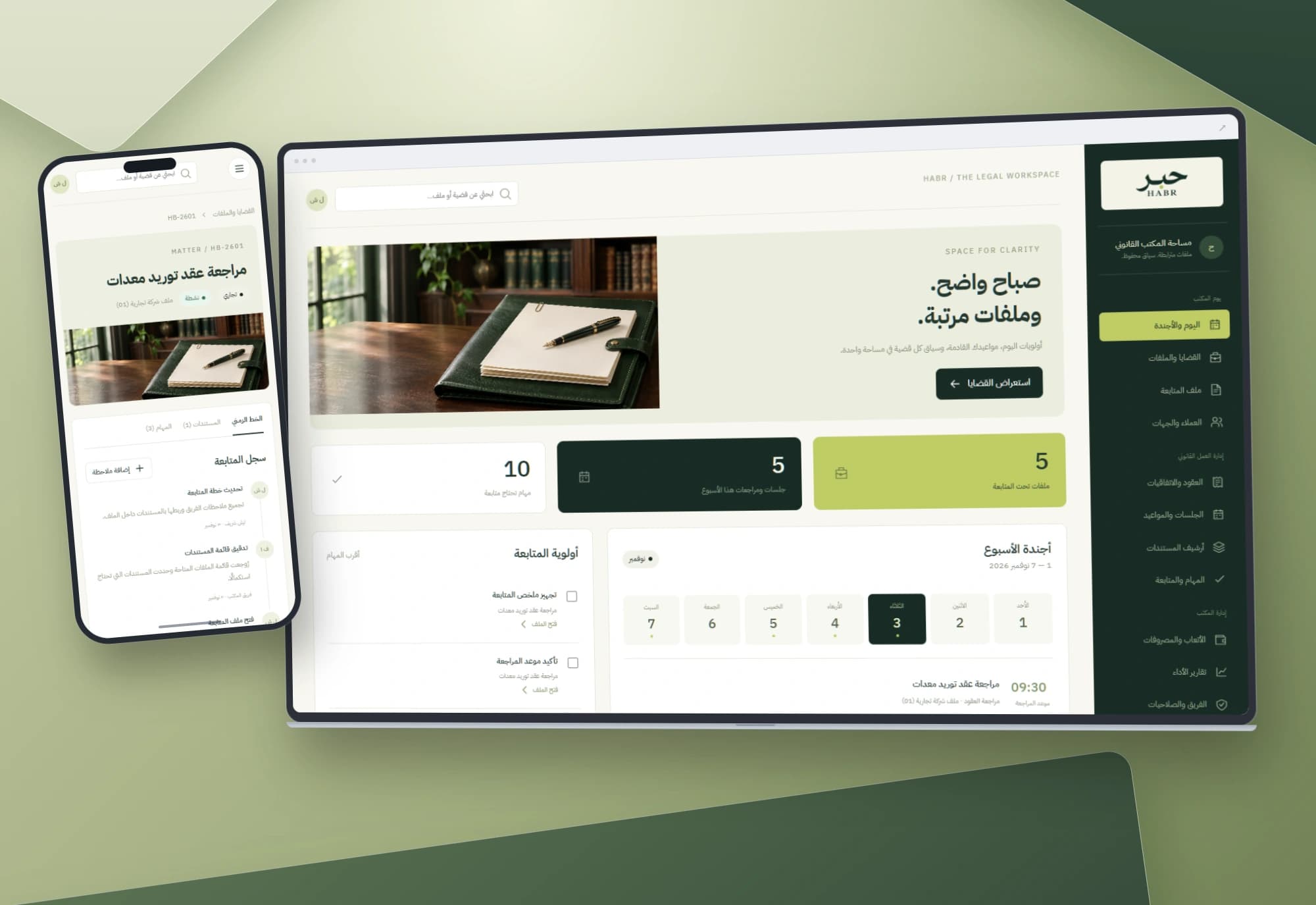
HABR — Legal matters and office workflow interface
Dates, tasks and documents belong to the same matter. An Arabic workspace connects the office agenda to case files and notes, keeping each step in context.
Explore projectHow does your team explain and retain risk decisions?
We start with your assessment rules, controls, actions and review roles, then design records, evidence and permissions around your internal process.