
DOKKA — Restaurant operations, stock and recipe costs
An order affects the kitchen before a plate leaves the pass. DOKKA connects each ticket to a declared recipe, ingredient reservations and costs fixed at confirmation, then distinguishes served, cancelled and consumed work in a warm Arabic-first branch workspace.
Explore the project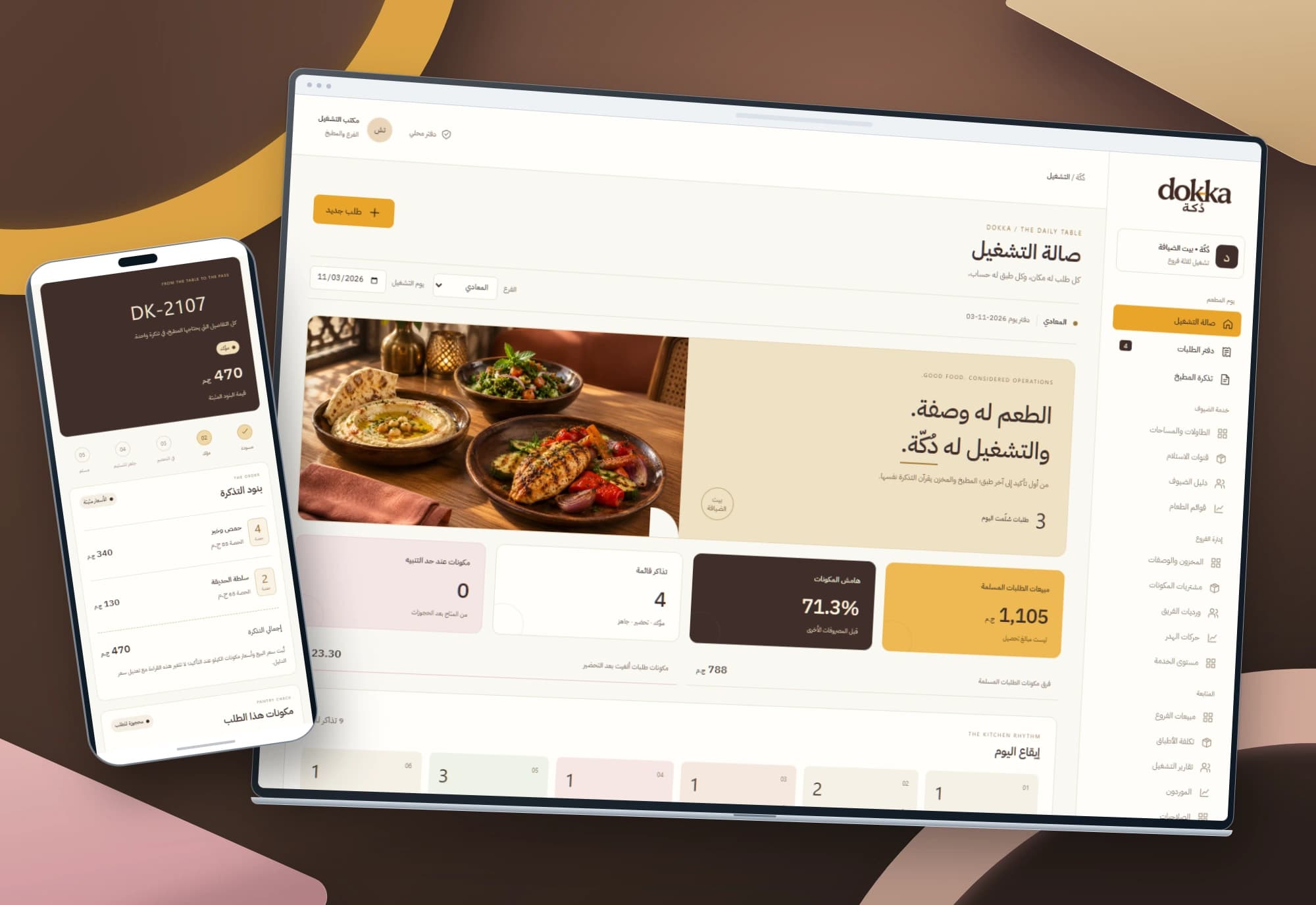 1 / 1
Project information
- Client
- An original Nextwave project
- Sector
- Hospitality & restaurants
- Platforms
- Web
- Project type
- Business systems
Services delivered
Project overview
Between the dining room and kitchen, a ticket looks simple: a dish, a quantity and a table. Behind it sit ingredients that cannot be promised twice, prices that may change tomorrow and cancellations whose effect depends on whether preparation has begun. Nextwave designed DOKKA as three connected screens with one consistent meaning for each operation.
Hospitality warmth with an operational ledger
Walnut, ochre, restrained rose and parchment tones give the workspace the warmth of hospitality. An original food photograph and ticket-inspired details support the identity, while clear figures and Arabic text carry the operational reading.
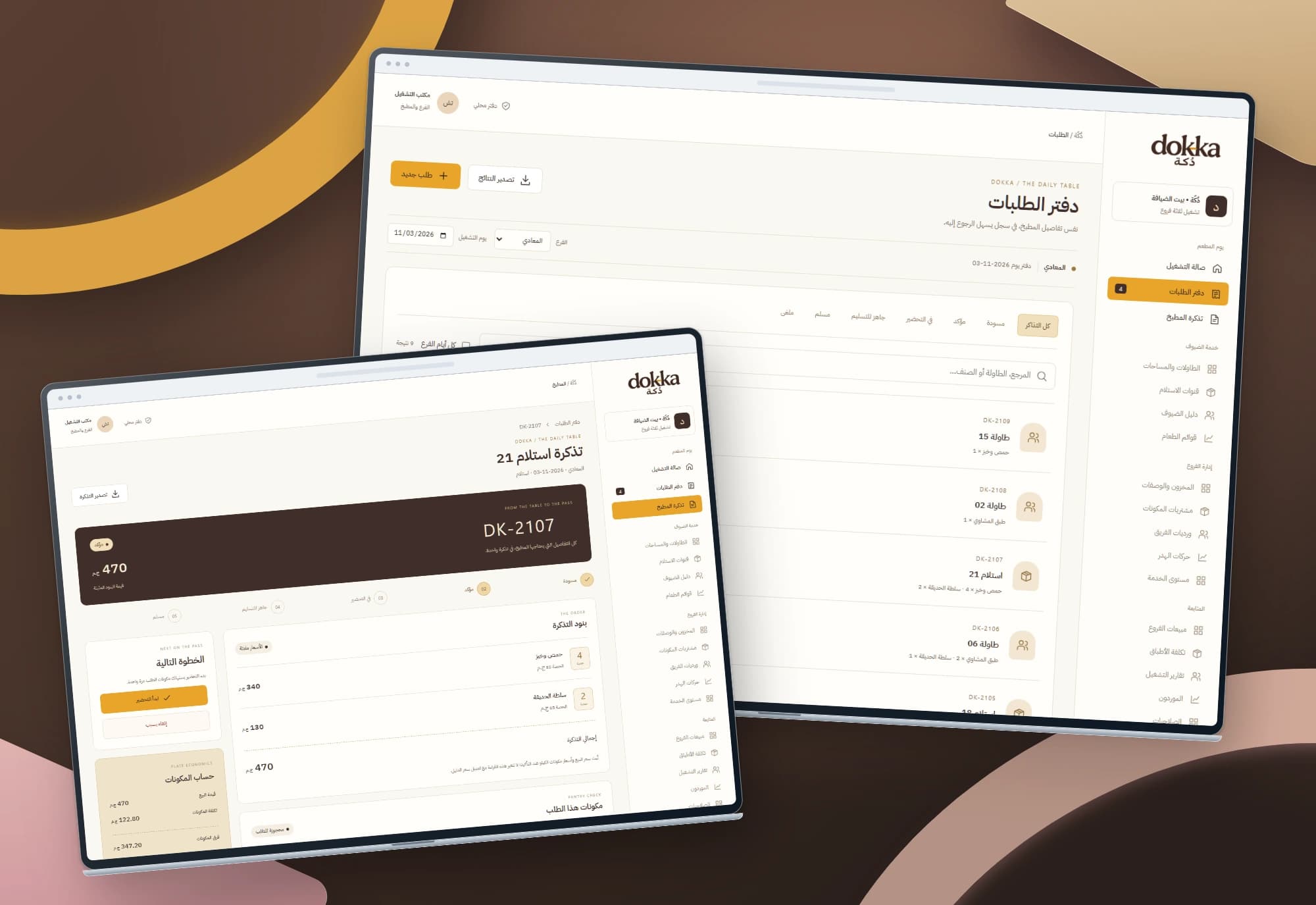
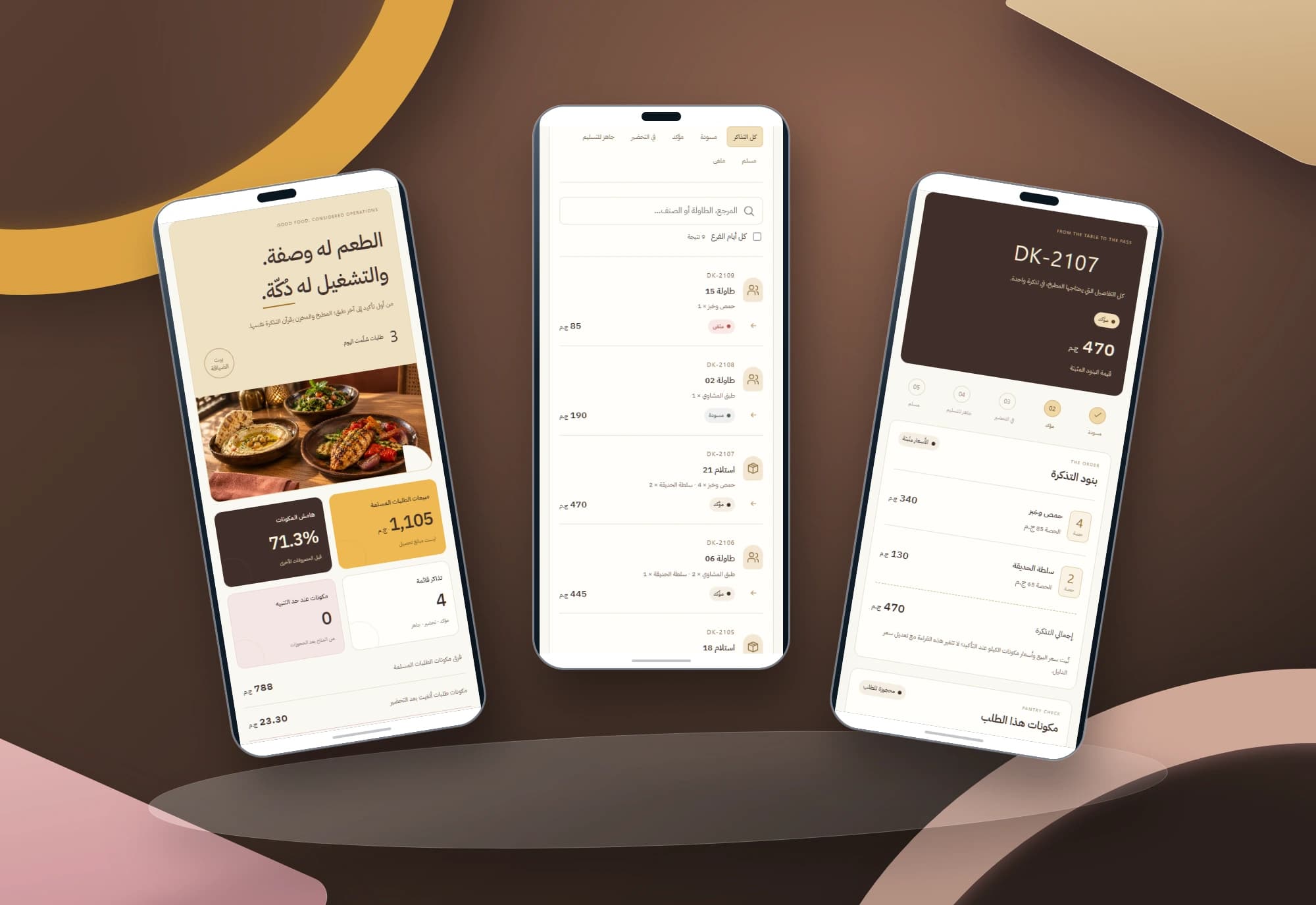
The sidebar presents a broader restaurant scope and identifies the three connected working destinations: overview, order register and kitchen ticket. Mobile layouts stack cards and items, with a keyboard-operable drawer and focus restoration.
Project images
Explore the interface and experience through the project gallery.
 1 / 3
The count alone does not explain the shift
Sales alone do not explain a restaurant day. A confirmed ticket that has not entered preparation differs from a ready plate, and cancelling after ingredients are consumed does not put them back on the shelf. We separated the service lifecycle from stock movements and connected them at the point where something actually changes.
The overview follows one branch and operating day, showing open tickets, their stages, served order value and ingredient costs. Ingredient contribution and post-preparation cancellation waste remain separate readings. Ingredient margin is not presented as net profit, and serving an order does not register payment collection.
Use case 1: Confirm an order without promising stock twice
The desk starts a draft for a table or collection order, adds dishes from the fixed menu and records portions and a kitchen note. Quantities can change and lines can be removed while it is a draft. Writing a ticket does not reserve ingredients.
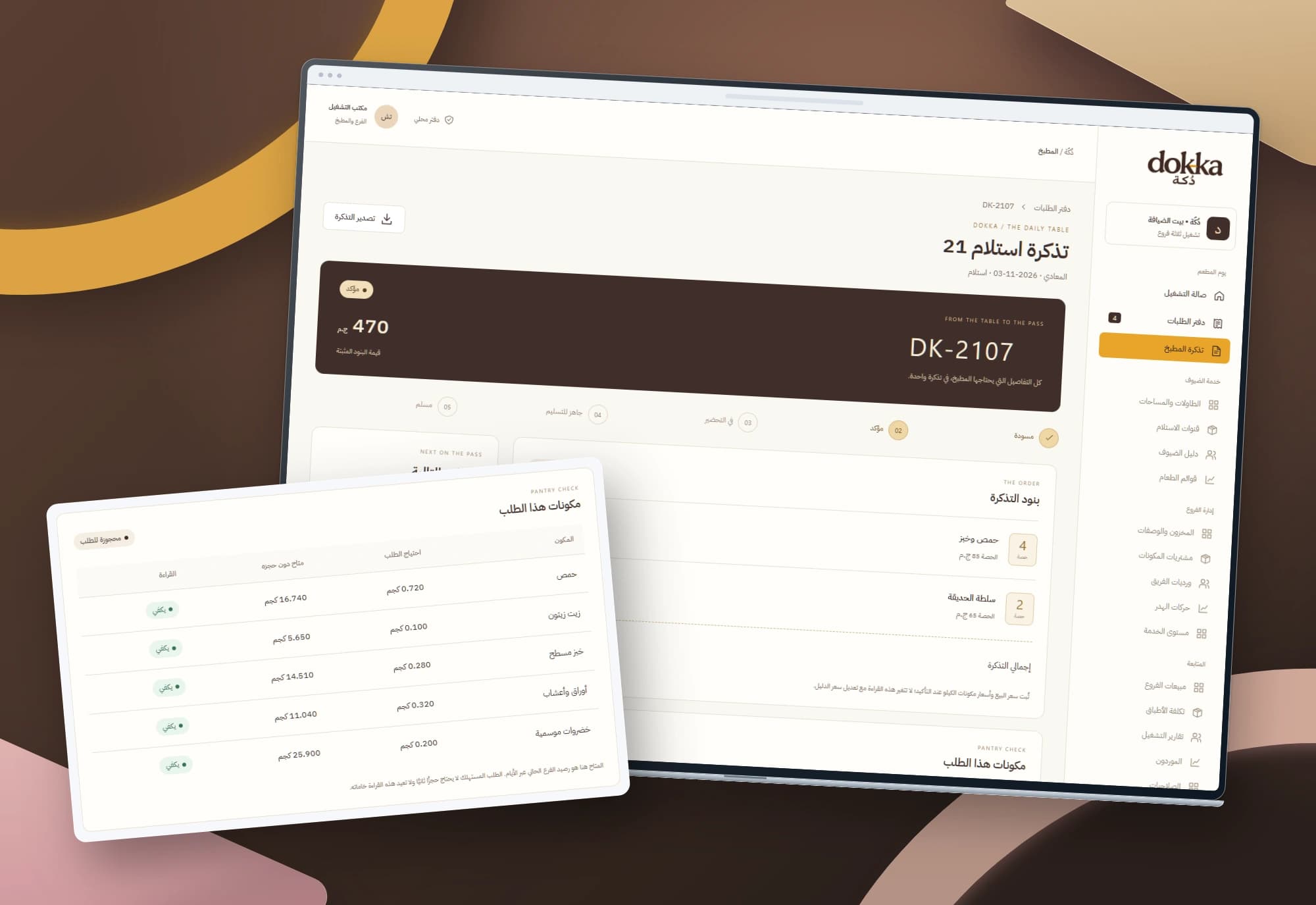
Confirmation expands each declared recipe into ingredient grams for the entire order and compares them with branch availability after existing reservations. A shortage blocks confirmation and keeps the draft intact. A successful check fixes ingredient cost rates and reserves quantities without consuming them.
Two tickets competing for the last available ingredient therefore have a clear outcome: the confirmed order holds its reservation and the next sees the actual remainder. Changing the overview day does not erase an existing reservation from current stock.
Use case 2: Preparation consumes once; cancellation keeps its context
The kitchen opens the ticket, reads its dishes and requirements, then begins preparation. Only this transition turns reserved grams into ingredient consumption. Moving to ready and served changes service status without deducting ingredients again.
Cancellation before preparation releases the reservation and leaves on-hand stock unchanged. Cancellation after preparation or readiness preserves the recorded consumption and shows its ingredient cost as cancellation waste. Stock is not increased with ingredients that no longer exist. A reason remains in the ticket history.
A served ticket is locked against cancellation and editing. Repeating a transition cannot consume its recipe twice or turn a completed service stage back into a draft.
Use case 3: Review branch costs without rewriting earlier orders
A branch operator records ingredient receipts in kilograms with a reason. A stock write-off cannot take quantities already reserved for tickets. Branch balances remain independent; replenishment in one branch does not silently cover another.
A reasoned catalogue cost update applies to later confirmations. Previously confirmed tickets retain their fixed cost rates, while drafts and subsequent confirmations use the new price. Recipe valuation first combines a complete dish line and rounds its value once, keeping cents consistent with portions.
The operator can search the register, filter stages and export every matching result. Ticket lines and their movement trail provide a route back to the figures instead of leaving an unexplained total.
Small safeguards that preserve the meaning of a move
Quantities, weights and prices accept Arabic and Latin digits with explicit decimals and correctly grouped thousands. Ambiguous input is rejected instead of becoming a larger unintended quantity. Long notes, large amounts and tables were checked on mobile, and a separate state copy is validated before saving.
A failed save keeps entered values and earlier records intact. An invalid saved source blocks writes until explicit recovery begins with a backup. Exports retain all matching rows even when the register itself is paginated.
What the delivered work includes
DOKKA is an original Nextwave interface project with three connected pages, working calculations, interactions and browser-local storage. It covers a fixed declared menu and recipes, branch orders, ingredient reservations, consumption, waste and traceable cost readings.
Storage belongs to the current device. There is no shared server, team account system, POS connection, payment gateway or purchasing and accounting cycle. Sidebar labels beyond the three destinations show possible scope extensions rather than completed modules. The study describes implemented operations without attributing them to a client or undocumented financial results.
Built with
- HTML5
- CSS3
- JavaScript
- localStorage
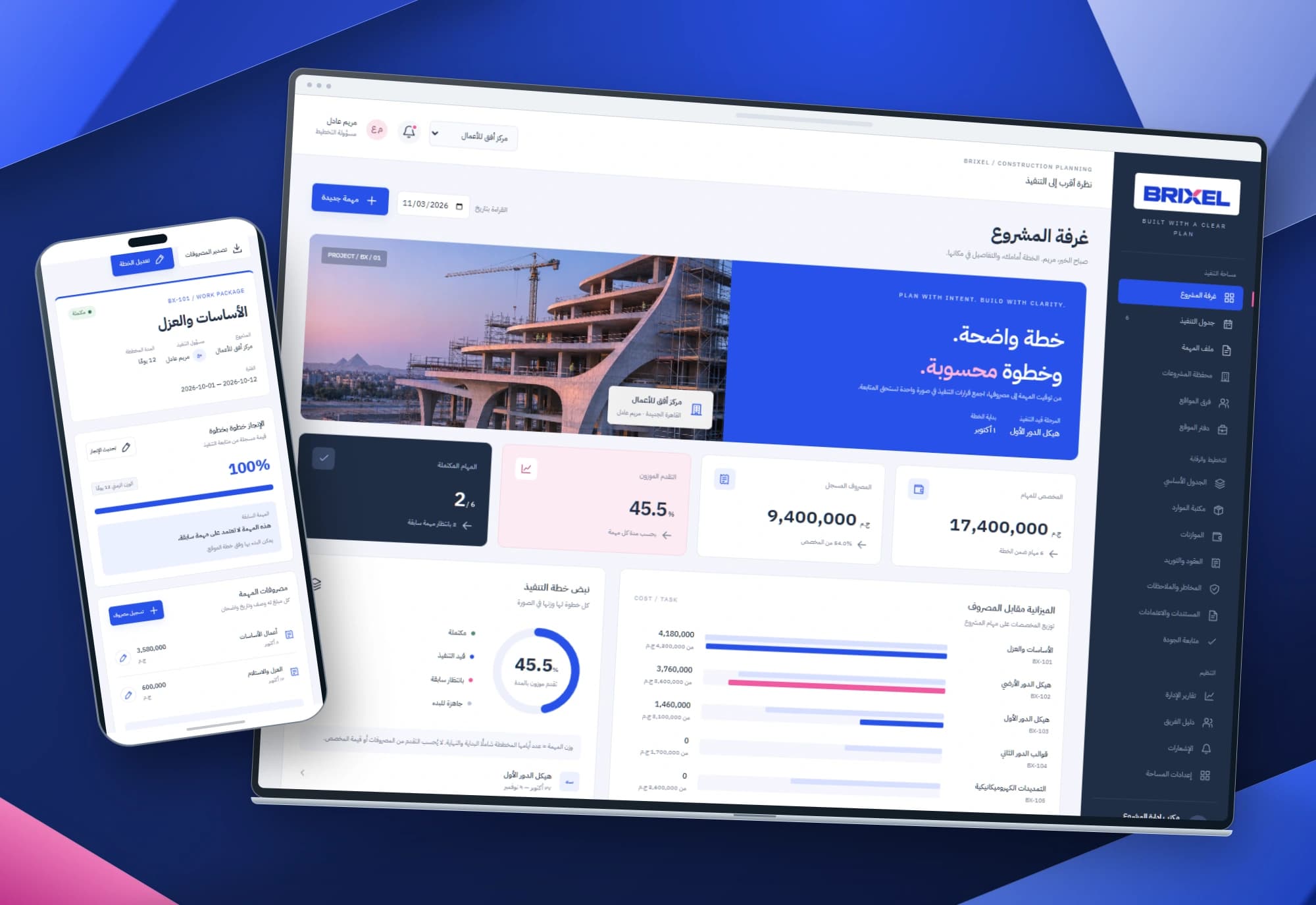
BRIXEL — Construction planning and cost tracking interfaces
A task may be complete while its costs still need review, or due soon while waiting on earlier work. BRIXEL brings timing, dependencies, progress and expenditure into one Arabic planning workspace.
Explore project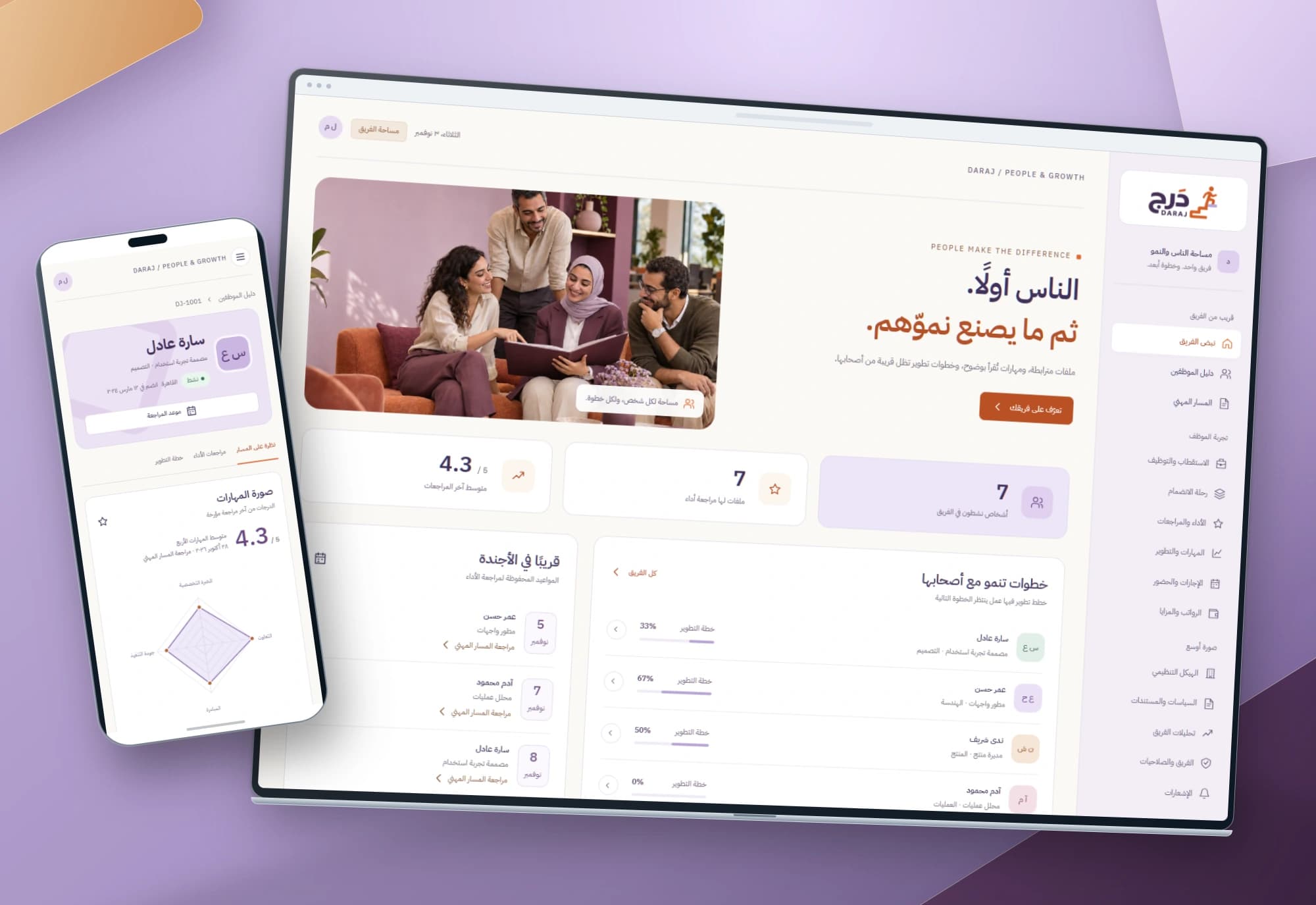
DARAJ — Employee performance and development interfaces
Performance reviews begin with people and lead to clear next steps. DARAJ connects an employee directory with individual skills, dated reviews and a development plan.
Explore projectWant a clearer restaurant workspace?
Start with the order and stock decisions you need to organize. We can define the screens, operating rules and integrations appropriate to your project scope.