
TESSEN — Production, materials and quality review interfaces
Material may be on hand but reserved for another order, and a batch may finish processing while awaiting review. TESSEN connects production orders, material requirements and quality decisions in an Arabic workspace.
Explore the project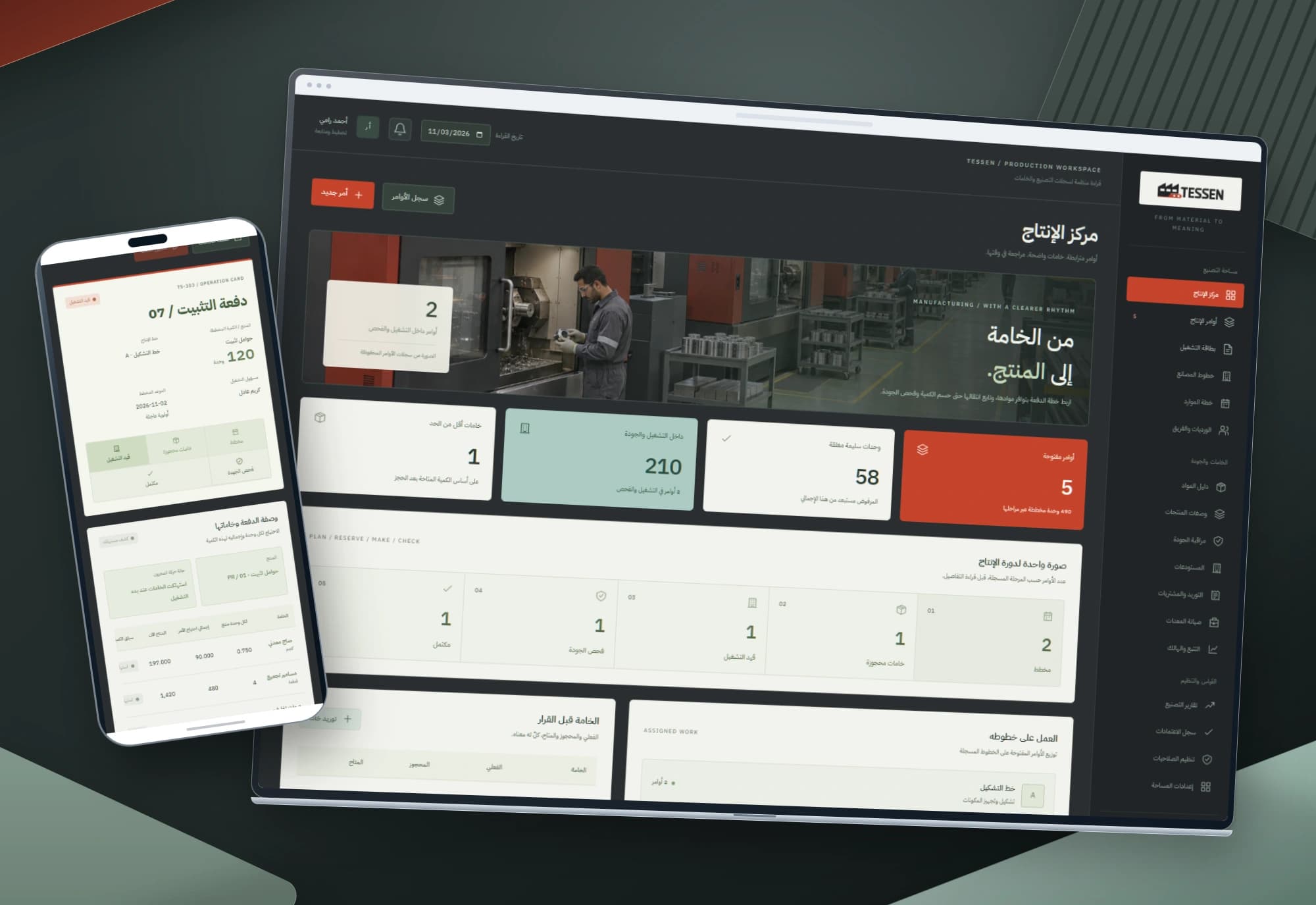 1 / 1
Project information
- Client
- An original Nextwave project
- Sector
- Manufacturing
- Platforms
- Web
- Project type
- Business systems
Services delivered
Project overview
Before starting production, the planner needs to understand allocated materials, what will be consumed and what is known about the batch output. TESSEN makes those decisions visible in the order record and stock ledger rather than compressing manufacturing into a single progress bar.
On-hand stock is not all available stock
Ignoring reservations can make the same stock appear available to two batches. An unclear workflow can also deduct material at both start and closure. Quality adds another distinction: processed units and accepted good units are different measures.
The interface separates physical, reserved and available stock, then good and rejected output. Each value belongs to a defined part of the order lifecycle, and the relationships are checked before a change is saved.
From a planned order to a reviewed batch
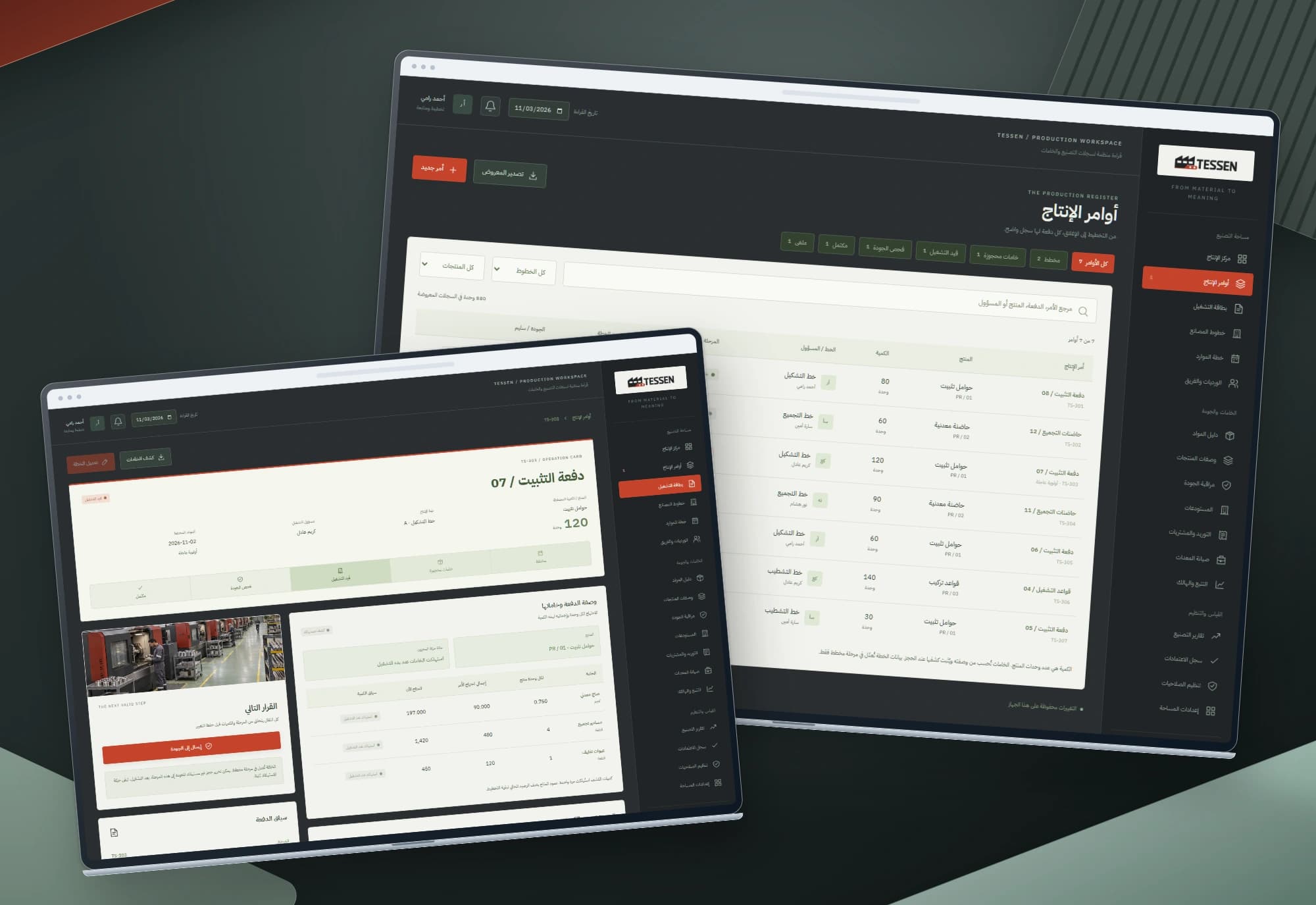
The overview shows order stages, materials, alerts and work assigned to lines. The register provides status, product and line filters. The operation card connects product, quantity, owner, deadline, priority, recipe and the next permitted decision.
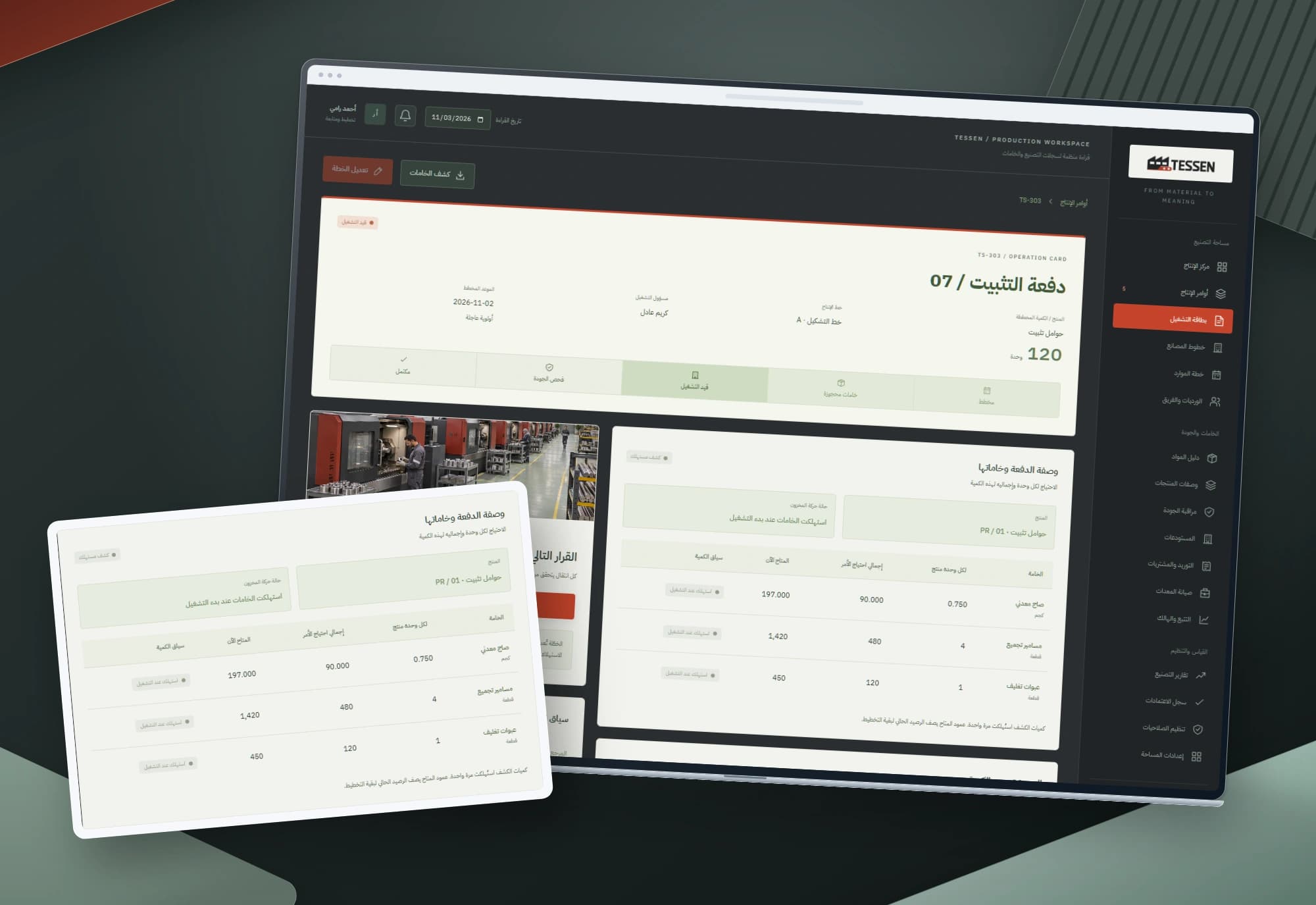
The starting workspace contains seven orders, three fixed product recipes, four materials and three lines. Product quantities are whole units; material quantities follow their own units. Kilograms retain three decimals and piece materials require whole pieces. Each order keeps a recipe snapshot with per-unit and total requirements.
Complete reservation, one consumption and gated closure
Reservation succeeds only when every recipe material is available. It freezes the order requirements, reduces available stock and leaves physical stock unchanged. Starting consumes that snapshot once and removes its reservation. Reasoned release or cancellation before start does not create new physical stock.
Quality review can save a partial count. Closure requires good plus rejected units to equal the plan, both dimension and finish checks to pass, and a rejection reason when needed. Completed-good indicators exclude rejected units.
Project images
Explore the interface and experience through the project gallery.
 1 / 3
Use case: checking materials before committing a batch
The planner creates an order with its product, unit count, line, owner and deadline. The card calculates recipe requirements: at 0.750 kg per unit, a 120-unit batch needs 90.000 kg of that material. Each required item is compared with available stock before reservation.
One missing material rejects the entire reservation. A receipt can be entered in the material’s unit before retrying. Successful reservation commits the quantities to that order, so another order cannot reserve them again. A reasoned release before production returns the order to planning and restores availability without increasing physical stock.
Use case: starting production with traceable stock changes
The owner opens a reserved order, reviews its frozen requirements and records the start. Material leaves physical stock and its matching reservation is removed. The card becomes running. Consumption uses the stored order snapshot and is not calculated again at closure.
Repeated submission or reload cannot consume the batch twice. Failed storage leaves the order, allocation, ledger and history unchanged. Requirement and stock exports support review, while validation checks that opening stock plus receipts minus recorded consumption equals physical stock.
Use case: completing quality counts before accepting output
The owner moves a running order into quality review and records inspection date, good/rejected counts and dimension/finish results. A partial review can be saved and resumed, but cannot close the batch or exceed its planned quantity.
Closure requires the complete count, both accepted checks and an explanation for any rejects. Only good units contribute to the completed-good total. No second material deduction occurs: start records consumption, while quality reviews the output. Inspection results are entered by the user rather than measured by connected machinery.
Industrial character with space for the numbers
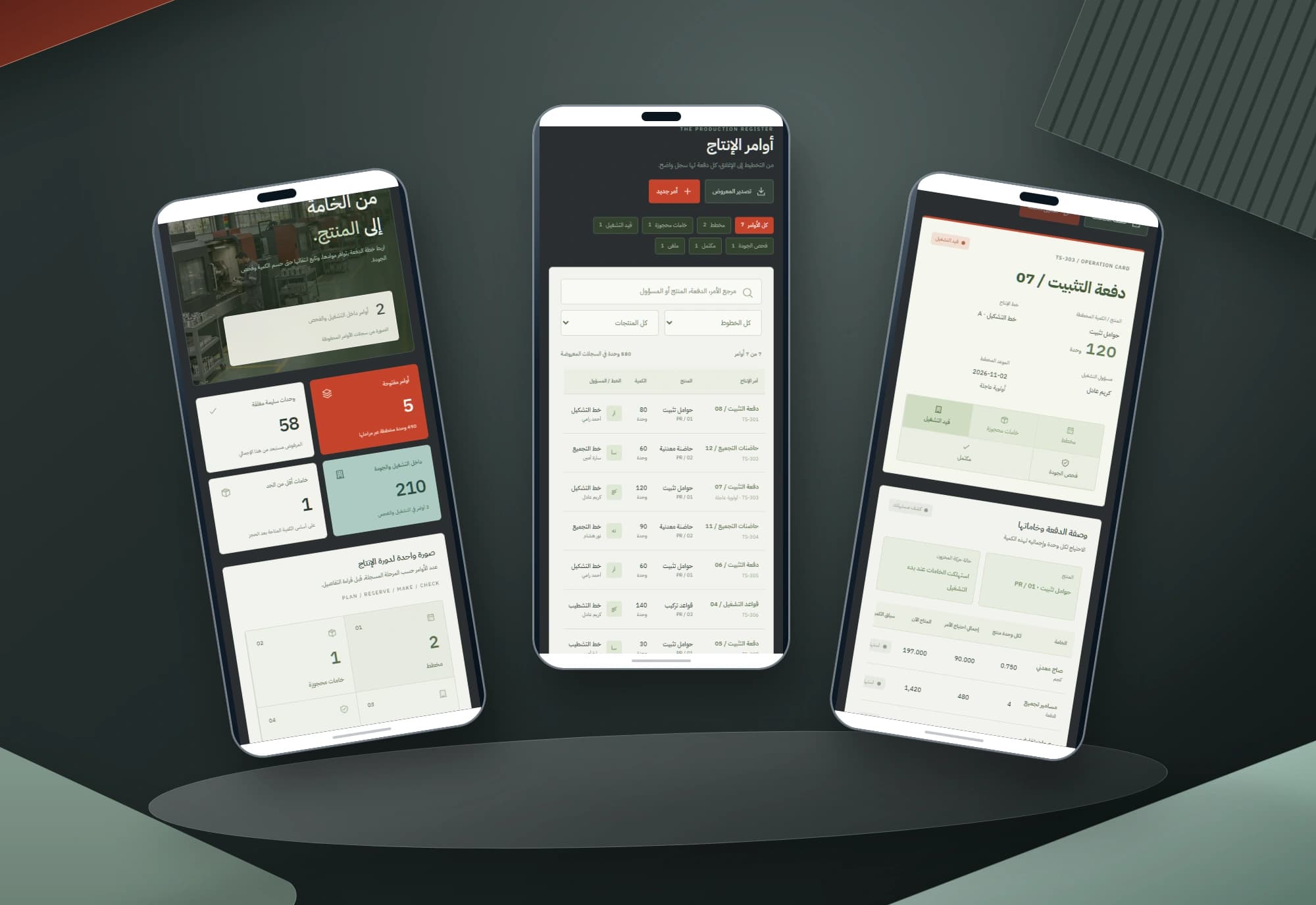
Graphite surrounds the workspace while ivory and muted green panels give material data room to breathe. Oxide red leads actions and selected states, and production-line imagery establishes the manufacturing context.
Mobile layouts keep the order reference, quantity and stage ahead of recipe details. Four mockups use industrial-panel forms for the overview, register, mobile screens and enlarged material sheet. Original screenshots preserve all interface text; backgrounds contain no lettering.
Implemented scope
The work comprises three HTML, CSS and JavaScript interfaces with local persistence, material reservation/consumption, receipts, quality review, filters and exports. Recipes are fixed within this scope; line assignment does not calculate capacity automatically. Data and imagery do not establish a verified customer factory or actual production outcomes. Warehouse/machine/accounting connections, shared users, multiple warehouses, editable recipes and permissions require separate work. Remaining sidebar labels outline broader modules.
Built with
- HTML5
- CSS3
- JavaScript
- localStorage
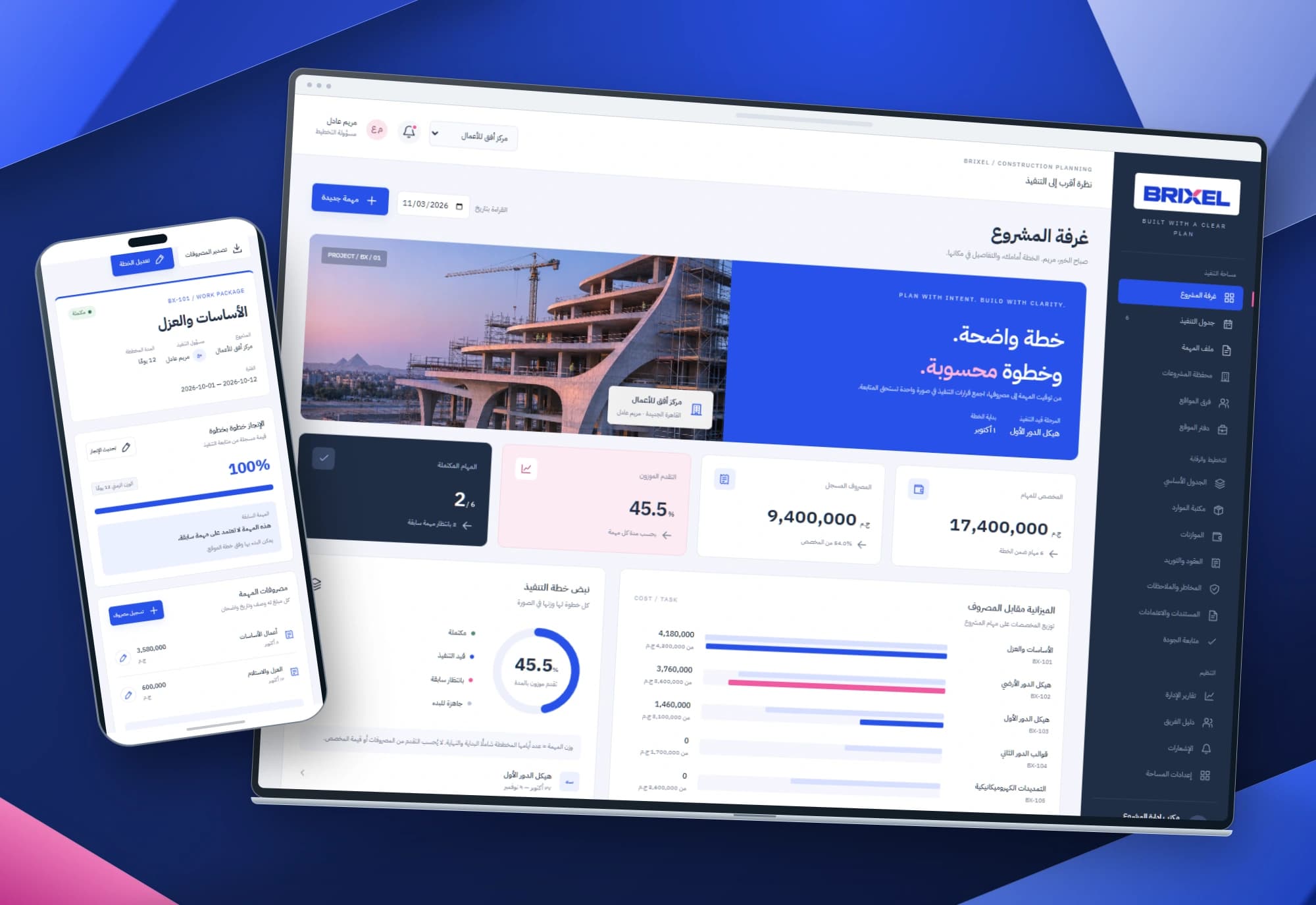
BRIXEL — Construction planning and cost tracking interfaces
A task may be complete while its costs still need review, or due soon while waiting on earlier work. BRIXEL brings timing, dependencies, progress and expenditure into one Arabic planning workspace.
Explore project
DARAJ — Employee performance and development interfaces
Performance reviews begin with people and lead to clear next steps. DARAJ connects an employee directory with individual skills, dated reviews and a development plan.
Explore projectNeed production orders and materials in one clear workflow?
We review your order, recipe, reservation and quality process, then define the data and integrations required for your factory’s operation.